






Retrofitting for resilience with the Leicester Resilience Hub

[edit] Resilience Hub initiative
The Resilience Hub initiative forms part of a growing international network proposed by the UN, advancing the principles first developed by the Urban Sustainability Directors Network (USDN) in North America.
These hubs represent community-serving facilities enhanced to support residents and coordinate essential services before, during, and after climate-related disruptions, particularly floods, heatwaves, and energy shortages. In the context of the UN’s Resilience Hub initiative, such facilities act as local anchors for climate adaptation, equity, and social cohesion. They embody the United Nations’ call to accelerate locally led resilience by empowering communities to anticipate, absorb, and recover from shocks, while advancing the Sustainable Development Goals (SDGs), particularly SDG 11 (Sustainable Cities and Communities), SDG 13 (Climate Action), and SDG 7 (Affordable and Clean Energy). According to the USDN Resilience Hub Guidance (2018, 2021), successful hubs are built on trusted community sites that operate year-round as centres of education, wellbeing, and resource exchange, and that can rapidly shift into emergency-response mode when disasters strike.
They combine physical retrofitting for hazard resistance with social and economic programming that enhances everyday quality of life. This model emphasises co-development with local residents and community-based organisations, ensuring that resilience is both equitable and locally relevant.
[edit] Context and site background
The Watershed, located on Bede Island (LE2 7AU), sits between the Old River Soar and the Grand Union Canal in Leicester, placing it firmly within Flood Zone 3. The building was first constructed in 1999 by Leicester City Council as a youth centre and later renovated by De Montfort University in 2015 for student sports and societies. In the past few years, the Old River Soar burst its banks, submerging nearby structures, a defining moment that exposed the site’s vulnerability and became the catalyst for change.
[edit] Design brief and vision
The retrofit brief was to re-envision the Watershed as a net-zero community hub and flood-resilient refuge, delivering both everyday social benefit and emergency-response capability.
The key design goals were to: achieve full flood protection and continuity of operation during extreme weather events; generate 100 per cent of the building’s energy on-site through renewables; reduce embodied and operational carbon via material reuse and circular design principles, and provide inclusive, adaptable community spaces for education, recreation, and support.
Day-to-day, the hub offers workshops, skill training, food redistribution, and leisure facilities. In a crisis, it can accommodate up to 200 people for one week, supplying food, shelter, and power independent of external utilities.

[edit] Flood-resilience strategy
Given the severity of local flood risk, a multi-layered approach was adopted, combining protection, adaptation, and recovery. A 1.2m reinforced concrete flood wall is proposed surrounds the site on three sides, adding 1.7m of defence above the recoded water levels. Controlled flood gates and tiered landscaping allow access to outdoor areas while maintaining security during floods. Surface-water management is addressed through permeable paving, a soakaway pond, and rainwater harvesting systems capable of collecting over one million litres annually. Internally, ground-floor finishes were replaced with moisture-resistant materials — vinyl flooring, PVC skirting, and cementitious boards up to 1.2m — ensuring rapid recovery after flood exposure. Electrical outlets and HVAC units were elevated above predicted flood levels, while flood-proof doors with outward opening provide additional safety.
[edit] Envelope and environmental design
Thermal performance and airtightness improvements enhanced energy efficiency and comfort. Five large north-facing skylights were inserted above the double-height sports hall, introducing diffuse natural light with a daylight factor (DF) of 3.9%. Glazing on the west façade was reduced to mitigate solar gain, and photochromatic coatings plus roof overhangs ensure compliance with Approved Document O. Combined with a smart, motion-activated LED system, these measures significantly cut electricity demand while improving visual comfort.

[edit] Energy generation and autonomy
The hub now operates as a fully self-sufficient, net-zero building. A total of 196 monocrystalline photovoltaic panels (400 W each) are distributed across the south and west-facing roofs, generating approximately 392 kWh per day, exceeding the 300 kWh average daily demand. Battery storage within an expanded plant room guarantees resilience during power cuts. All systems are monitored via an intelligent control network that adjusts lighting, heating, and ventilation in real time to optimise efficiency and indoor air quality.
[edit] Heating, ventilation and water strategy
A new ventilation tower introduces filtered, tempered fresh air into all rooms, while a heat-recovery system captures waste energy from exhaust air to reduce heating loads. The building’s extensive roof area (1,450m²) enables an integrated rainwater-harvesting and greywater-recycling system, supplying toilets, irrigation, and, after treatment, potable water. An underground tank beneath the car park, safely above flood levels, stores enough water to sustain the 200-person emergency population for a full week.
[edit] Social retrofit and spatial adaptability
The retrofit reinforces the hub’s social role within Leicester’s diverse Westcotes ward. The former sports hall became a flexible, divisible multipurpose area for sports, study, or temporary accommodation. A new mezzanine library (216m²) provides quiet workspace, bookable pods, and a computer suite for digital literacy training. Meanwhile, a recording studio and games room foster creativity and youth engagement, supporting mental wellbeing and community cohesion, and the expanded kitchen doubles as a café and emergency food bank, operated by volunteers and supplied via the flood-proof delivery bay.
During flood or heatwave scenarios, these adaptable spaces convert swiftly into dormitories, medical wards, or communication centres.
[edit] Accessibility and fire safety
Universal accessibility was fundamental to the redesign. All doors now include hydraulic openers (< 30 N resistance), while the main pedestrian route maintains a 1:26 gradient — below the threshold for a ramp under Part M. Additional accessible WCs and refuge areas, compliant with Approved Document T, ensure inclusivity across both floors. Fire strategy upgrades reclassified the building under Purpose Group 2a (Residential –Institution), introducing an L1 detection system with heat, smoke, and aspirating detectors throughout. Sixty-minute fire compartments protect high-risk zones, and automatic smoke vents secure clear escape routes.
[edit] Impact and lessons learned
The Leicester Resilience Hub demonstrates how retrofitting, rather than rebuilding, can deliver high- performance resilience with reduced embodied carbon. Its layered flood-defence system, renewable-energy autonomy, and flexible spatial design show that community buildings can become climate refuges without sacrificing functionality or aesthetics. This project also illustrates the importance of collaboration — between university, local authority, engineers, and community stakeholders — in shaping inclusive adaptation strategies.
Through careful integration of environmental technologies and user-centred design, the Leicester Resilience Hub transforms an at-risk youth centre into a model for flood-resilient urban regeneration. It stands as evidence that sustainable retrofitting can simultaneously address climate adaptation, social resilience, and community empowerment, essential components of a just transition to a low-carbon future.

[edit] Author’s note
Steven Thornton completed this project as part of the BENV 1304 Building Project 1 module at the Architectural Technology BSc, De Montfort University. Supervised by Dr Sahar Abdelwahab, Amit Chhatralia and Daniel Ikemiyashiro, his design demonstrates how emerging practitioners can apply Architectural Technology to tackle real-world climate challenges in the built environment.
This article appears in the AT Journal Issue 156 Winter 2025 as "Case study: retrofitting for resilience with the Leicester Resilience Hub" and was written by Steven Thornton, De Montfort University.
--CIAT
[edit] Related articles on Designing Buildings
- Applying flood resilience technologies GG 84
- Building Back Better: Resilience
- Building flood resilience
- Business resilience
- Changing attitudes to property flood resilience in the UK
- CIAT articles
- Climate resilience
- Energy, resilience and climate change knowledge campaign
- Engineering resilience to human threats
- Enhancing community energy resilience, QSAND and Loughborough University Research collaboration
- Flood resilience
- Kenneth Browne and townscape in Leicester
- Publicly Available Specification to improve the visibility and resilience of buried services
- Property flood resilience
- Resilience
- Resilience of UK infrastructure and climate predictions
- Sustainable Development Goals must be focus for construction says CIOB President
- Ten years on – Lessons from the Flood on building resilience
- Resilience of UK infrastructure and climate predictions
Featured articles
Check out some of the best features and news from Designing Buildings as well as key stories from around the web.
Households living near new pylons to save on bills.

ECA warns growth must not outpace grid capacity or skills.
The role of the client and decision making

CIOB response to built environment professions call for evidence.
Construction's sustainability reporting revolution
Tracking upfront embodied carbon with digital tools.
ECA welcomes procurement reforms

Public spending must back British jobs and skills.
Campaigning for Edinburgh: the Cockburn Association 1875-2049

The role of the civic voice in protecting character. Book review.
CIOB photography competition is open for entries.
ECA Edmundson apprentice of the year award

Finalists announced.
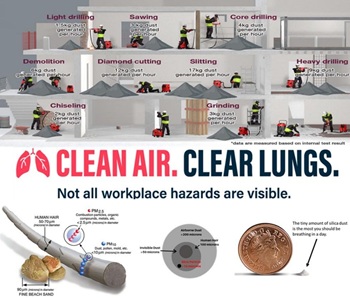
Major new study exposes serious knowledge gaps.
Generating energy from internal light as well as sunshine.

ECA welcomes plans to strengthen subcontractor quality control.

Combining mid-career qualifications with experience broadens career opportunities.