




Welcome

Welcome to BIM Wiki on Designing Buildings. This special subject hub is intended to distribute knowledge and spread awareness about building information modelling (BIM) to BIM newcomers as well as more experienced users. BIM WIki was launched in 2019, providing a free, open-access knowledge sharing platform to help make BIM mainstream.
To find a page, just type your subject into the search box. You can also use the directory on the right to start navigating, or click the 'All articles' tab at the top.
New and updated pages are being added all the time.
BIM Wiki was launched in response to research published by Designing Buildings that showed BIM remains an isolated subject, the domain of expert practitioners and not well integrated into the rest of the industry.
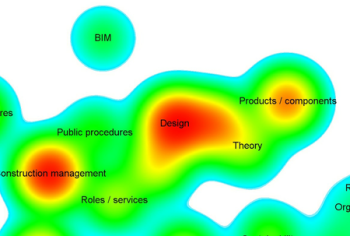
We are calling on the industry to help develop the site into a comprehensive source of BIM best practice by contributing new articles and engaging with the existing content.
You can write about any subject related to BIM, including research, publications, organisations, theories, news, products and practices. All we ask is that articles are factual (not adverts) and are encyclopaedic in style (not blog posts).

Designing Buildings includes 5 other special subject hubs. Created with our partners, they provide easy access to curated knowledge about particular aspects of the built environment:





About BIM
[edit] What is BIM?
Building Information Modelling (BIM) is a very broad term that describes the process for specifying, creating, and managing digital information about a built asset such as a building, bridge, highway or tunnel.
Fundamentally, the purpose of BIM is to ensure that appropriate information is created in a suitable format at the right time so that better decisions can be made throughout the design, construction and operation of built assets. It is not about creating a 3D model for its own sake, and it is not an add-on process. BIM is fundamental to the way a project is set up and run.

[edit] Why BIM is important
- Better coordination and fewer errors - By properly managing shared information in a common data environment (CDE), BIM reduces mismatches between design disciplines, issues can be identified earlier, and the risks of costly rework can be reduced.
- Cost and time savings - When projects are planned and managed digitally, there can be better logistical planning, coordination and clash detection, with better cost estimation and the overall programme tends to be more predictable and efficient. This helps in keeping budgets under control and reduces delays.
- Lifecycle / whole-life asset management - BIM supports managing a building over its entire life, giving asset managers more accurate and up-to-date information about components, facilities, materials, maintenance schedules, and so on. This helps reduce whole-life costs and improves performance.
- Sustainability and environmental performance - UK policy and regulation increasingly focus on reducing carbon emissions, improving energy efficiency, and optimising materials usage. BIM makes it easier to understand environmental impacts throughout the life cycle.
- Improved quality, transparency and accountability - Detailed digital records and “digital twins” improve transparency, making decisions easier and more traceable. This is particularly useful for regulatory compliance, safety and operational performance.
[edit] Challenges
While BIM is relatively mature in the UK, there are still challenges in adoption:
- Small- and medium-sized designers, contractors and subcontractors sometimes lack resources, training or tools to fully implement BIM workflows.
- There is still variation in how well BIM is used; having the mandate is one thing, achieving consistency, data quality and real integration is another.
- Interoperability of tools, data formats, and ensuring that the data produced early (in design and construction) is usable for later phases (maintenance, operations) can be difficult.
- Investment is needed in digital skills throughout the supply chain.
BIM Directory
[edit] Building Information Modelling (BIM)
[edit] Information Requirements
Employer's Information Requirements (EIR)
Organisational Information Requirements (OIR)
Asset Information Requirements (AIR)
[edit] Information Models
Project Information Model (PIM)
[edit] Collaborative Practices
Industry Foundation Classes (IFC)