





Environment

Contents |
[edit] Introduction
In its broadest sense, the term ‘environment’ refers to all of the things around us. These things can affect our comfort, wellbeing, performance, behaviour, growth and development. In turn, our behaviour can impact on the environment around us.
In a very general way, the environment can be considered to comprise:
- The natural environment.
- The built environment.
[edit] The natural environment
The term 'natural environment' refers to the non-human-made surroundings and conditions in which all living and non-living things exist. The common concept of the natural environment encompasses two different components:
- Ecological units that operate as natural systems (such as soil, vegetation and so on).
- Universal natural resources (such as air and water).
In this sense, the term ‘environmental’ has become synonymous with ‘sustainability’ describing a desire to carry out activities without depleting resources or having harmful impacts, defined by the Brundtland Commission as 'meeting the needs of the present without compromising the ability of future generations to meet their own needs.' (ref. Brundtland Commission, Our Common Future, 1987).
For more information see: Natural environment.
[edit] The built environment
The term ‘built environment’ refers to aspects of our surroundings that are built by humans. It includes not only buildings, but the human-made spaces between buildings, such as parks, and the infrastructure that supports human activity such as transportation networks, utilities networks, flood defences, telecommunications, and so on.
The built environment is increasingly developed in a way that considers both its resilience to and its impact on the natural environment.
For more information see: Built environment.
[edit] Personal environmental conditions
The way that individuals experience the environment around them comprises a number of different characteristics, including:
- The thermal environment (air temperature, radiant temperature, air velocity and humidity).
- The visual environment (colour, views, lighting levels, glare, visual information and so on).
- The acoustic environment (sound and noise).
- Air quality (pollution, smells and so on)
- Textures.
[edit] Other classifications
Other definitions of the environment include:
- Internal environment.
- External environment.
- Historic environment.
- Ecological environment.
- Macro environment.
[edit] Business definition
The term 'environment' may also be used to describe the conditions within which a business operates. This can include the internal environment within the business itself, and the external environment outside the business that affects its activities. Typically the external environment is broken down into a micro environment and a macro environment.
The term 'environment' is also used in relation to computer coding to describe the development environment.
[edit] Related articles on Designing Buildings
- Air quality.
- Built environment.
- External environment.
- Historic environment.
- Indoor environmental quality.
- Internal environment.
- Operating environment.
- Macro environment.
- Micro environment.
- Natural environment.
- Sustainability.
- Thermal comfort.
- Thermal environment.
- Wellbeing.
- Environmental impact assessments.
Featured articles
Check out some of the best features and news from Designing Buildings as well as key stories from around the web.
Changing expectations around competence and compliance

New information sheet from CIAT.
Grenfell investigation files passed to CPS

Angela Rayner apologises on behalf of the British state.

Electrical contractors need to understand the practical implications.

The real barrier to getting more value from digital technology.

Your guide to The Construction Reset at UKCW Birmingham.

Accommodating the Victorian and Edwardian working woman. Book review.
Rethinking passive fire protection in design
PFP demands the same level of design rigour as structure or services.

38% of Gen Zs feel safe when a fire door is wedged open.
Stunning images from around the world
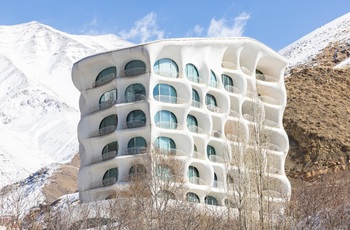
Shortlist for CIOB’s Art of Building photography competition.
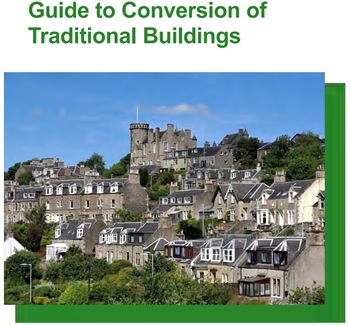
Guidance for conversion of traditional pre-1919 stone buildings.
Industrial heritage in the Ruhr
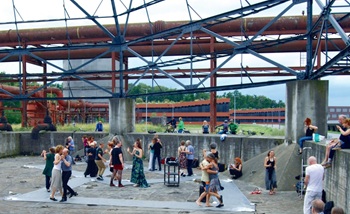
A marked difference to the fate of industrial landscapes in the UK.
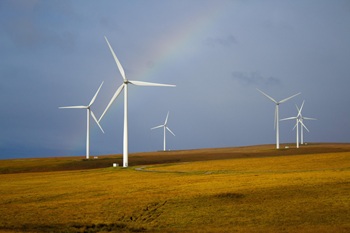
Communities will be able to build their own clean energy.