




Inclusive, values-based conservation to 2008
What matters and why, and to whom? Those questions, and the importance of being open to different views of heritage, were the focus of key figures in the world of conservation.

|
| Exeter High Street in around 1895. |
Contents |
Introduction
Any review of influential conservation thinkers cannot ignore major policy shifts shaped not just by individuals but collectively. The authors or contributors to public policy documents are rarely named, most do not publish or are constrained by public sector codes of conduct from doing so. But their influence has been significant.
This article draws on personal memories to identify some of the people involved in the shift towards a more inclusive, values-based approach that recognises conservation as not just a technical or an architectural design challenge, but a social process grounded in the complex values that people hold for their heritage. Individuals such as James Semple Kerr, Liz Forgan, Mike Coupe and Paul Drury were part of a much wider movement inside heritage institutions that emerged in the short decades of growth preceding the swingeing cuts of the noughties. That period fostered innovative thinking whose legacy can still be felt today, including the ‘people-based’ thinking of the (then) Heritage Lottery Fund.
Inclusive, values-based conservation
Inclusive, values-based conservation or thinking is a shorthand term for a group of trends in conservation thinking that are reflected in a series of documents such as the Burra Charter (1979), Conservation Issues in Strategic Plans (1993), Conservation Plans (1998 and 2002), Power of Place (2000), the Heritage Lottery Fund’s first two strategic plans, Capturing the Public Value of Heritage (2006) and the Conservation Principles (2008).
Taken together they mark a shift in conservation thinking that recognises conservation as both a social and a technical activity – one that requires the ability to read, respect and work with the fabric of landscapes, buildings and objects grounded in the original SPAB principles – but also recognises that conservation can never be a neutral, value-free activity. Instead, it requires the practitioner to understand and work with the multiple different values that people hold for their heritage.
Inclusive values-based thinking is not about experts imposing their values on others. Instead, the skill lies in reconciling multiple different values. These values often work against each other, creating tension in conservation decisions. This applies to everything from replacing a timber to accommodating housing growth in a city.
It is not about ranking values or ticking boxes. Instead, it is about uncovering the complexities of what matters, and why and to whom in any situation, and finding creative ways to reconcile conflicts between, for economic and cultural concepts of value.
Values-based conservation plays out today in critical conservation methodologies – land-use planning, heritage and environmental impact assessment, conservation or management planning, community engagement, and facilitation or evaluation. Each involves using an understanding of what matters, and why and to whom to inform about decisions, alongside grappling with technical issues and working within the context of the legislation. Understanding cultural values alongside economic value is also relevant to appraisal, business cases and funding applications for conservation activities, projects and organisations.
Origins
The roots of some of this work lie in London and Australia in the 1980s. James Semple Kerr, a former Qantas quality engineer, relocated to London with his wife Joan Kerr. In the evenings they studied with Nikolaus Pevsner at Birkbeck college, learning to ‘read’ buildings. Joan became an eminent art historian and Jim one of the earliest students on the fledgling York conservation course, writing a thesis on convict architecture. Returning to Australia, Jim joined the National Trust, which was benefitting from the sudden (and rare) injection of funding to the new Australian Heritage Commission, supported by the 1972 Whitlam Government.
At the same time, people such as Sharon Sullivan in the New South Wales parks and wildlife services were in the forefront of establishing protocols for cultural landscapes, heavily influenced by Indigenous perspectives on culture, heritage and landscape.
These themes of a contested history, a nascent Australian built heritage conservation discipline often working with very recent structures that might not even be seen as heritage in a European context, and the challenge that Indigenous cultural heritage philosophies and values brought to land and place management, came together in the Australian Burra Charter. First published in 1979, the charter was drafted by a group including Jim Kerr, Jane Lennon, Peter Watts, Josephine Flood, Peter Forrest and Richard Mulvaney. Concepts of value were not new in heritage conservation, but previous heritage charters had implicitly assumed shared common values. The Burra Charter challenged that assumption. It also grounded heritage thinking as a process flowing from understanding through values and current issues to setting policies for dealing with change.
As a new and different way of thinking about heritage conservation, Sharon Sullivan and others ensured that the Burra Charter was rolled out with an extensive education programme and resources, and a later initiative around natural heritage. Australian heritage agencies soon followed with other values-based guidance on local heritage, migrant heritage, social value, community mapping and engaging with communities. Sadly, the rapid expansion of resources under the Whitlam government was short-lived and that flurry of creative thinking was curtailed.
Values-based thinking in the UK
The (then) Heritage Lottery Fund was key to bringing that more inclusive, values-based thinking to the UK. Australian architect Susan Macdonald came to the UK, initially to work in Peter Inskip’s office before joining John Fidler’s team in English Heritage. Susan had been in the forefront of innovative thinking in the New South Wales Heritage Office in the 1990s and Peter was a trustee of the Heritage Lottery Fund.
Facing some complex decisions about major investments in heritage sites such as Whitby, Peter suggested that values-based conservation planning might both help the HLF make better decisions, and empower applicants to understand what was important, and think about the long-term care and management of the site. John Barnes, then of the English Heritage major projects team, asked for help because (as an industrial archaeologist) I was familiar with Jim Kerr’s work and thinking.
Under the visionary and inclusive chairmanship of Liz Forgan, the HLF was already challenging established approaches. Its origins in the National Heritage Memorial Fund meant that, unlike other established agencies, it was not confined to heritage silos, but could work across landscapes, collections, biodiversity and buildings, and movable heritage. It was already taking a people-based approach, recognising the need to support both technical conservation and heritage activities, and supporting a diverse range of groups and organisations through such projects as Young Roots or the work on public parks.
Judy Cligman commissioned the HLFs own guidance on Conservation Plans for Historic Places, published in 1998. Because it built on UK thinking, it was very different to Jim Kerr’s earlier guidance (1982). The HLF approach had strong roots in the UK tradition of landscape planning and management that was already well established by colleagues working with parks such as David Jacques and Jennifer White. In line with the HLF remit, it took an integrated approach to heritage conservation, recognising the need for a methodology that worked for anything from a single type of heritage such as a ship, to a place that might comprise a building, landscape, collection, biodiversity and more. In line with the inclusive, people-based approach of the HLF, it explicitly recognised that the value of a site went beyond the reasons for which it was designated, and it was important to understand all of the different ways that people cared about it in order to sustain and manage it.
The proceedings of the 1998 Oxford conference to launch the new guidance provides a snapshot of contemporary thinking about values in conservation. Leading UK architects, planners, archaeologists, landscape architects, architectural historians, countryside managers and surveyors spoke about their own thinking, openly debating the approach with a wider audience. Some were enthusiastic, some sceptical, but all had trenchant insights into the challenges of linking values and conservation.
Power of Place and its legacy
The incoming 1996 Labour government embarked on a series of reviews to look at the problems of poor neighbourhoods, including a report that examined the role of arts and museums in social inclusion. The DCMS and DETR wrote to English Heritage asking for a major review of policies for heritage. In response, English Heritage brought together over 100 heritage organisations to debate the future of heritage. This initiative went beyond thinking about the cultural values of heritage, to also engage with the economic and social benefits of caring for heritage.
Steered by Jeff West, Power of Place was also shaped by the link between heritage and sustainable development. The original idea of sustainable development linked environmental, economic and social values as a powerful new way of thinking but omitted cultural heritage. Two key figures (the planner Mike Coupe and archaeologist Graham Fairclough) had been instrumental throughout the 1990s in bringing cultural heritage into policy on sustainable development, working in partnership with English Nature and the Countryside Agency. This work built on the Civic Trust/Council for British Archaeology work on historic towns, the Arup/BDF work on modelling the capacity for change, and the thinking that Anna McPherson and others had been doing on conservation area appraisal, and historic landscape characterisation that came together into the Quality-of-Life Capital model, a precursor for today’s thinking about natural capital and environmental impact assessment. Mike had also been involved in the 1994 Nara document on authenticity.
Power of Place (2000), and the more conservative government response, A Force for the Future (2001), set a broader, more inclusive agenda for conservation that gave it a role in inclusion and diversity, in sustainability and the environment, and which recognised its economic value. More important, it connected heritage to other policy agendas.
The legacy of Power of Place can still be seen in long-running initiatives such as Heritage Counts, which gathers data on the historic environment and its economic, social and environmental benefits of heritage, drawing together data from the Heritage Tourism Monitor and information on buildings at risk. Susan Macdonald moved to the Getty Conservation Institute in Los Angeles, where she initiated the Values of Heritage Management work, bringing economists, anthropologists, archaeologists and heritage managers together. Paul Drury convened the initial working group that captured the move from monuments to people in heritage and set the foundations for what became the Faro Convention on the Value of Heritage to Society (2005), which recognises that a right to a cultural heritage brings with it a duty to respect that of others.
The legacy of Power of Place is also apparent in the Conservation Principles (2008) and English Heritage’s Constructive Conservation approach, championed by Simon Thurley. There had long been pressure for a UK heritage charter that captured some of this values-based thinking, and after several attempts the initiative was taken up by English Heritage, who commissioned Paul and Anna McPherson Drury. Their Conservation Principles provided a more open, transparent and inclusive decision-making framework that was not about selecting what to protect (designation) but more about structuring decisions about what is important. Mirroring the values-based conservation planning process, they talk about ‘places’ as a term for any part of the historic environment (including below the ground and under water). A more nuanced approach to values distinguishes those used in designation from the wider range of values that are relevant to day-to-day management. Such values embody the sustainable development principles in the sense of shaping and sustaining the historic environment today in a way that does not compromise the ability of future generations to do so in their own ways.
The HLF way
Meanwhile the HLF, with Forgan and Carole Souter at the helm, moved in its first (2001) and second (2008) Strategic Plans to a more inclusive approach, with funding for access and inclusion as well as conservation. The plans integrated values-based thinking into the application process, asking applicants to tell them what mattered.
Despite a growing body of social, economic and place-based evaluation, and impact research commissioned by environmental economist Gareth Maeer, the fund was struggling to articulate the wider value of that investment. In Challenge and Change, John Holden of Demos and Robert Hewison presented a group of measures that brought together the values-based thinking of Jim Kerr and the HLF guidance, with the sustainability work of Power of Place and Mark H. Moore’s thinking about how institutions created public value. This recognised that values such as trust, and accountability and ethical values, were as important in heritage institutions as other values.
The Capturing the Public Value of Heritage approach was launched at an event that heard from a diverse range of speakers, including members of the public who had taken part in citizens’ juries, community groups and local authority heritage champions as well as key thinkers.
Values-based thinking today
The post-2008 heritage world is more challenging as a reduced public sector struggles to deal with everyday casework, and with new challenges such as affordable housing and the resilience of heritage organisations. Nevertheless, the legacy of influential figures in heritage conservation in the 1990s and early 2000s lives on.
Conservation plans never were embraced by the (then) English Heritage, perhaps because they are more useful as day-to-day site management documents than in statutory case work, but the principles of heritage impact assessment were picked up in Judith Alfrey’s guidance on heritage impact assessment for Cadw. At a more strategic level, the work of Riki Therivel, Land Use Consultants (LAC) and CAG with English Heritage in the 1990s lives on in the methodology and thinking behind strategic environmental assessment.
Value and values are central to appraisal and business cases, but currently heritage is not recognised in accounting as a form of capital alongside financial, human or even natural capital. Harman Sagger and the team at DCMS are leading the Culture and Heritage Capital initiative and new thinking about how heritage assets and activities might deliver services that can be valued.
Meanwhile, central governments are looking at going beyond GDP to explore other ways of capturing value in public policy-making, particularly through ‘wellbeing’. This has emerged as an alternative to sustainability as an integrated policy-making framework through wellbeing frameworks in Wales, England and elsewhere. Perhaps because of the work of the HLF, the UK now leads the world in terms of research looking at the link between heritage and wellbeing. This year’s annual IHBC conference features a variety of emerging conservation thinkers who are exploring the links between heritage and wellbeing.
Whose story?
This account draws on personal memories of English Heritage and the Heritage Lottery Fund up to 2008, and a few of the people who most inspired me. Many others were part of the mix, encountered at early Association of Conservation Officers conferences or in the corridors of English Heritage in Savile Row.
Writing about recent history is never easy, and no two people will remember events or even the figures involved in those events in the same way.[1] There will be alternative views, and I hope others will tell their own stories.
Inclusive, values-based practice often starts with looking for untold stories that challenge our established views of what is important. In 1983, Roz Langford spoke at an Australia ICOMOS conference entitled ‘Your Playground, Our Heritage’, in which she asked non-Indigenous heritage practitioners to understand different perspectives on the past. In 1989 Noongar activists set up camp at the Old Swan Brewery in Perth. The derelict buildings were on the site of Gooninup, a place of great significance to the Whadjuk people of the Swan River plain. Despite years of protest, and police violence, the building was eventually redeveloped as a cafe, restaurant, function centre and apartments. What may have been acceptable to one set of heritage interests was unacceptable to others. A Perth brewery may seem a long way from heritage conservation in the UK today, but Australian practitioners learned that heritage conservation is not, and never can be, a value-free exercise.
In a world where cultural heritage was one of the first terms to be banned by an incoming US administration, being open to different views of heritage – without losing sight of our core technical and design thinking – is more important than ever.
References:
- [1] A more detailed history of these policies can be found in three journal articles on Power of Place (2019), and the lessons from conservation planning (2023), and integrating nature and culture in the 1990s (2025). All were based on a paper archive documenting heritage policy in the UK and Australia from the late 1980s to 2008, containing many more untold stories.
This article originally appeared in the Institute of Historic Building Conservation’s (IHBC’s) Context 184, published in June 2025. It was written by Kate Clark, an industrial archaeologist, with a career in heritage and museums in Wales, England and Australia. She has a special interest in inclusive, values-based approaches to heritage and is currently writing a dissertation on integrating heritage into wider public policy.
--Institute of Historic Building Conservation
Related articles on Designing Buildings Conservation.
- Conservation area.
- Conservation.
- Heritage value.
- Heritage.
- Historic environment.
- IHBC articles.
- IHBC.
- Nikolaus Pevsner.
- The Value of Heritage report APPG CPP 2022.
- Value transitions between heritage and nature.
- Values in Heritage Management: Emerging approaches and research directions.
- Who do heritage values belong to?
IHBC NewsBlog
IHBC sponsors Gardens Trust event 23-4 Sept 2026
.jpeg)
'Learning from the Past, Shaping the Future’ takes place in Milton Keynes
Renovations to Frank Lloyd Wright's Fallingwater complete
.jpg)
World Heritage Preserved project opens house for tours again
Shakespeare Birthplace Trust places Hall's Croft on HAR Register
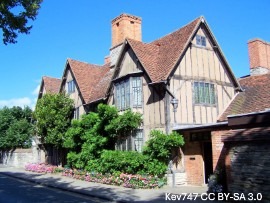
Stratford-upon-Avon home of Shakespeare's daughter is 'At Risk'
Lady Grange’s House repaired on St Kilda
.jpg)
National Trust for Scotland repairs stone cleit with link to famous island resident
Griff Rhys Jones on BBC Radio 4 Today programme
,_Green_Lane,_Derby.jpg)
The Victorian Society’s President unveiled its latest Top Ten Endangered Buildings 2026.
Need a MATE? Book your place now.
IHBC offers free webinars on applying for IHBC accreditation (Full & Associate).
UK Stained Glass Repository finds windows new homes
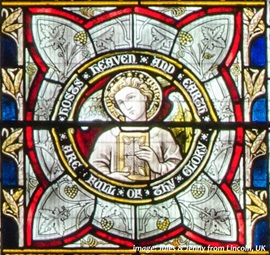
How are stained glass windows are rescued, stored and repurposed?
APPGEBE report sets high aims for quality
'Government must not sacrifice quality in drive to build 1.5m homes'
New measures protect Historic Shipwrecks from heritage crime

Underwater cultural heritage benefits from new HE guidance
How could the City of London skyline look in 6 years' time?

Visualisation shows approved planning applications as completed buildings
National Trust for Scotland calls for VAT cuts
Heritage neglect is encouraged by current policies
IHBC's 'Context' Issue 186 features Industrial Heritage
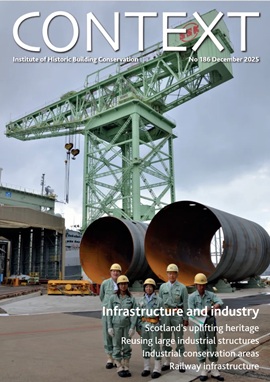
IHBC's members' journal reports on the challenges of conserving infrastructure
Book now for IHBC Annual School 2026
IHBC Annual School is taking place 18-20 June 2026 in Newcastle
RICHeS Research Infrastructure offers ‘Full Access Fund Call’
RICHeS offers a ‘Help’ webinar on 11 March
Latest IHBC Issue of Context features Roofing
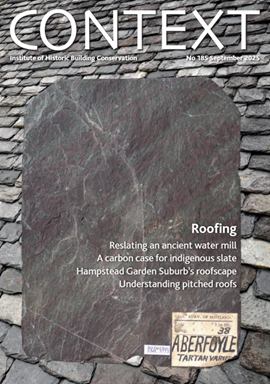
Articles range from slate to pitched roofs, and carbon impact to solar generation to roofscapes
Three reasons not to demolish Edinburgh’s Argyle House

Should 'Edinburgh's ugliest building' be saved?
IHBC’s 2025 Parliamentary Briefing...from Crafts in Crisis to Rubbish Retrofit
IHBC launches research-led ‘5 Commitments to Help Heritage Skills in Conservation’
How RDSAP 10.2 impacts EPC assessments in traditional buildings

Energy performance certificates (EPCs) tell us how energy efficient our buildings are, but the way these certificates are generated has changed.