






Streamline House
In 2016, the winner of the Alan King Award for Excellence in Architectural Technology was Streamline House. Brian Davies MCIAT and Mark Davies MCIAT of Arc Design look back at the project.

The client’s existing house was a thermally efficient 2000 standard timber frame dormer bungalow. The clients wanted planning permission to sub-divide their 1.1-acre site and construct a new modern ‘A’-rated house for themselves. Once planning permission had been granted, they would sell their existing house to finance the new build project.
Fortunately, the site was relatively level, however the intended location of the new house was very close to a fast-flowing stream with banking along the eastern boundary, which we took advantage of within our building design.

The brief was to design a unique modern art deco-influenced house as a retirement home. The house with its subtle curves takes advantage of the natural curvature of the stream whilst incorporating the soft sound of water rushing underneath the overhanging balcony, with a view towards an existing secret garden.
The internal ground floor accommodation includes a large open plan living/dining/kitchen space, utility room, separate lounge room and a spectacular curved staircase leading to the first floor. The first floor comprises of a master suite with access to the balcony overlooking the stream, three additional bedrooms, one with en suite and a family bathroom. It was important for our clients to have a uniquely designed house with an energy efficient building fabric and a renewable heating system giving low annual running costs.
As the design team, we evaluated the best approach to construct the building, which incorporated external curves with large areas of glazing, internal open plan layouts and cantilevered balconies. We decided to use an insulated concrete formwork (ICF) walling system, connected to reinforced concrete floors, balconies and curved feature staircase. All floors, balconies and staircase are finished in polished Italian marble. A full heat recovery system was concealed within the ceilings and connected to a heat exchanger unit.
It was essential for the house to achieve sustainable performance along with a comfortable all year round living environment. ICF construction provides a high level of thermal insulation and air tightness (air permeability rating resulting in excellent low annual energy running costs), by combining CFC/HCFC free insulation and concrete thermal mass, minimises temperature fluctuations by absorbing and storing heat. The complete building envelope is thermally designed to approximately 25% above the minimum Irish Building Regulation Standards.
The monolithic concrete building construction was designed to be extremely resilient to flood damage, and incorporated low maintenance components and finishes. Triple glazed AluClad windows and door units were fitted. The house is fitted with a sophisticated Mechanical Heat Recovery Ventilation System (MVHR) supplying fresh air to all habitable rooms. A sustainable electric solution for the heating and hot water was provided to work alongside the MVHR. A water source heat pump was located in the stream providing heat energy to the house all year round.

The hot water and under floor heating was provided via a water source heat pump with an open loop system using stream water which passes into an underground concrete holding tank to raise the temperature of water to the required minimum of eight degrees. Stream water enters the heat pump through the heat exchanger; the heat is removed and disbursed throughout the house through under floor heating pipes. The used water is then dumped back into the stream without any contamination, making the system environmentally friendly.
ICF walling system is seen to be the most user friendly, due to its innovative design, which increases speed of construction, reduces labour costs and provides the highest level of performance during and after construction. Purity of the external design was paramount so exposed external rainwater downpipes were eliminated. Drainage from the balconies were concealed within the vertical hollow structural steel supports.
The local stream water temperature was deemed ideal for using the water source heat pump providing sustainable efficient hot water and heating throughout the year. We incorporated the Amvic ICF system, awarded an A+ by the BRE under its Green Guide to Specification assessment scheme. The A+ demonstrated that the ICF system was one of the most environmental friendly and sustainable ways to build. A sustainable wood burning appliance was incorporated into the formal lounge and relaxation area.
The site is level and the building is fully accessible and compliant under the Irish Building Regulations. The external cantilevered balconies incorporate an adjustable raised pedestal system allowing occupants level access from the building interior.
This article was originally published in AT ed. 122.
--CIAT
[edit] Related articles on Designing Buildings Wiki
Featured articles
Check out some of the best features and news from Designing Buildings as well as key stories from around the web.
New and updated CLC building safety guidance.
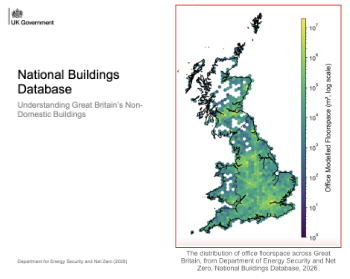
New UK National Buildings Database.
Building Safety Wiki Interviews

Chief executive of the British Woodworking Federation.
Planning condition discharge in England and Wales

A brief explanation from a building compliance expert, with further links.
Overheating guidance and tools for building designers

Guidance for dealing with element of building fabric control that have increasing importance.
Shading for housing, a design guide

From the Good Homes Alliance and British Blind and Shutter Association.
UK Standard Skills Classification (SSC)

A shared framework for describing skills needs.
Social media ban consultation comes to close

CIOB urges UK Government to consider social media’s role in careers guidance in ban debate.
The latest of eight Skills England apprenticeship units

The addition of battery manufacturing welcomed by ECA with a warning about the risks of fast-tracked apprenticeship units.
Building Control Independent Panel final report
A precis of a key report led by Dame Hackitt with full recommendations and link to the government response.
Building Safety recap April, 2026
A short and longer run-through of the month, with links to further information and sources.