





The roofscape of Hampstead Garden Suburb
With the distinctive roofs being such an important part of the garden suburb’s historic character, residents, architects and roofers need to understand their detailing.

|
| The roofscape of Hampstead Garden Suburb (Photo by Hampstead Garden Suburb Trust) |
The roofscape of Hampstead Garden Suburb in north-west London is one of its most striking features. On most streets of this conservation area, low sweeping roofs made with pleasingly irregular tiles give a consistency to houses that are otherwise architecturally varied. The former editor of Country Life, Christopher Hussey, spoke evocatively of the ‘luxuriance and variety of roofs… an unending source of interest’ in the neighbourhood. At the Hampstead Garden Suburb Trust, which oversees the area, we have been developing a Roofing Guidance that emphasises their importance while advising residents on their repair and renewal.
Begun in 1907, Hampstead Garden Suburb is one of the most significant examples of the early-twentieth-century garden suburb movement. Like the garden cities of Letchworth and Welwyn, it developed under the influence of arts and crafts architects reacting against the architecture of industrialised Britain. The influx of hard, shiny, machine-pressed tiles on the roofs of identical terraced houses across the country was thought to diminish local character and the traditional roofing crafts, and architects like Raymond Unwin, the master planner of the early Hampstead Garden Suburb, wished to rescue both. In his development, traditional handmade, sand-faced clay tiles were almost always used, to evoke the villages of the south of England. His associate Barry Parker spoke of these tiles’ ability to mellow ‘into all sorts of lovely shades’, and this patina of age we enjoy today.
The actual form of the suburb roofs designed by Unwin and his office before the first world war can be complex. They are characterised by emphatic sprockets, stone or tile-creased kneelers, upward tilts at the end of the ridge line, open eaves and tiled undercloaks. These details have mostly evolved as weathering devices across centuries of British roofing craftsmanship, but over time they have also acquired a satisfying appearance. Unwin was aware of this dual purpose – arguably more pronounced today, in the face of ever more modern methods of construction.
Our Roofing Guidance explains the vision held by the original architects of the suburb in giving roofs such emphasis. It then runs through the above details and more across the document. Ridges, hips, eaves, gables, kneelers and verges are all covered. The guide will give more confidence to residents in asking their contractor about the detail of the work they will undertake. Any resident, or indeed their architect or roofer, should be able to understand the detailing of their roof based on the guide, and see what needs to be retained in subsequent building work.
The guide is part of a set of design guidance documents published by the trust, whose charitable aim is to ‘maintain and preserve the present character and amenities’ of the suburb. The trust’s architectural team provides technical advice and oversees an approvals system for building development that is independent to the local authority. This form of planning control is underpinned by a scheme of management, a legal document containing restrictive covenants which apply to all enfranchised freehold properties in the area. Residents require the prior written consent of the trust to carry out repair or renewal work, even if this is ‘like for like’.
The guide draws on the experience of the trust’s architectural team, not only through our knowledge of the area, but also our ongoing site work at individual properties, meeting residents and roofers. Unsympathetic materials, for example, where the tiles are flat or too bright, can be an issue, even in the cases of small-scale ‘piecing in’. By meeting the owners on site at short notice, we are often able to agree replacement tiles to the same form and colour within a short space of time, returning the house to its original appearance. Where plastic roof vents are installed, we negotiate their removal and replacement with heritage alternatives that integrate real clay tiles, such as hidden tile vents.
Some roofing features can be tricky to detail. Traditional tiled undercloaks are sometimes replaced with thin cement boards (or not replaced at all), which detracts from the character of the verge and will generally have to be remediated using the original treatment. Where sprockets are not faithfully recreated when a roof is overhauled, they can result in a flat or even ‘droopy’ appearance, so understanding this detail is critical. Cut valleys replacing valley tiles, or laced valleys, will generally not be accepted and will have to go back to the original detail. Chimney stacks are a major feature of houses and the overall suburb roofscape, and the trust is keen for these to stay. While the trust can only control external alterations to freehold properties in the area, we ask for engineering details for chimney stack support where the underlying chimney breast is being removed, to show it will be retained.
As the suburb continued development after the first world war, fashions diversified from Unwin’s initial arts and crafts focus to a variety of interwar styles, among them art deco and Georgian revival. Generally, the same handmade tiles were used but the roof forms became simpler, with the vernacular assortment of gables, valleys and ridges being replaced with comparatively sober hipped or pitched roofs. In the 1930s, a handful of properties were roofed with eye-catching green glazed pantiles and some were even given modernist flat-roofed decks. At the trust we give equal conservation emphasis to the early and later phases of the suburb’s development.
The suburb is generally affluent and there are consistent pressures to alter properties. For this reason, it is important that the trust continues to publish guidance on various aspects of the area’s architecture, while providing advice for proposed designs and building work both in the office and on site. In June, my colleague Calum Orr and I delivered a walking tour for suburb residents promoting the upcoming guide. Many attending the tour told us they found themselves looking at buildings in a different way. I am still struck by the new details and views I encounter every time I walk through the area, where roofs are such a big part of its historic character.
This article originally appeared in the Institute of Historic Building Conservation’s (IHBC’s) Context 184, published in September 2025. It was written by Joe Mathieson, architectural adviser to the Hampstead Garden Suburb Trust.
--Institute of Historic Building Conservation
Related articles on Designing Buildings Conservation.
- A code of practice for slate and stone roofing.
- Conical roof slating.
- Conservation area.
- Conservation.
- Heritage.
- Historic environment.
- IHBC articles.
- IHBC.
- Photovoltaics.
- Reslating an ancient water mill.
- Roofing.
- Slate.
- Solar panels.
- Sourcing Scottish slate in the 21st century.
- Stone.
- Successful solar generation in the historic environment.
- Tiles.
- Types of roof.
- Understanding pitched roofs.
IHBC NewsBlog
IHBC sponsors Gardens Trust event 23-4 Sept 2026
.jpeg)
'Learning from the Past, Shaping the Future’ takes place in Milton Keynes
Renovations to Frank Lloyd Wright's Fallingwater complete
.jpg)
World Heritage Preserved project opens house for tours again
Shakespeare Birthplace Trust places Hall's Croft on HAR Register
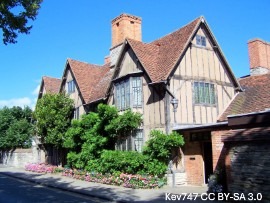
Stratford-upon-Avon home of Shakespeare's daughter is 'At Risk'
Lady Grange’s House repaired on St Kilda
.jpg)
National Trust for Scotland repairs stone cleit with link to famous island resident
Griff Rhys Jones on BBC Radio 4 Today programme
,_Green_Lane,_Derby.jpg)
The Victorian Society’s President unveiled its latest Top Ten Endangered Buildings 2026.
Need a MATE? Book your place now.

IHBC offers free webinars on applying for IHBC accreditation (Full & Associate).
UK Stained Glass Repository finds windows new homes
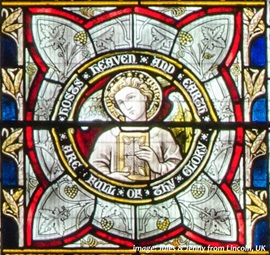
How are stained glass windows are rescued, stored and repurposed?
APPGEBE report sets high aims for quality
'Government must not sacrifice quality in drive to build 1.5m homes'
New measures protect Historic Shipwrecks from heritage crime

Underwater cultural heritage benefits from new HE guidance
How could the City of London skyline look in 6 years' time?

Visualisation shows approved planning applications as completed buildings
National Trust for Scotland calls for VAT cuts
Heritage neglect is encouraged by current policies
IHBC's 'Context' Issue 186 features Industrial Heritage

IHBC's members' journal reports on the challenges of conserving infrastructure
Book now for IHBC Annual School 2026

IHBC Annual School is taking place 18-20 June 2026 in Newcastle
RICHeS Research Infrastructure offers ‘Full Access Fund Call’

RICHeS offers a ‘Help’ webinar on 11 March
Latest IHBC Issue of Context features Roofing
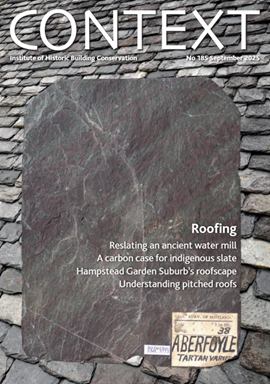
Articles range from slate to pitched roofs, and carbon impact to solar generation to roofscapes
Three reasons not to demolish Edinburgh’s Argyle House

Should 'Edinburgh's ugliest building' be saved?
IHBC’s 2025 Parliamentary Briefing...from Crafts in Crisis to Rubbish Retrofit
IHBC launches research-led ‘5 Commitments to Help Heritage Skills in Conservation’
How RDSAP 10.2 impacts EPC assessments in traditional buildings

Energy performance certificates (EPCs) tell us how energy efficient our buildings are, but the way these certificates are generated has changed.
Comments
Interesting read, especially the way roof design shapes the character of a whole neighbourhood. It’s a good reminder that details like drainage and gutter placement matter just as much as the roofline itself.