




Ankita Dwivedi Architect, CEO and Co-founder of Firstplanit

[edit] Introducing Ankita Dwivedi, our guest editor
Ankita Dwivedi is the CEO and co-founder of Firstplanit, an intelligent planning tool designed to simplify product decisions for rapid decarbonisation, health, resource efficiency, and future proofing, working to transform the construction industry.
Having led architecture and design teams for top Fortune 100 firm projects across the globe for 20 years, Ankita left business as usual to set up Firstplanit. It offers patented technology that takes the mystery out of selecting green building products aligned with multiple sustainability goals quickly and easily in a single workflow.
We met at a few key events, caught up on messaging, and managed a brief chat in her hectic timetable between running her start-up that researches, interrogates, and innovates to understand and share how materials and products used in the built environment impact the environment, businesses, communities, and individuals. making key data sets more easily accessible and assessable for all parties involved in the design and construction of buildings.
She has a drive to reduce the impact of our industry, a passion for biomimicry, a maturing business head, and a will to not only share knowledge but to facilitate its useful application with an awareness that it has to reach millions of people in a short space of time.
[edit] Why have you chosen these particular news articles for this week's features?
There were some features published recently in the newsletter that caught my eye and some I came across, as well as a few items from the web. I've also added one item from our own Firstplanit weekly dig deep newsletter, which we send to our subscribers to keep up to date with material knowledge and events.
[edit] Types of work to existing buildings - repurposing of buildings
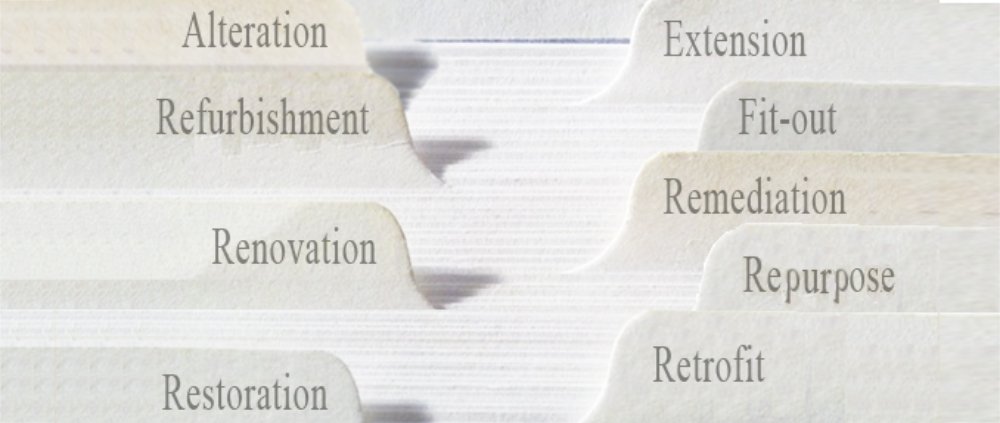
We often forget that buildings outlive those that design and commission them. Buildings also outlive their initial purpose. Repurposing is increasingly critical as our socio-economic and environmental landscapes evolve. This article ties into key industry goals such as carbon reduction and resource efficiency, illustrating the challenges and examples of adapting buildings over time.
[edit]
This article, discussing air quality in 2023, addresses the complex relationship between indoor and outdoor air quality in building design. It's about the paradox of trapping indoor pollutants while trying to shield ourselves from outdoor pollution. Ventilation, an often overlooked aspect, is crucial for balancing energy efficiency with the need for good indoor air quality. This piece highlights the need for a collective approach to ventilation, moving it beyond a local, localised issue.
[edit] Nature and buildings
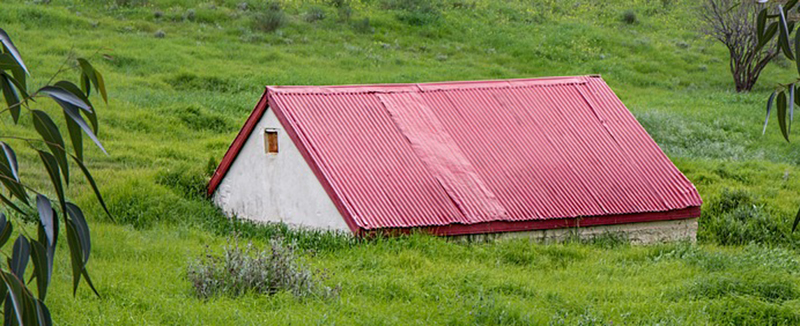
I'm deeply fascinated by biomimicry and this covers many variations on this theme. It's intriguing to see how nature and its systems can inform design, not only in architecture and construction but also in fields like artificial intelligence, surgery, and aeronautics. While we've yet to fully unlock nature's secrets, there's immense potential in studying them more closely. This approach can lead us to more sustainable practices in consumption, management, and resource sharing.
[edit] The Biomimicry Institute newsroom

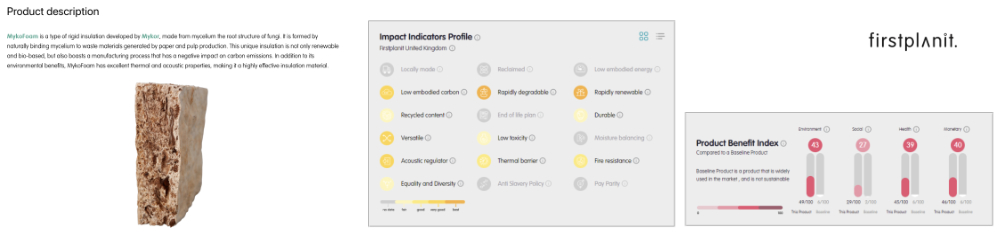
[edit] Firstplanit Evaluation of MykoFoam: The carbon negative mushroom insulation
MykoFoam is a type of rigid insulation developed by Mykor, made from mycelium the root structure of fungi. It is formed by naturally binding mycelium to waste materials generated by paper and pulp production. This unique insulation is not only renewable and bio-based, but also boasts a manufacturing process that has a negative impact on carbon emissions. In addition to its environmental benefits, MykoFoam has excellent thermal and acoustic properties, making it a highly effective insulation material.
[edit] Firstplanit, November 29 - Shaping the Future of Global Climate Action, COP28.
Well, just because it is on our doorstep and started yesterday !

[edit] Tell us a little about your background, activities, and interest in buildings.
[edit] Practice
For two decades, I worked as a designer, architect, project leader, and sustainability advocate. I delved deeply into research, constantly questioning and innovating to grasp the full impact of the built environment on our environment, businesses, communities, and individuals. There's a wealth of knowledge in this field, yet the real challenge lies in applying it effectively and swiftly to reach millions.
[edit] Research
In 2018, I stepped away from the usual business path to establish FirstPlanit, a digital platform that is dedicated to tackling climate change from the ground up. My aim was to accelerate incremental change at a high volume and speed, offering an alternative to the typical slower governmental top-down approach. Instead of advocating for change, I chose to take direct action, aligning with a community committed to making a difference.
[edit] Start-up
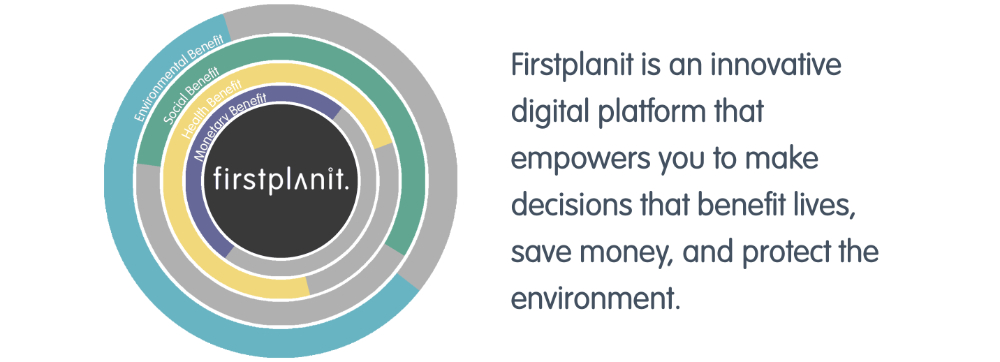
Firstplanit offers patented technology that takes the mystery out of selecting green building products aligned with multiple sustainability goals quickly and easily in a single workflow. We are a group of researchers, architects, engineers, and coders who are working to transform the construction industry by breaking down its walls and helping it embrace change.
[edit] Do you think there are specific areas of knowledge that are lacking across the industry?
[edit] Simplifying the complexity of climate change
There's a shortage of professionals who can distil the complexities of climate change into clear, actionable steps for sustainable and regenerative building practices. Sustainability is a broad and ever-evolving field, brimming with new research and legislation. Many, including myself, get deeply involved in data and numbers, which can be overwhelming for those in charge of designing and commissioning buildings.
Sustainability experts often find themselves outside of capital allocation decisions. Their challenge is to quickly and effectively communicate the benefits of green design, efficiency improvements, and carbon reduction to those who manage funds. The issue isn't a lack of knowledge; it's about translating that knowledge into understandable and actionable guidance.
[edit] Firstplanit in brief
At Firstplanit, we're addressing this challenge in the specific, yet complex, realm of material and product selection. There are numerous opportunities to streamline complex processes in the construction industry, and we're seeing a growing number of innovative startups rising to meet this challenge.
[edit] Is there value in sharing knowledge across disciplines and institutions?
Absolutely, breaking out of our silos is essential. While silos can foster deep expertise, they often lead to echo chambers, disconnected from reality and hindering the very changes they aim to achieve.
[edit] What do you think are the main barriers to sharing and applying knowledge?
In construction, projects pass through many hands, each with different skills and backgrounds. This diversity means there's no unified voice or goal representing all stakeholders, making widespread buy-in crucial for change.
Designers, academics, policymakers, and developers must rapidly learn from one another to effectively support the industry's transition. The construction industry, a 14 trillion dollar sector with one of the largest workforces, is lagging in digitisation and is among the most polluting industries. The main obstacles to progress are short-term ROI focus, compartmentalisation of knowledge, and slow adoption of new skills.
[edit] How did you first discover Designing Buildings?
I discovered Designing Buildings years ago, attracted by its wealth of useful articles on construction and the fact that it was and still is freely accessible. The construction industry often hoards its knowledge within a small circle, so finding accessible, bite-sized write-ups was a refreshing change. They're well-suited for anyone curious about the field, regardless of their background.
[edit] Do you have an account? Have you ever posted an article, and if not, what stops you?
While I don’t have a personal account, I'm subscribed to the newsletter. I haven’t contributed any articles yet, but I plan to encourage my Firstplanit team to share our findings. We're continuously researching and analysing the environmental, social, health, and economic impacts of building decisions, and DB could be a great platform to disseminate this information.
I would have signed up sooner if I'd known about it earlier, which suggests that more effort could be made to raise awareness about this resource. Additionally, I appreciate simplicity in design, so streamlining the main page to reduce clutter would help highlight the excellent content available.
[edit] Do you have any favourite themes relating to buildings that spring to mind?
[edit] Biomimicry
I'm deeply fascinated by biomimicry. It's intriguing to see how nature and its systems can inform design, not only in architecture and construction but also in fields like artificial intelligence, surgery, and aeronautics. While we've yet to fully unlock nature's secrets, there's immense potential in studying them more closely. This approach can lead us to more sustainable practices in consumption, management, and resource sharing.
[edit] Regionally specific, low-tech vernacular architecture
In addition to biomimicry, I'm increasingly attracted to low-tech, simple, vernacular architectures and building methods specific to regions and localities. These approaches offer rich insights derived from creative problem-solving with limited means. They encourage the optimal use of local resources, resulting in designs that are more aligned with cultural values, community needs, and sustainable living. This kind of problem-solving, which relies less on globally sourced, high-tech solutions and more on local ingenuity, tends to be more thoughtful and resilient.
[edit] Would you like to nominate someone for the guest editor slot?
I would like to nominate Brian Murphy, a renowned expert in green specifications.
[edit] Related articles on Designing Buildings
- Biomimicry
- Biomimicry in Architecture - review.
- Biodiversity
- Biogenic carbon.
- Biologic carbon sequestration.
- Biomass.
- Carbon cycle.
- Nature and buildings
- Natural materials
- Obsolescence.
- Planned obsolescence.
- Circular Construction in Regenerative Cities (CIRCuIT).
- Circular economy.
- Design life.
- Earth overshoot day.
- Ecological impact assessment.
- Economic sustainability.
- Life.
- Product-life extension: product-life factor.
- Reduce, reuse, recycle.
- Regenerative design.
- Sustainable materials.
- Sustainable procurement.
- The sustainability of construction works.
- Types of rapidly renewable content.
[edit] External links
Featured articles
Check out some of the best features and news from Designing Buildings as well as key stories from around the web.

Government approach could undermine delivery and regeneration.
World's first mass timber data centre.

The overlooked environmental aspect of data centre development.
Introduction to radon awareness

New technical information sheet published by CIOB.

Updated supplier guide can help electrical contractors engage with NHP.

CIAT confirm the winners of the 2026 architectural technology awards.

Government launches a one stop shop for flood preparedness.

Sir Edwin Lutyens: Britain's greatest architect? Book review.

CIOB publishes free template to help assess and manage risks.
ECA's reflections on Party Conference season

Burnham wants to be confident of winning before asking for a fresh mandate.
New Chief Construction and Scientific Adviser

Sergio Cavalaro, Professor of Infrastructure Systems at Loughborough University.
Building safety levy for England

CIAT publish estimator tool for members.

Water sector faces a growing crisis that could slow the delivery of vital infrastructure.