





Building services

Contents |
[edit] What are building services?
Building services are the systems installed in buildings to make them comfortable, functional, efficient and safe.
Building services might include:
- Building control systems.
- Energy distribution.
- Energy supply (gas, electricity and renewable sources such as solar, wind, geothermal and biomass).
- Escalators and lifts.
- Facade engineering (such as building shading).
- Fire safety, detection and protection.
- Heating, ventilation and air conditioning (HVAC).
- Information and communications technology (ICT).
- Lighting.
- Lightning protection.
- Refrigeration.
- Security and alarm systems.
- Water, drainage and plumbing.
Specialist building services might also include systems for bacteria and humidity control, specialist lighting and security, emergency power, specialist gas distribution, fume cupboards, operating theatres, and so on.
NB BG 87/2024, Useful Information Guide, written by Chin Hang “Kay” Lam and published by BSRIA in 2024, defines building services as: ‘A collective term for the systems required for the safe, comfortable and efficient operation of the built environment. This includes energy supply and distribution, heating, air-conditioning, ventilation, refrigeration, lighting, lifts, escalators, IT networks, security, alarms, fire detection and fire protection.’
For more information, see Types of building services.
[edit] What does building services design involve?
Building services play a central role in contributing to the design of a building, not only in terms of overall strategies and standards to be achieved, but also in façade engineering, the weights, sizes and location of major plant and equipment, the position of vertical service risers, routes for the distribution of horizontal services, drainage, energy sources, sustainability, and so on.
This means that building services design must be integrated into the overall building design from a very early stage in the design process, particularly on complex building projects such as hospitals.
The detection of clashes between building services and other building components is a significant cause of delays and variations on site, not just in terms of the physical services themselves, but also access to allow the builders work in connection with those services. The use of 3D computer aided design (CAD) systems and building information modelling (BIM) should help reduce the occurrence of such problems.
For more information see: Concept services design and Detailed services design.
[edit] Building services engineers
Increasingly, building services engineers are central to the design and assessment of sustainable systems, assessing the life cycle of buildings and their component services to minimise the resources consumed and the impact on the environment during fabrication, construction, operation and dismantling.
Whilst it is usual for a building design team to be led by an architect, on buildings with very complex building services requirements a building services engineer might be appointed as the lead designer.
Building services engineers can obtain qualifications and training from industry bodies such as BSRIA and CIBSE.
For more information see: Building services engineer.
[edit] Regulation of building services
According to The Chartered Institute of Building Services Engineers (CIBSE): 'In any new construction project, building services typically account for 30-40% of the total cost.' (Ref. CIBSE fact sheet) and buildings account for almost 50% of carbon emissions (Ref. CIBSE).
As a consequence, many aspects of building services design are regulated (the building regulations, the energy related products regulations, and so on), and clients may impose their own standards on top of these regulations or seek certification under schemes such the Building Research Establishment’s (BRE) Environmental Assessment Method (BREEAM).
Ensuring that building services meet the standards set can involve the use of sophisticated simulation tools to predict the likely performance of buildings during the design stages (including the assessment and comparison of different options), as well as monitoring actual performance in use.
For more information see: Building regulations and BREEAM.
[edit] What is the performance gap?
Clients and designers are becoming increasingly aware of a disparity between the predicted and actual performance of buildings, with many buildings using considerably more energy than had been expected (up to 5 times as much according to the Carbon Trust‘s Low Carbon Buildings Accelerator and the Low Carbon Buildings Programme).
This may be as a result of the following:
- A lack of proper understanding of building design and the interaction between components.
- Poor prediction tools.
- Inadequate detailing.
- Discrepancies between specifications and actual construction.
- Poor build quality.
- The use of idealised performance data for products.
- Improper user behaviour or operation.
- Unexpected power loads (such as additional ICT equipment, external lighting, and so on).
The collection of more data to feedback information about performance in use will be necessary to rectify this problem.
For more information see: Performance gap.
[edit] Related articles on Designing Buildings
- Air conditioning.
- BSRIA blue book.
- Building Automation and Control System BACS.
- Building engineering services.
- Building management systems.
- Building Services Analytics - BG 75 2018.
- Building services and health risk resilient buildings.
- Building services compliance with the building regulations.
- Building services engineer.
- Building engineering services.
- CIBSE.
- Concept services design.
- Cooling systems for buildings.
- Detailed services design.
- Domestic building services compliance guide.
- Electrical control systems.
- Heating.
- HVAC.
- Lightning protection system.
- Mechanical and electrical.
- Mechanical, electrical and plumbing MEP.
- Mechanical ventilation.
- Model Format for Building Services Specifications BG56 2016.
- Non-domestic building services compliance guide.
- Performance gap.
- Pipework.
- Plant room.
- Plumbing.
- Rules of Thumb - Guidelines for building services.
- Thermal comfort.
- Types of building services.
- Utilities.
Featured articles
Check out some of the best features and news from Designing Buildings as well as key stories from around the web.
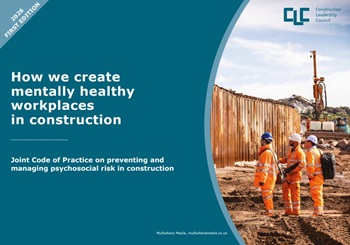
CLC publishes Mental Health Joint Code of Practice.
A quick introduction to its uses and risks.
Construction Management, 17 June

Government rolls out digital planning tool to all local authorities.

Your views needed - a strategy for the professions, trades and occupations.

Confronting competency, codes, capacity and costs.
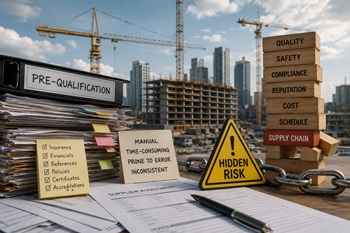
The hidden risk in modern construction supply chains.
Construction Management, 10 June

24 months to 14: CITB launches accelerated apprenticeships.
Bridging the gap between clients and contractors
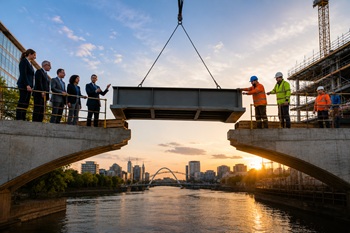
Concerns remain around contractor quality, capability, and delivery.
Construction Management, 10 June.
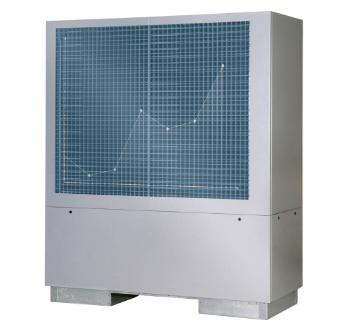
Heat pumps beat boilers in new home tests.
Building Safety Act implementation in Wales
CIAT to host industry panel on 26 June.

New and updated CLC building safety guidance.
Comments
[edit] To make a comment about this article, click 'Add a comment' above. Separate your comments from any existing comments by inserting a horizontal line.
May I know what are the 5 different types of the computing simulation of building services installations with detailed illustration of its purpose and advantages?