






Are new towns the future or the past? The role of land assembly in reawakening a vision

Contents |
[edit] Reviving the new town vision
The concept of building new towns once epitomised a transformative approach to addressing housing and infrastructure challenges in Britain. From early developments, such as Letchworth Garden City, to post-war projects like Milton Keynes, these planned communities provided innovative solutions to overcrowding and economic stagnation. Yet momentum appeared to stall in the 21st Century, raising questions about their relevance today. Can the vision of new towns be revived – as the current Government hopes – or has land assembly become too complex to manage?
[edit] Greenfield vs. brownfield
A major challenge in reimagining new towns lies in land assembly, which is politically contentious and costly. Greenfield sites offer a blank slate, but even considering recent relaxations of Green Belt policy (not least the introduction of the ‘grey belt’ into planning policy), its restrictions pose a major challenge. Meanwhile, brownfield sites, although aligned with sustainability goals, come with significant hurdles, including remediation costs and fragmented ownership. The new government must navigate these competing dynamics to reignite large-scale new town projects.
[edit] Greenfield land assembly challenges
Farmers’ reluctance to sell land poses a significant roadblock for greenfield development. For many, land represents their livelihood and wealth. Recent tax reforms, such as higher capital gains and inheritance taxes, make selling even less attractive. Farmers often face a substantial tax burden when selling land for development, deterring them unless compensated at a premium. Additionally, concerns about losing long-term security and dealing with a contentious planning process further diminish their willingness to sell.
To overcome this, new Government policies could offer tax incentives or deferrals for landowners willing to sell under specific frameworks. Without such interventions, greenfield land assembly for new towns remains limited, threatening the feasibility of these projects. This would align better to the Government’s aspirations of building 1.5 million homes over the parliamentary tenure.
[edit] Reimagining new towns
For new towns to regain relevance, I suggest that several policy and practice shifts are needed:
- Innovative land assembly approaches. Compulsory Purchase Orders (CPOs) have historically facilitated large-scale land acquisition but remain contentious and slow. Streamlining the CPO process or adopting collaborative models, where landowners share in development profits, could reduce opposition. Such models may not ensure optimal site selection, though.
- Reconsidering Green Belt priorities. The Green Belt protects natural landscapes and curbs urban sprawl, but a more nuanced approach could enable targeted, sustainable development. Identifying fewer sensitive areas for strategic interventions could alleviate housing pressures near urban fringes. Enhanced land mapping and public consultation are crucial to balancing these objectives.
- Integrated infrastructure planning. Successful new towns require robust infrastructure, including transport links, schools, and healthcare facilities. Public-private partnerships, backed by government funding, could unlock the resources needed for integrated development.
- Capturing land value uplift. Greenfield new towns can generate significant land value uplift. Mechanisms to capture this uplift – via levies, bonds, or development corporations – could fund infrastructure and community amenities. While not a new idea, it remains underutilised in modern planning.

[edit] The political landscape
The feasibility of new towns ultimately depends on political will. Recent governments have focused on urban densification and smaller-scale projects, but the housing crisis persists and currently shows little sign of improving: data from the Office for National Statistics shows that only 38,400 homes were completed in Q1 2024 – the lowest quarterly average since Q1 2016. Public dissatisfaction with incremental solutions could drive renewed interest in large-scale interventions. That said, the new government has made some progress, initially by establishing the New Towns Taskforce, which is due to recommend a list of suitable locations by July. For the new Government, championing new towns could serve as both a bold vision and a practical response to housing shortages. Delivering a new town requires many disciplines to work together over many decades (Milton Keynes was planned in 1967 and it was not until 1992 that the Development Corporation was wound up) – funding, a legal framework, infrastructure provision, suitable land being available, etc. From a pure town planning perspective, new towns make a lot of sense and should absolutely be part of the solution to the housing crisis.
However, unless the Government wins a second or third term in office, or there is genuine cross party support for a ‘new town initiative’ and an agreed delivery strategy, it is unlikely that new towns will be able to meaningfully contribute to housing delivery for many years. Furthermore, private investment, an integral part of new town delivery, requires political certainty to de-risk their investment.
Whilst building new towns is a sensible and indeed a proven means of delivery housing, it is not exactly a political point scorer. Despite the rhetoric, new towns are unlikely to generate the political and industry interest that they deserve.
[edit] A balanced future
New towns are neither relics of the past nor guaranteed solutions for the future. Deployed thoughtfully, they could address contemporary challenges while respecting historical lessons. However, policymakers must overcome hurdles in land assembly, rethink Green Belt priorities, and embrace innovative funding models. Whether driven by economic necessity or visionary ambition, new towns could play a pivotal role in 21st Century planning if political leaders and landowners are prepared to act.
This article appears in the AT Journal issue 154, summer 2025 as " Are new towns the future or the past? The role of land assembly in reawakening a vision", written by Andrew Burton, Planner/ Land Consultant, Boyer (an LRG company)
--CIAT
[edit] Related articles on Designing Buildings
- Boom Cities: architect-planners and the politics of urban renewal in 1960s Britain.
- British post-war mass housing.
- Brownfield land.
- Conveyancing.
- CIBSE Case Study: Garden City.
- Ebenezer Howard: inventor of the garden city
- Eco towns.
- French new towns.
- Garden towns.
- Greenfield land.
- Harlow new town.
- New Homes Accelerator and Taskforce announced.
- Land assembly.
- Land acquisition.
- Land law.
- Land registry.
- Land use.
- Land value.
- Levittown.
- Local plan.
- New Town Development Corporation.
- New Towns Act
- New towns heritage.
- New Towns: the rise, fall and rebirth.
- Post-war new towns in Germany.
- Practical guide on health in garden cities.
- Real estate.
- Rights over land.
- Right to access land.
- Shanghai's One City Nine Towns.
- The grey, the brown and the golden rules of housing.
- The New Towns Taskforce
- Town and Country Planning Act.
- Towns and cities in history.
- Types of land.
- Use class.
- What is an estate?
Featured articles and news
Costs and insolvencies mount for SMEs, despite growth

Construction sector under insolvency and wage bill pressure in part linked to National Insurance, says report.
The place for vitrified clay pipes in modern infrastructure
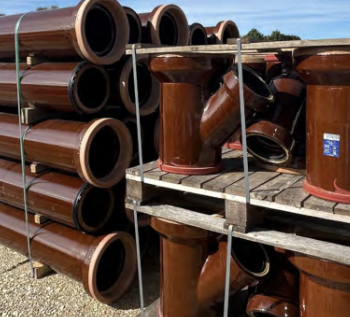
Why vitrified clay pipes are reclaiming their role in built projects.

Research by construction PR consultancy LMC published.
Roles and responsibilities of domestic clients

ACA Safety in Construction guide for domestic clients.
Fire door compliance in UK commercial buildings

Architect and manufacturer gives their low down.
Plumbing and heating for sustainability in new properties

Technical Engineer runs through changes in regulations, innovations in materials, and product systems.
Awareness of the Carbon Border Adjustment Mechanism
What CBAM is and what to do about it.
The new towns and strategic environmental assessments
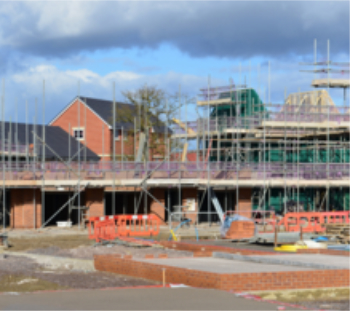
12 locations of the New Towns Taskforce reduced to 7 within the new towns draft programme and open consultation.
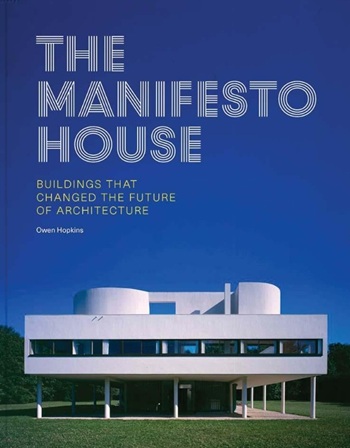
Buildings that changed the future of architecture. Book review.
The Sustainability Pathfinder© Handbook
Built environment agency launches free Pathfinder© tool to help businesses progress sustainability strategies.

Government outcome to the late payment consultation, ECA reacts.
IHBC 2025 Gus Astley Student Award winners

Work on the role of hewing in UK historic conservation a win for Jack Parker of Oxford Brookes University.
Future Homes Building Standards and plug-in solar
Parts F and L amendments, the availability of solar panels and industry responses.
How later living housing can help solve the housing crisis

Unlocking homes, unlocking lives.
Preparing safety case reports for HRBs under the BSA

A new practical guide to preparing structural inputs for safety cases and safety case reports published by IStructE.
Male construction workers and prostate cancer

CIOB and Prostate Cancer UK encourage awareness of prostate cancer risks, and what to do about it.