





Mint Sandstone: A Smart Choice for Beautiful Builds
[edit] How to Choose Mint Sandstone for Architectural and Landscaping Projects
If you are specifying stone for a facade, courtyard or garden wall, Mint Sandstone deserves a close look. This cool toned Indian sandstone suits both modern and traditional builds. SNK Surfaces is a trusted Mint Sandstone supplier and exporter, backed by ISO 9001:2015 certification along with CE and UKCA marking on its stone. As a manufacturer based in India, SNK Surfaces processes and ships this stone directly to architects, contractors and importers across the UK and beyond, so buyers work with the source, not a middleman.
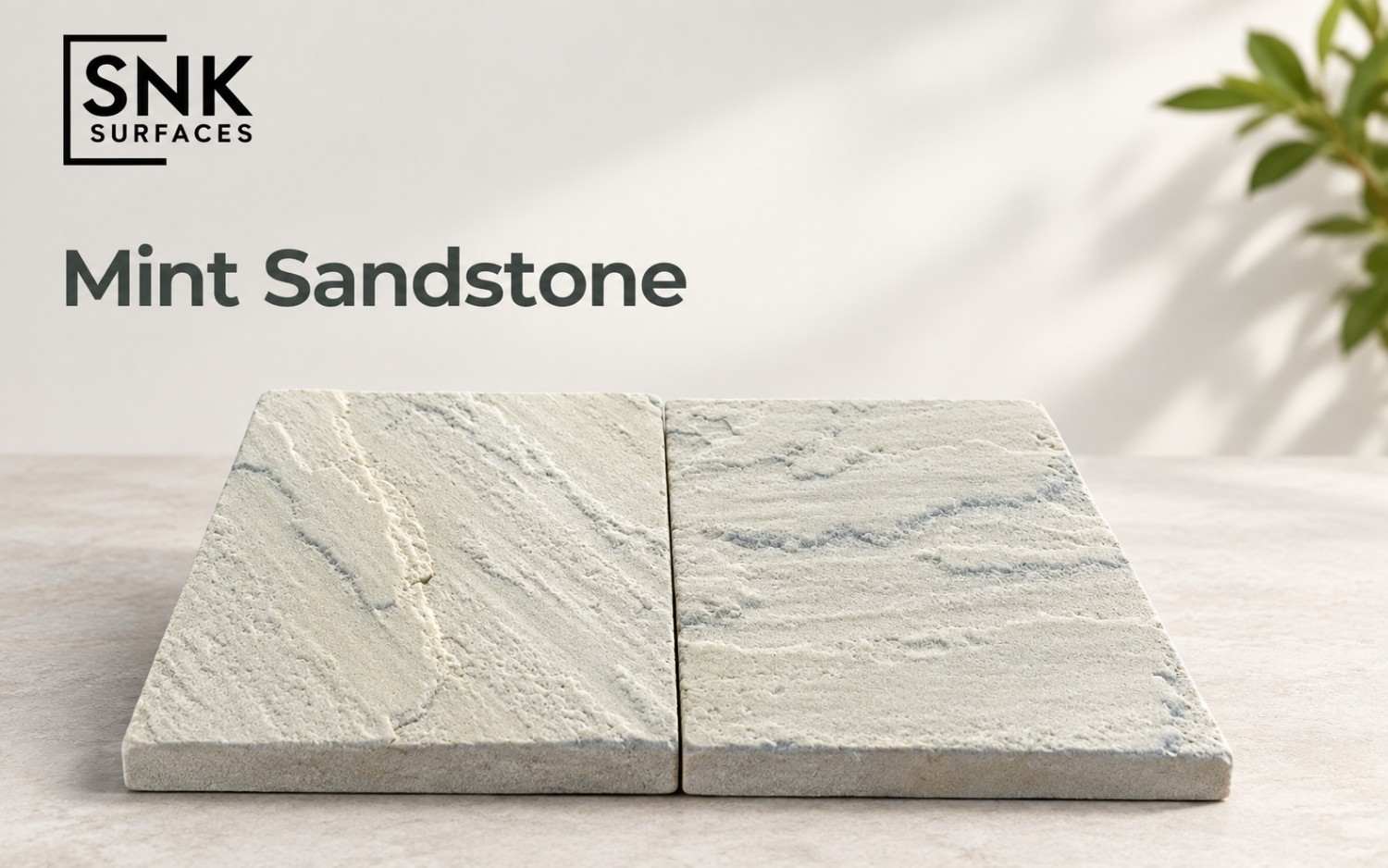
[edit] What Is Mint Sandstone?
Mint Sandstone is a natural quartzitic sandstone quarried mainly around Gwalior in central India. It is often sold under names like Gwalior Mint Sandstone or Yellow Mint, and buyers sometimes ask for it as Mint Indian Sandstone. Some batches carry visible fossil markings, sold as Fossil Mint Sandstone, which adds character to feature walls and flooring.
The stone shows a soft blend of buff, beige and pale yellow tones, sometimes leaning closer to a light Mint White Sandstone shade. No two slabs look identical, since natural variation is part of what makes sandstone attractive for architectural use.
[edit] What Makes Mint Sandstone Suitable for Architectural Projects?
Architects like Mint Sandstone because it reads as neutral without looking flat. The tone works with timber, greenery, glass and steel, which is why it turns up on both heritage renovations and contemporary builds.
On strength, the Mint Sandstone properties that matter most are low water absorption, good compressive strength and solid resistance to weathering. These qualities make it dependable for exterior cladding, paving and structural facing, not just decorative work.
The stone also takes several surface treatments well, which gives design teams flexibility. A rough riven surface suits rustic garden work, while a sawn or honed face fits sharper, contemporary facades.
[edit] Where Can Mint Sandstone Be Used?
Common Mint Sandstone applications include:
Building facades and feature cladding on commercial and residential projects. Exterior wall panels, especially where a natural stone finish is wanted without full masonry weight. Garden walls, steps, palisades and stepping stones. Monuments, boundary markers and decorative stonework. Bespoke architectural elements shaped to a specific brief, such as window surrounds or column cladding.
Because the stone can be cut and finished to order, it also fits custom stonework where a standard slab size will not do the job.
[edit] How Do You Select the Right Mint Sandstone?
Start with the application. A driveway needs a different thickness and finish than an interior feature wall. Next, look at colour variation. Sandstone batches shift slightly between quarry lots, so ask for current photos or samples before ordering at scale, not catalogue images from years ago.
Pick a finish that matches the setting and check the thickness against your structural or paving requirements. Confirm available slab sizes early, since large architectural projects often need bespoke dimensions rather than stock sizes. Finally, ask for technical data sheets covering water absorption, compressive strength and slip resistance, so specifications hold up under review.
[edit] What Mint Sandstone Finishes Are Available?
Mint Sandstone finishes generally fall into three groups. A natural or riven surface keeps the stone's raw texture and grip, which suits outdoor paving and garden features. A sawn finish gives a flatter, more even face, often chosen for cladding and contemporary facades. Custom finishes, including honed, shot blasted or brushed surfaces, are available for architects who want a specific look or texture that stock finishes do not offer.
The right choice usually comes down to where the stone sits. Foot traffic areas benefit from grip, while vertical cladding can lean toward a smoother, more refined face.
[edit] What Sizes Can Mint Sandstone Be Supplied In?
Standard Mint Sandstone sizes cover common paving and cladding formats, typically in the 15mm to 30mm thickness range for most external work. For architectural projects, bespoke sizes and thicknesses are common, since facades and feature walls rarely follow patio-pack dimensions. Large scale commercial projects often need pre-agreed batch sizes to keep colour and finish consistent across an entire building, which is worth discussing with your supplier at the design stage rather than after ordering.
[edit] What Should You Check Before Buying Mint Sandstone?
Quality checks matter more on architectural work than on small garden jobs, since mistakes are expensive to fix once installed. Ask for consistent batch quality across the full order, not just a sample piece. Request test data covering strength, absorption and durability, ideally in line with recognised industry benchmarks such as those maintained by the Natural Stone Institute. Approve colour and finish samples before production runs. Confirm dimensional tolerances, since even small variations can cause fitting issues on large facades. Also check export packaging standards and confirm the manufacturer's production capacity matches your project timeline.
[edit] How to Source Mint Sandstone From an Indian Manufacturer
Buying direct from an Indian Mint Sandstone manufacturer usually means better pricing, clearer communication and more control over specifications than buying through a trading agent. Ask about quarry ownership, in-house processing capability and whether custom sizes or finishes can be manufactured to your drawings.
When sending a project enquiry, share the application, required sizes, finish preference, order volume and delivery location. This lets a Mint Sandstone supplier from India quote accurately and avoid delays caused by back-and-forth clarification later in the process.
[edit] Mint Sandstone Supply for UK and Global Projects
Demand for this stone runs strong among UK architects, landscapers and importers working on both residential and commercial jobs. A dependable Mint Sandstone supplier UK teams typically look for combines container export from India with local stock support, so smaller or urgent orders do not wait on a full shipment cycle.
SNK Surfaces keeps a UK warehouse stocked with selected natural stone and paving lines, which helps importers, distributors and contractors get faster access to product without always waiting on an international shipment. Beyond that UK stock, the company also manufactures and exports its full natural stone and porcelain range from India, supporting Mint Sandstone UK buyers alongside customers across Europe, the Middle East and further afield.
[edit] Frequently Asked Questions About Mint Sandstone
[edit] What is Mint Sandstone?
It is a natural quartzitic sandstone from India, known for a soft buff, beige and pale yellow tone, used in paving, cladding and architectural work.
[edit] What colour is Mint Sandstone?
It ranges from light mint white to a warmer yellow buff, with natural variation between batches and even within a single slab.
[edit] What is Mint Sandstone used for?
It suits facades, wall cladding, paving, steps, garden features and bespoke architectural stonework for both residential and commercial projects.
[edit] Is Mint Sandstone suitable for architectural applications?
Yes. Its strength, weather resistance and range of finishes make it a practical choice for facades, feature walls and structural cladding.
[edit] Can Mint Sandstone be used for wall cladding?
Yes, particularly in sawn or honed finishes, which give a flatter, more consistent face suited to vertical applications.
[edit] What finishes are available?
Natural riven, sawn and custom finishes such as honed or shot blasted surfaces are all available depending on the project.
[edit] What sizes are available?
Standard paving and cladding sizes are common, with bespoke sizes and thicknesses available for architectural and large scale projects.
[edit] Can Mint Sandstone be supplied in custom sizes?
Yes. Manufacturers can cut and finish the stone to project drawings, which is common on facade and feature wall work.
[edit] Where can I buy Mint Sandstone from India?
SNK Surfaces manufactures and exports Mint Sandstone directly from India to buyers across the UK and global markets.
[edit] Does SNK Surfaces export Mint Sandstone?
Yes. SNK Surfaces exports Mint Sandstone worldwide and also holds UK warehouse stock for faster access on selected products.
[edit] Why Choose SNK Surfaces for Mint Sandstone?
SNK Surfaces manufactures and finishes its own stone rather than trading product sourced from other factories, which keeps quality and pricing more consistent across large orders. The company holds ISO 9001:2015 certification alongside CE and UKCA marking, giving architects and contractors confidence in compliance from the outset.
Custom sizes, bespoke finishes and OEM manufacturing are available for architectural and landscaping briefs that fall outside standard catalogue formats. For UK based buyers, warehouse stock on selected lines supports quicker turnaround, while the company's India based production and export operation continues to serve importers, distributors and construction firms across international markets.
[edit] Request Mint Sandstone for Your Project
If your project calls for a natural stone with warmth, strength and design flexibility, Mint Sandstone is worth specifying. Visit SNK Surfaces to request samples, technical data sheets or a quote tailored to your next architectural or landscaping project.
Featured articles
Check out some of the best features and news from Designing Buildings as well as key stories from around the web.

Communities will be able to build their own clean energy.
Why diversity and inclusion matters for SMEs

CIOB’s D&I Charter shows how practical changes can support long-term growth.
Cut electricity bills to power growth

Coalition sends joint letter to the Chancellor.

Gasholders: a history in pictures. Book review.
Recognition, influence and growth

SocEnv identifies three strategic pillars in new strategy to 2045.
Discover the future of roofing, cladding and insulation.

New guidance for professional practice, cultural change and regulation in social housing.
The heritage of nuclear and conventional power stations.
New measures to stop people being ripped off

Government to protect families from cowboy builders and aggressive bailiffs.

New Futurebuild showcase brings an innovation-first approach.
National Planning Policy Framework
Understanding the 2026 changes.
ECA's public affairs priorities

Member consultation opens to shape priorities for 2027 to 2030.