





Gasholders: a history in pictures

|
| Gasholders: a history in pictures, Russell Thomas and Timur Tatlioglu, edited by National Grid, Liverpool University Press on behalf of Historic England, 2024, 240 pages, 254 colour and black-and-white illustrations. |
Until the late 20th century gasholders were a common sight in the landscape. Every city and town had them and sometimes they were prominent features in the countryside. They served the ubiquitous municipal gasworks that gave us the first streetlights and lit up the houses, factories and other workplaces across the country.
The earliest gasholders, built in the early 19th century, were simple structures with a deep tank of water used to provide a seal and a closed vessel rising above the water as the gas volume increased. As demand for gas grew, the technology evolved, with multiple lifts connected in a telescopic manner, counterweights and guide wheels. Most of the large gasholders dating from the 1840s to the 1890s were constructed of cast and wrought iron, with decorative features such as floral motifs, classical mouldings and filigree lattice work. Later they were built of steel. Spiral-guided gasholders came to dominate those built in the 20th century. High-pressure gasholders, another type, were first introduced in the 1930s. Normally they took the shape of a bullet tank with domed ends and, unlike other gasholders, they were static, with no moving parts.
After the 1960s the replacement of carbonised coal with imported natural gas caused many of the 19th and 20th century gasworks to be demolished. Although some gasholders continued in use, the more efficient storage of high-pressure gas in pipes below ground led to their phased disappearance. This process was carried out by the National Grid, the majority owner of gasholders in the UK, working closely with Historic England to make a detailed record. Gasholders: a history in pictures, using a mixture of archive and contemporary photographs, engineering drawings, paintings, adverts and diagrams, is a valuable outcome. At folio size, with full-page photographs, the book gives a vivid picture of these extraordinary structures, that were largely taken for granted during the years of their operation.
Each chapter of the book adopts a different approach, covering the varied types of gasholders, the landscapes they occupied (many are captured in aerial photographs), the engineers who designed them, the people who built and maintained them, and their place in society. There are 3,600 gasworks sites known to have existed in England, and the book includes examples from all parts of the country.
The final chapter deals with a possible future for those gasholders that survive. The first to be used in a redevelopment project are those at Kings Cross. They were dismantled in 2001 and re-erected to contain apartments, with the central gasholder becoming an atrium. Similar schemes are proposed for listed gasholders at Bethnall Green, Fulham, Bromley-by-Bow and the famous one at Kennington that overlooks the Oval cricket ground. The National Grid, Historic England and the authors can be congratulated for this useful, if somewhat nostalgic, picture book.
This article originally appeared as: ‘Taken for granted’ in the Institute of Historic Building Conservation’s (IHBC’s) Context 186, published in December 2025. It was written by Peter de Figueiredo, reviews editor of Context.
--Institute of Historic Building Conservation
Related articles on Designing Buildings Conservation.
IHBC NewsBlog
IHBC sponsors Gardens Trust event 23-4 Sept 2026
.jpeg)
'Learning from the Past, Shaping the Future’ takes place in Milton Keynes
Renovations to Frank Lloyd Wright's Fallingwater complete
.jpg)
World Heritage Preserved project opens house for tours again
Shakespeare Birthplace Trust places Hall's Croft on HAR Register
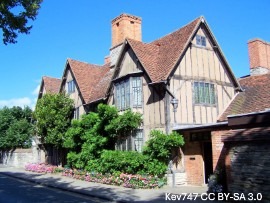
Stratford-upon-Avon home of Shakespeare's daughter is 'At Risk'
Lady Grange’s House repaired on St Kilda
.jpg)
National Trust for Scotland repairs stone cleit with link to famous island resident
Griff Rhys Jones on BBC Radio 4 Today programme
,_Green_Lane,_Derby.jpg)
The Victorian Society’s President unveiled its latest Top Ten Endangered Buildings 2026.
Need a MATE? Book your place now.

IHBC offers free webinars on applying for IHBC accreditation (Full & Associate).
UK Stained Glass Repository finds windows new homes
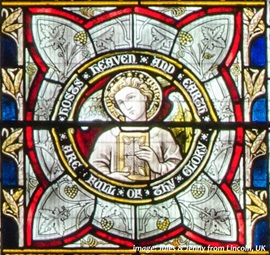
How are stained glass windows are rescued, stored and repurposed?
APPGEBE report sets high aims for quality
'Government must not sacrifice quality in drive to build 1.5m homes'
New measures protect Historic Shipwrecks from heritage crime

Underwater cultural heritage benefits from new HE guidance
How could the City of London skyline look in 6 years' time?

Visualisation shows approved planning applications as completed buildings
National Trust for Scotland calls for VAT cuts
Heritage neglect is encouraged by current policies
IHBC's 'Context' Issue 186 features Industrial Heritage
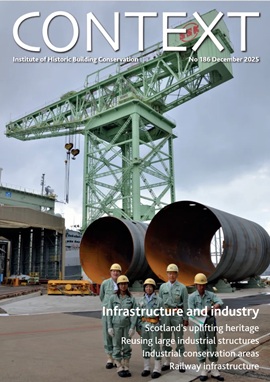
IHBC's members' journal reports on the challenges of conserving infrastructure
Book now for IHBC Annual School 2026
IHBC Annual School is taking place 18-20 June 2026 in Newcastle
RICHeS Research Infrastructure offers ‘Full Access Fund Call’
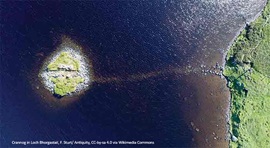
RICHeS offers a ‘Help’ webinar on 11 March
Latest IHBC Issue of Context features Roofing
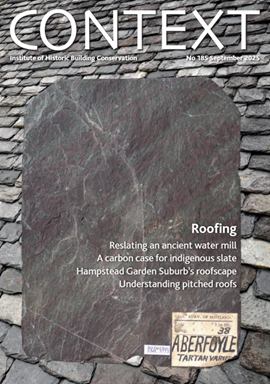
Articles range from slate to pitched roofs, and carbon impact to solar generation to roofscapes
Three reasons not to demolish Edinburgh’s Argyle House

Should 'Edinburgh's ugliest building' be saved?
IHBC’s 2025 Parliamentary Briefing...from Crafts in Crisis to Rubbish Retrofit
IHBC launches research-led ‘5 Commitments to Help Heritage Skills in Conservation’
How RDSAP 10.2 impacts EPC assessments in traditional buildings

Energy performance certificates (EPCs) tell us how energy efficient our buildings are, but the way these certificates are generated has changed.