





Types of dome

Contents |
[edit] Introduction
The dome has a long history in the built environment, and has been a design feature of many different kinds of architecture around the world. Domes are prominent features of Persian, Roman, Byzantine, Islamic, and Italian Renaissance design.
In its simplest form, a dome is a hollow semi-spherical structural element. However, there are many variations on this basic shape, and The ‘Building Construction Handbook’ describes domes as: ‘Double curvature shells which can be rotationally formed by any curved geometrical plane figure rotating about a central vertical axis.’
Domes evolved from arches, originally being adapted only to small buildings such as huts and tombs; however, as construction and design techniques developed, they became more popular as a means of showcasing grand structures such as cathedrals, legislative buildings and, more recently, leisure buildings such as sports stadia.

In terms of semiology, by reinforcing centrality and singularity, the form of the dome renders explicit the primacy of the circle of space directly below.
In historical terms, the representational efficiency of the dome has made it popular among those seeking to reinforce the notion of a centralised and singular power system, whether absolute monarchy, monotheism, hegemonic dictatorship, fascism, and so on.
Some of the terminology that is often associated with domes include:
- Apex: The uppermost point of a dome (also known as the ‘crown’).
- Cupola: A small dome located on a roof or turret.
- Extrados: The outer curve of a dome.
- Haunch: Part of an arch that that lies roughly halfway between the base and the top.
- Intrados: The inner curve of a dome.
- Springing: The point from which the dome rises.
[edit] Characteristics

Domes can be constructed from a variety of materials, from traditional masonry and concrete, to cast iron, timber and steel. More recently, lightweight materials such as architectural fabrics and cable structures have also been used to create ‘domes’; for the most part these are not true domes as their components have an anticlastic shape, however inflated fabric structures can be dome shaped.
Traditional domes can be highly-efficient structures, similar to arches. They are self-supporting, stabilised by the force of gravity acting on their weight to hold them in compression. They are able to span large areas and require no intermediary columns, creating a free space below.
However, the weight of traditional domes produces downward and outward thrusts. The downward thrust must be transferred to the foundations, whilst the outward thrust must be resisted to prevent the dome from collapsing. This resistance can be provided by the mass of the supporting walls, by buttresses, or by a tension element such as a perimeter ring, cable or chain.

[edit] Types of dome
[edit] Corbel dome
Dating back to Paleolithic construction, this is one of the earliest dome forms, also known as a ‘beehive dome’. They are not domes in the strict sense, as they are formed by horizontal masonry layers that are slightly cantilevered until meeting in the centre.
[edit] Cloister vault
Cloister vaults, also known as dome vaults, maintain a polygonal shape in their horizontal cross-section. They arch towards the centre from a constant spring point along a wall.
[edit] Crossed-arch dome
This is one of the earliest type of ribbed vault where the ribs, instead of meeting in the dome’s centre, are intertwined to form polygons, leaving an empty space in the centre. The earliest known example is in Spain’s Great Mosque of Cordoba, dating back to the 10th century.
[edit] Geodesic dome

Geodesic domes are sphere-like structures consisting of a network of triangles which provide a self-balancing structural framework whilst using minimal materials. They were developed by the American engineer and architect Buckminster Fuller in the late 1940s.
For more information, see Geodesic dome.
[edit] Monolithic dome
This is a dome structure that is cast in a one-piece.
[edit] Onion dome

These domes are characterised by the way they bulge out beyond their base diameters and taper smoothly in an ogee (S-curve) profile. Their height usually exceeds their width and they are often gilded or brightly painted. These are traditionally associated with Russian architecture, in particular their multi-domed churches. For more information, see St. Basil’s Cathedral.
[edit] Oval dome
An oval dome may be defined as a dome whose plan or profile (or both) has an oval form. The geometry is defined as using combinations of circular arcs that transition at tangential points.
[edit] Rotational dome
Also known as ‘hemispherical domes’, these are one half of a sphere, constructed on a circular ring beam.
[edit] Saucer dome
In terms of area these are often some of the largest domes, and are shallower in profile than other forms of dome.
[edit] Umbrella dome
Also known as a ‘ribbed’, ‘parachute’ or ‘scalloped’ dome. These are divided into curved segments that follow the elevation’s curve. Radial lines of structure that act as the dome’s ‘ribs’ extend down the springing from the apex.
[edit] Cable net dome

Whilst not conventional domes in that they are not compression structures, but tension structures, cable net structures can adopt an overall domed shape, albeit individual sections are generally flat or anticlastic in form (rather than the synclastic form of compression domes). The Millennium Dome in London is a cable net dome structure, and at 320m in diameter, is one of the largest domes in the world.
[edit] Inflated domes
Inflated structures are formed by pressurising a volume of air enclosed by a lightweight fabric membrane. Inflated structures can adopt a domed shape, and are typically used for spaces requiring a large enclosure uninterrupted by columns, such as radomes, warehouses, sporting facilities, stadia and so on.
[edit] Related articles on Designing Buildings Wiki
- Air-supported structure.
- Anticlastic.
- Arches.
- Barrel vault.
- Bartizan.
- Belvedere.
- Church.
- Cloister.
- Conoid shell.
- Corbel vault.
- Dome of the Rock.
- Extrados.
- Florence Cathedral.
- Geodesic dome.
- Hagia Sophia.
- Hyperbolic paraboloid.
- Lancunar.
- Maqsurah.
- Millennium Dome.
- Pantheon.
- Pendentive dome.
- Shell roof.
- St. Basil’s Cathedral.
- St Pauls Cathedral.
- Stadium.
- Synclastic.
- Taj Mahal.
- The history of fabric structures.
- Vault.
- Why are domes popular?
Featured articles
Check out some of the best features and news from Designing Buildings as well as key stories from around the web.
Changing expectations around competence and compliance

New information sheet from CIAT.
Grenfell investigation files passed to CPS

Angela Rayner apologises on behalf of the British state.

Electrical contractors need to understand the practical implications.

The real barrier to getting more value from digital technology.

Your guide to The Construction Reset at UKCW Birmingham.

Accommodating the Victorian and Edwardian working woman. Book review.
Rethinking passive fire protection in design

PFP demands the same level of design rigour as structure or services.

38% of Gen Zs feel safe when a fire door is wedged open.
Stunning images from around the world
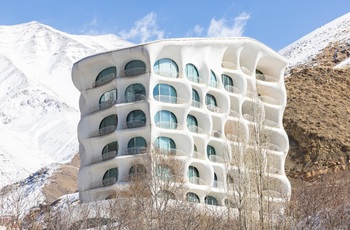
Shortlist for CIOB’s Art of Building photography competition.
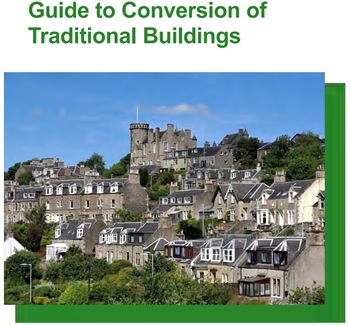
Guidance for conversion of traditional pre-1919 stone buildings.
Industrial heritage in the Ruhr
A marked difference to the fate of industrial landscapes in the UK.
Communities will be able to build their own clean energy.
Comments
Nothing at all about thin tile vaulting?
A very economical and functional system in use for over 600 years?
its a wiki site so change it....
how hard is it to add pictures to each type? You could've added it and made your article more informative.. and useful.. anyways, you're article saved my day.. a comprehensive list always makes things simpler..