





Structural systems
Contents |
[edit] Introduction
Structural systems are those elements of construction that are designed to form part of a building’s structure either to support the entire building (or other built asset, such as a bridge or tunnel) or just a part of it. So, a steel frame is a structural system that supports the building and everything on it and in it. A space frame is a structural system that typically supports the roof.
[edit] Types of structural system
[edit] Continuous structures
These comprise continuous supporting walls through which the combined loads and forces in a building are transferred, mainly by direct compression, into the subsoil through the foundations. The timber floors of a traditional brick-built house, for example, provide lateral bracing and prevent potential deflection of the walls. Laying the bricks in a bond pattern (ie with staggered vertical joints) allows compression forces to be evenly distributed throughout the wall volume.
[edit] Framed structures
Timber, reinforced concrete and steel can all be used to create regular frameworks comprising beams and columns. The beams transfer loads from roof, floors and walls to the columns. The columns transfer the beam loads to the sub-soil through the foundations. The dead and imposed loads from roofs or floor slabs will be transferred to the floor beams and then to the structural frame. Compared to a continuous support-type structure of similar weight, a framed structure typically transfers more concentrated loads into the subsoil.
External walls in framed buildings act as infill panels between columns and beams. Because they are non-load bearing (although they carry their own weight and must resist wind forces), they can be of any durable material that fulfils thermal, acoustic, fire and environmental criteria. When positioned on the outside of the frame they form a part of the building envelope and are known as cladding. When they are positioned on a secondary steel framework attached to outside of the main structure so that a ventilation gap is created behind them, they are known as a rainscreen.
The position of the structural frame relative to its cladding will determine the external appearance: cladding panels can be located behind, in front of, or flush with the frame.
[edit] Shell structures
Shell structures are made from structural ‘skins’ where the shell material is thin in section relative to the other dimensions of the roof and undergoes relatively little deformation under load. They are commonly used where a building interior needs to be free from intermediate walls or columns that might support a more conventional flat or pitched roof, such as; libraries, theatres, leisure centres, airport and railway terminals, and so on.
Shell roofs structures be ‘flat’, but are typically curved, assuming a cylindrical, domed, paraboloid or ellipsoid shape. The curvature of shell structures benefits from the same structural efficiency as arches, which are pure compression forms with no tensile stresses. Because of their structural efficiency less material is generally needed compared to more traditional roofs. However, a restraining structure such as an edge beams is required to prevent the shell from ‘spreading’.
For more information see: Shell structure.
[edit] Tensile structures
Conventional structures tend to be stabilised by the action of gravity on their mass holding them in compression. A tensile structure is a structure that is stabilised by tension rather than compression. In practice, structures tend to carry both tension and compression, and it is the degree to which a structure is intentionally tensioned to stabilise it that determines whether it is considered a tensile structure.
A suspension bridge is an example of a tensile structure.
For more information see: Tensile structures.
[edit] Membrane structures
Membrane structures (or fabric structures) create spaces that are enclosed by tensioned membranes. At its simplest, a tent may be regarded as a membrane structure given its steel or fibreglass poles support a canvas or plastic membrane covering.
As structures, membranes can be divided into pneumatic structures, tensile membrane structures and cable net membrane structures. In all these, the membrane is rendered taut through tensile forces applied by steel cables (or internal air pressure) which transfer the forces to a structural frame and then to the subsoil. It is through the action of the cables and construction members that the membranes find their form.
In inflatable structures, steel cables and columns are replaced by air which supports a reinforced membrane.
For more information see: Fabric structures.
[edit] Others
Other common forms of structural system include:
- Arches.
- Barrel vaults.
- Cantilevers.
- Domes.
- Shell and core.
- Space frame.
- Trussed rafters.
- Portal frame.
[edit] Related articles on Designing Buildings Wiki
- BCIS elements.
- Braced frame.
- Building Cost Information Service
- Building fabric.
- Concept structural design.
- Concrete-steel composite structures.
- Curtain wall systems.
- Deflection.
- Fabric structures.
- Frei Otto.
- Hyperbolic paraboloid.
- Structural engineer.
- Structural principles.
- Structure definition.
- Substructure.
- Tensile structures.
- Tension cable and rod connectors.
- Types of structure.
Featured articles
Check out some of the best features and news from Designing Buildings as well as key stories from around the web.
Bridging the gap between clients and contractors

Concerns remain around contractor quality, capability, and delivery.
Construction Management, 10 June.
Heat pumps beat boilers in new home tests.
Building Safety Act implementation in Wales

CIAT to host industry panel on 26 June.

New and updated CLC building safety guidance.
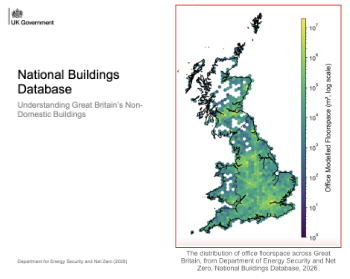
New UK National Buildings Database.
Building Safety Wiki Interviews

Chief executive of the British Woodworking Federation.
Planning condition discharge in England and Wales

A brief explanation from a building compliance expert, with further links.
Overheating guidance and tools for building designers

Guidance for dealing with element of building fabric control that have increasing importance.
Shading for housing, a design guide

From the Good Homes Alliance and British Blind and Shutter Association.
UK Standard Skills Classification (SSC)

A shared framework for describing skills needs.
Social media ban consultation comes to close

CIOB urges UK Government to consider social media’s role in careers guidance in ban debate.