





Building Safety Regulator strategic plan 2026 to 2027
[edit] Introduction
The Building Safety Regulator (BSR) published its strategic plan for 2026 to 2027 on 31 March 2026, setting out its ambitions for the year ahead, with a forward by Samantha Dixon MP, Minister for Building Safety, Fire and Democracy The plan reiterates that the work of BSR is rooted in the lessons of Grenfell and the need to make homes and buildings safe, especially higher-risk buildings.
After moving on 27 January 2026 from being part of HSE to becoming a standalone non-departmental public body sponsored by MHCLG, BSR entered a period of major change, while helping shape the future single construction regulator recommended by the Grenfell Tower Public Inquiry. The plan describes how the organisation has focused on new ways of working, new technology, and being accountable, collaborative, and proportionate, a longer three-year plan is intended to follow this initial strategic plan for 2026 to 2027.
BSR says its strength lies in its people, whose ethics, resident focus, and sense of responsibility guide decision-maiking to places residents’ safety and wellbeing at the centre of its work. It uses feedback, engagement, and the Residents’ Panel to shape policy, communications, and training, while also drawing on wider charities and interest groups to ensure diverse perspectives. Its mission is to maintain and improve safety standards in the built environment, enabling safe new homes and better existing homes, while its values are to be collaborative, proportionate, and accountable in how it works and how it uses public money.
[edit] In brief
The plan clarifies that between April 2023 and March 2026, BSR major progress in establishing England’s new building safety regime, including becoming the largest building control authority in England. The activities included introducing competence assessment and registration for building control professionals, setting up the statutory committees required by the Building Safety Act 2022, registering higher-risk buildings, reviewing Approved Documents, and implementing the three statutory gateways.
The period brought major challenges because the new framework required earlier and more detailed compliance evidence for higher-risk buildings, while the new regulated profession of building control demanded substantial competence testing across the sector. Looking ahead, it says it wants to be faster, clearer, more data driven, and more efficient, and under its new board and standalone NDPB status it is strengthening governance while preparing for the future single construction regulator. The plan describes 5 priorities for this new stand -alone body during the next period:
- Priority 1: Continuing to improve our operations and processes
- Priority 2: Remediation
- Priority 3: Building phase and gateway 3.
- Priority 4: Keeping the safety of people and the standard of buildings under review.
- Priority 5: Improving professional standards across industry
[edit] Priority 1: Continuing to improve our operations and processes
BSR says that becoming an NDPB gives it the chance to improve how it works so it can better serve residents and industry while supporting safe new homes. It explains that, because it was originally set up very quickly, it is now reviewing and changing its processes, including hiring its own experts for multidisciplinary teams, adding account managers, creating an Innovation Unit, piloting batched application handling, and introducing staged gateway 2 applications. It also expects that by the end of March 2027 it will respond to non-complex new-building gateway 2 applications within 18 weeks or less and achieve a 65% approval rate, while also exploring automation, better software, improved data sharing, clearer guidance, and possible self-certification or legal simplification where appropriate. These changes are meant to reduce delays, improve service, and help residents see faster repairs, better maintenance, and a smoother experience when dealing with BSR.
[edit] Priority 2: Remediation
BSR says its remediation work is mainly about approving building control applications so unsafe cladding can be removed and affected homes made safe again. It plans to work with MHCLG, Homes England, and mayoralties, publish remediation data, improve guidance and applicant support, and use account managers to reduce errors and speed up approvals. It also expects that by the end of March 2027 it will respond to non-complex remediation applications within 12 weeks or less and achieve a 65% approval rate, while continuing to monitor principal accountable persons and take action where residents are not being kept safe.
[edit] Priority 3: Building phase and gateway 3.
BSR says it will keep buildings safe to live in by increasing in-build inspections as gateway 2 applications progress, using those visits to check changes made during construction and to support later gateway 3 applications. It is also looking at how to address the shortage of registered building inspectors, improve working methods and technology, and make site visits proportionate. For gateway 3, BSR says it will rely on internal expertise, give better updates to help owners plan, publish clearer guidance, and explain any refusal clearly so fixes can be completed quickly, with the aim of avoiding unnecessary delays before residents move in.
[edit] Priority 4: Keeping the safety of people and the standard of buildings under review.
BSR says it will keep people safe by improving how it identifies, assesses, and responds to risks in buildings, working with MHCLG, local authorities, rescue services, and industry to decide who is responsible for major risks. It also plans to use intelligence, reports, research, and software to monitor emerging risks from new technologies, ageing buildings, climate change, and changes to buildings themselves. In parallel, it will update Approved Documents and review building regulations guidance so that the advice stays clear, accessible, and aligned with current risks and regulatory changes, helping residents feel safer and giving industry better guidance.
[edit] Priority 5: Improving professional standards across industry
BSR says it will improve professional standards by strengthening guidance, reducing unnecessary bureaucracy, and raising competence across the industry. Its priorities include reviewing competent person scheme conditions, improving materials on skills and competence, supporting the RBI profession and the organisations that employ RBIs, and promoting cultural change through a published organisational framework and higher standards in public-sector procurement. For residents, this is meant to mean better service, clearer quality expectations, and the ability to check whether an RBI is qualified for the work being carried out.
BSR says its 2027 to 2030 strategy will build on the progress made in 2026 to 2027 while focusing on stronger internal capability, better performance measurement, and preparation for a single construction regulator. It also plans to support government’s goal of delivering 1.5 million high-quality, safe new homes, drive cultural change across the sector, and strengthen partnerships with government, local authorities, industry, and residents. The strategy will be shaped by further reflection on performance, close engagement with stakeholders, and horizon scanning so it is realistic, resilient, and based on evidence.
[edit] Related articles on Designing Buildings
- Building Safety Alliance.
- Building safety certificate.
- Chief inspector of buildings.
- CIC response to Hackitt report.
- Consultation on banning the use of combustible materials in the external walls of high-rise residential buildings.
- Grenfell Tower articles.
- Grenfell Tower Fire.
- Grenfell Tower independent expert advisory panel
- Grenfell Tower industry response group.
- Grenfell Tower Inquiry.
- Grenfell Tower working group.
- Hackitt review of the building regulations and fire safety, final report.
- ICE Grenfell Tower review.
- Independent review of the building regulations and fire safety.
- Joint Competent Authority.
- Reform of building safety standards.
- Sweeping building safety measures announced.
- The Building Safety Bill and product testing.
- The Building Safety Regulator.
- The Construction Industry Council summarises what to expect from the Construction Products Regulations.
Featured articles
Check out some of the best features and news from Designing Buildings as well as key stories from around the web.
Bridging the gap between clients and contractors

Concerns remain around contractor quality, capability, and delivery.
Construction Management, 10 June.
Heat pumps beat boilers in new home tests.
Building Safety Act implementation in Wales
CIAT to host industry panel on 26 June.
New and updated CLC building safety guidance.
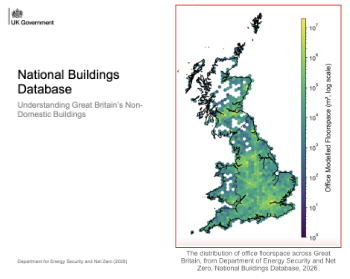
New UK National Buildings Database.
Building Safety Wiki Interviews

Chief executive of the British Woodworking Federation.
Planning condition discharge in England and Wales

A brief explanation from a building compliance expert, with further links.
Overheating guidance and tools for building designers

Guidance for dealing with element of building fabric control that have increasing importance.
Shading for housing, a design guide

From the Good Homes Alliance and British Blind and Shutter Association.
UK Standard Skills Classification (SSC)

A shared framework for describing skills needs.
Social media ban consultation comes to close

CIOB urges UK Government to consider social media’s role in careers guidance in ban debate.