






Overview of automatic sprinkler system design and operation
This article was originally published as part of The impact of automatic sprinklers on building design, an independent report produced by WSP, sponsored by the Business Sprinkler Alliance (BSA), published in September 2017.
Contents |
General
Automatic sprinkler systems extinguish or control fires by discharging water locally. Detection is handled mechanically by heat sensitive elements which can be constructed from soldered links or glass bulbs containing oil based liquids. The thermal element holds in place a plug which prevents water from flowing from the sprinkler head. The thermal elements respond to localised heating which acts to release the plug and allow water to flow.
Key facts about their operation are:
- Automatic sprinklers will typically only operate in areas where fire is present allowing adjacent rooms or areas to remain unaffected;
- Discharge in the presence of fire is extremely reliable (98 to 99.8%) and discharge in the absence of fire is rare;
- They have an 80-95% [1] probability of being successful;
- Generally the cost and design complexity increases with fire risk. Offices which are considered lower risk have a lower water demand compared to high-bay warehousing that requires sprinklers to operate at a higher water demand;
- Systems can be designed to conceal pipes, and the availability of decorative sprinkler heads allows them to be matched with the interior of the space.
An automatic sprinkler system consists of water supply (tank, pump and valves) and sprinkler installation (pipes and heads). The specifications of the design depend primarily on the hazard classification of the occupancy of the building. The specifications include head spacing dimensions, assumed area of maximum operation (number of heads in-operation), design density (water discharge), water supply period, and tank volume.
Automatic sprinkler system design
- The maximum area of coverage per sprinkler head depends on hazard classification and sprinkler mounting orientation (i.e. sidewall or overhead);
- Design density is the water discharge required in litres per minute over the assumed area of maximum operation. This can be summarised as the flow of water required which increases proportionally with the occupancy risk category;
- Area of operation is the design assumption for the maximum area over which the sprinklers will operate in a fire delivering the design density. This addresses the nature of the fire risk and recognises that some fires will grow faster than others;
- Water supplies are required to be capable of supplying the required flow (depending on the system design) for a minimum duration that varies from 30 to 90 minutes depending on the hazard classification;
- Minimum water volume requirement (water tank size) also depends on the hazard classification and the system type (wet, pre-action or dry).
Design standards
The automatic sprinkler standards applicable at the time of writing this document are:
- BS EN 12845:2015 – Fixed firefighting systems: Automatic sprinkler systems.
- BS 9251:2014 – Fire sprinkler systems for domestic and residential occupancies.
- LPC Rules for Automatic Sprinkler Installations 2015 incorporating BS EN 12845 (inc. TB229).
Alternative systems
Automatic sprinkler system designs can be adopted to suit a specific fire safety objective. Sprinklers are typically installed throughout a building, whereas drenchers are placed to address a specific risk such as on glazing as an alternative to fire rated glass, or on a structure as an alternative to passive fire protection. The principle was applied at a Hong Kong Air Cargo Handling Facility [2] where hollow structural members were water-cooled internally to reduce maintenance requirements and cost associated with passive fire protection. The design was justified using fire engineering methodologies. A performance-based approach to fire engineering design allowed fire safety to be addressed to meet clear performance requirements rather than the traditional prescriptive approach.
References
[1] PD 7974-7: 2003 Application of fire safety engineering principles to the design of buildings — Part 7: Probabilistic risk assessment
[2] Water-Cooled Roof Incorporating Sprinklers into the Structure: Hong Kong Air Cargo Handling Facility, Lovell, T. and Bressington, P. (2001) http://ascelibrary.org/doi/abs/10.1061/40558%282001%2987
Related articles on Designing Buildings
- Automatic fire sprinkler.
- Automatic fire sprinkler systems: A good practice guide.
- BS 7974.
- Business Sprinkler Alliance.
- Case study A for offices to show where automatic sprinklers have the greatest impact.
- Case study B for offices to show where automatic sprinklers have the greatest impact.
- Costs of water automatic sprinkler systems.
- Design benefits of automatic sprinkler systems granted under approved document B.
- Drenchers.
- Fire detection and alarm system.
- Fire detector.
- Fire in buildings.
- Fire protection engineering.
- Fire safety design.
- Leading built environment bodies call for sprinklers in all schools.
- Making the case for sprinklers and dispelling myths.
- Sprinkler systems explained: A guide to sprinkler installation standards and rules.
- Sprinkler head.
- Sprinklers.
- The cost efficiency of different combinations of fire protection measures.
- The impact of automatic sprinklers on building design.
- Watermist systems for fire protection in domestic and residential buildings DG 534.
Featured articles
Check out some of the best features and news from Designing Buildings as well as key stories from around the web.

Your views needed - a strategy for the professions, trades and occupations.

Confronting competency, codes, capacity and costs.

The hidden risk in modern construction supply chains.
Construction Management, 10 June

24 months to 14: CITB launches accelerated apprenticeships.
Bridging the gap between clients and contractors
Concerns remain around contractor quality, capability, and delivery.
Construction Management, 10 June.
Heat pumps beat boilers in new home tests.
Building Safety Act implementation in Wales

CIAT to host industry panel on 26 June.

New and updated CLC building safety guidance.
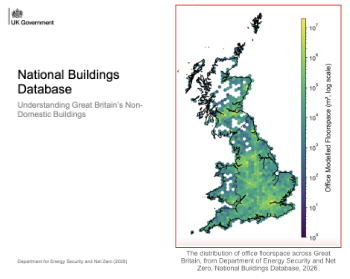
New UK National Buildings Database.
Building Safety Wiki Interviews

Chief executive of the British Woodworking Federation.
Planning condition discharge in England and Wales

A brief explanation from a building compliance expert, with further links.
Comments
Sprinkler pipe systems in unheated conditions such as garage or external areas susceptible to frost should be installed to falls to allow draining in winter and substitution of compressed air in the system that is expended prior to water cutting in.