






AI Voice Agents, A Strategic Handbook for Real Estate Developers & House Builders

Contents |
[edit] Executive Summary
Real estate developers and house builders operate in a consistently complex market of fluctuating demand, limited skilled labour, and ever-increasing customer expectations for immediate and clear communication.
Sales enquiries, for instance, tend to surge around new launches, during evenings, and on weekends, precisely when staffing levels are typically at their lowest. Similarly, aftercare teams must be both responsive and consistent, balancing urgent defect reports with routine status updates. On construction sites, the constant flow of deliveries, new worker inductions, and last-minute changes creates an ongoing need for timely and accurate information exchange. In this dynamic environment, AI voice agents emerge as a reliable and integrated first point of contact, capable of answering every call, resolving common issues, and initiating actions directly within core business systems.
These AI voice agents engage in natural conversations with minimal delay and advanced turn-taking capabilities. They can seamlessly switch between voice and text when precise information is required, understand and respond in multiple languages, and, most importantly, they can book appointments, log issues, and update records within your CRM, ticketing, and project management systems. Organisations that strategically implement AI voice agents, focusing their initial 90 days on automating a few high-volume interactions, typically observe significant improvements. This often translates to faster lead response times and higher appointment rates, enhanced first contact resolution and reduced handling times in aftercare, fewer failed deliveries, safer escalation processes, and a substantial decrease in missed calls and out-of-hours operational costs.
Programs of this nature have shown indicative results such as lead response times shrinking from hours to mere seconds, with appointment rates for qualified leads increasing by 10–20%. In aftercare, first contact resolution can rise by 15–30%, average handling time may fall by 20–40%, and call abandonment rates can drop by 25–50%.
Furthermore, failed deliveries can decline by 20–35% when access instructions and inductions are reliably communicated through AI. Typically, a return on investment is seen within 3–9 months once call volumes stabilise and routing mechanisms are optimised.
These performance ranges are consistent with the advanced features offered by modern AI voice agent platforms, including ultra-low latency, sophisticated turn-taking, multimodal voice and chat capabilities, knowledge grounding (RAG), real-time integration with CRM, service, and telephony systems, multilingual support, voice customisation, and microchannel deployment.
[edit] Introduction
The real estate and house building sectors share a distinct communication pattern characterised by periods of high intensity.
These periods are earmarked with a diverse range of caller needs, and a strong reliance on phone conversations for both clarity and reassurance. A single launch weekend, for example, can generate an entire week's worth of enquiries within just 48 hours. Aftercare teams often dedicate a significant portion of their day to calls that are either simple status checks or require structured data capture, tasks that are particularly well-suited for automation with appropriate safeguards.
Site managers, meanwhile, constantly juggle deliveries, new worker inductions, and last-minute operational changes, frequently relaying information in a fragmented manner to subcontractors and drivers. Concurrently, communities are increasingly expecting multilingual access and immediate, consistent answers regarding planning and development activities.
A practical and effective introduction of AI voice agents should be guided by three core principles. First, there must be always-on availability, ensuring that no call goes unanswered and that callers receive accurate guidance and desired outcomes at any hour.
Second, the agents should be action-oriented, meaning conversations should conclude with a completed step, whether it's an appointment booked, a defect ticket raised with all the necessary details, or a delivery slot confirmed with instructions sent.
Third, when issues become complex or sensitive, a human hand-off with context is crucial. Escalation should be immediate and seamless, including a concise transcript so that customers do not have to repeat themselves.
[edit] Summary of handbook's key points
- AI voice agents provide a 24/7 intelligent communication front door for real estate developers and house builders, ensuring every call is answered and no enquiry is missed.
- Organisations that adopt these systems typically achieve faster lead response times, significant increases in appointment rates, shorter handling times, and reduced operational costs within months.
- Effective implementation relies on three guiding principles: always-on availability, action-oriented conversations that lead to completed outcomes, and seamless human hand-offs when required.
- The most impactful use cases are in sales and marketing, aftercare, and site operations, where AI handles common interactions, schedules, and escalations efficiently.
- Centralised communication through AI reduces failed deliveries, confusion, and rework by ensuring accurate, consistent instructions across teams and subcontractors.
- AI voice agents support multilingual and multimodal communication, switching naturally between voice and text to provide clarity and accessibility to diverse audiences.
- In sales, AI ensures predictable workflows by instantly qualifying leads, booking appointments, capturing data, and providing sales teams with warmer, better-documented opportunities.
- The customer experience improves as routine issues are handled quickly and complex cases are escalated smoothly, creating a more reliable and trustworthy engagement process.
- Continuous improvement is driven by transcript analytics, intent clustering, and real-time integration with CRM and service systems, allowing organisations to expand and refine AI capabilities.
- Organisations can obtain complete support frameworks that includes research and stakeholder engagement, education and reskilling programs, and a Platform-as-a-Service model for developing and managing AI voice systems effectively.
This Handbook was originally announced on the London Daily News. It was also published City Business Research Page on 25 October 2025.
[edit] Related articles on Designing for Buildings
- Artificial intelligence and civil engineering.
- Artificial Intelligence and its impact on the project profession.
- Artificial intelligence and surveying.
- Artificial intelligence for smarter, safer buildings.
- Artificial intelligence in buildings.
- Artificial intelligence in the construction industry
- BSRIA publishes Artificial Intelligence in Buildings white paper.
- A Practical Guide to Using AI for Smaller Construction Firms.
- Building automation and control systems.
- Building information modelling.
- Computer aided design CAD.
- Computers in building design.
- Generative design.
- Global building automation.
- Internet of things.
- Key AI related terms to be aware of, with UK government explanations.
- Parametric design.
- Predictive analytics.
- The impact of digital on civil engineering.
- Will AI ever be able to design buildings?
Featured articles and news
Embedding AI tools into architectural education

Beyond the render: LMU share how student led research is shaping the future of visualisation workflows.
Why document control still fails UK construction projects
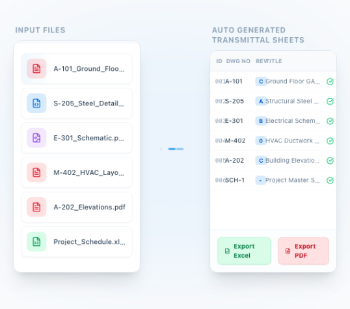
A Chartered Quantity Surveyor explains what needs to change and how.
New planning reforms and Warm Homes Bill

Take centre stage at UK Construction Week London.

A brief run down of changes intentions from April in an onwards.
Reslating an ancient water mill

A rare opportunity to record, study and repair early vernacular roofs.
CIOB Apprentice of the Year 2025/26

Construction apprentice from Lincoln Mia Owen wins this years title.
Insulation solutions with less waste for a circular economy

Rob Firman, Technical and Specification Manager, Polyfoam XPS explains.
Recycled waste plastic in construction
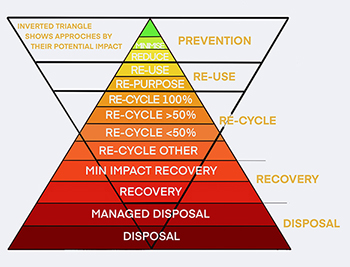
Hierarchy, prevention to disposal, plastic types and approaches.
UK Net Zero Carbon Buildings Standard V1 published

Free-to-access technical standard to enable robust proof of a decarbonising built environment.
Prostate Cancer Awareness Month

Why talking about prostate cancer matters in construction.
The Architectural Technology podcast: Where it's AT

Catch up for free, subscribe and share with your network.
The Association of Consultant Architects recap

A reintroduction and recap of ACA President; Patrick Inglis' Autumn update.
The Home Energy Model and its wrappers

From SAP to HEM, EPC for MEES and FHS assessment wrappers.
Future Homes Standard Essentials launched

Future Homes Hub launches new campaign to help sector prepare for the implementation of new building standards.
Building Safety recap February, 2026
Our regular run-down of key building safety related events of the month.
Planning reform: draft NPPF and industry responses.
Last chance to comment on proposed changes to the NPPF.

A Regency palace of colour and sensation. Book review.