





Health performance indicators in the built environment

Contents |
[edit] Introduction
On 28 January 2021 CIOB hosted a webinar entitled, IMMUNE - The world’s first open source Healthy by Design Building Standard. Chaired by Dr Darren Allen, IMMUNE director, the webinar panel included Catalin Nastasoiu, IMMUNE marketing consultant, Gavin Bonner, vice president of Genesis Property and Dr Liviu Tudor, president of the European Property Federation and developer of the IMMUNE building standard.
The IMMUNE Building Standard is an international certification programme that can be used to identify buildings that have been designated as safe from the transmission of COVID-19 or other contagious airborne illnesses. It was developed in response to the COVID-19 pandemic of 2020/21.
For more information see: IMMUNE Building Standard.
[edit] Returning to the workplace
As employees return to the workplace there is likely to be an expectation of better water filtration, cleaner air and other improvements in the environment. Allen suggests, “people will ‘interview’ their buildings” before agreeing to return, and Health Performance Indicator (HPIs) will help to document adjustments that have been made. Citing precedents first set in structural safety standards (such as those addressing earthquakes, fires or floods) and then sustainability standards (such as those addressing energy usage, pollution controls and the need for more efficient buildings), Allen sees health and wellness as the next critical area for building standards.
Noting the lack of preparation in most built environments (other than those with clean room requirements or dealing with healthcare and infectious diseases), Allen opened the webinar by discussing the need to address the current condition of the built environment. He stressed the importance of a Healthy by Design System (HbDS) at the core of a building’s resilience. IMMUNE seeks to produce HbDS by using technology such as big data (captured by IoT sensors) and artificial intelligence which is then relayed in real time to facilities management departments to prompt adjustments to cleaning, security, fire safety and other practices associated with health.
IMMUNE and HbDS are primarily associated with existing buildings, and seeks input from facilities managers, property owners, architects, human resources and other stakeholders. The expectation is that everyone will come together to develop, design, engineer and permanently maintain the building with health in mind.
[edit] Examples of HPIs
One important aspect of HbDS is the concept of health performance indicators (HPIs). Allen sees them as a wellness-based counterpart to key performance indicators (KPIs) commonly used as a measure of business activity.
Essential to HbDS are the HPIs introduced in the book Healthy Buildings by Joseph G. Allen, Director of the Healthy Buildings Program and John D. Macomber, Senior Lecturer in Finance at Harvard Business School. This matrix illustrates the concepts that have been incorporated into IMMUNE and its HbDS. These concepts are designated as HPI factors to be measured over time.
[edit]
| BEFORE | AFTER |
| Employee happiness | Illness trends |
| Employee complaints | Total sick days |
| Data collected from personal digital devices | How employees perceive their health |
| Sentiment analysis | Healthcare costs |
In evaluating the input of people (who are fully encouraged to contribute their observations), the HPIs are examined based on benchmarking levels recorded over time and then compared to data from places, including:
- Comparable examples in the industry.
- Buildings within the organisation.
- Specific areas (such as different floors) within the building.
[edit]
| BEFORE | AFTER |
| Building design | Space utilisation |
| Building composition | Building audits |
| Ventilation | How employees perceive the building |
| Continuous commissioning | Retroactive commissioning |
The data that has been gathered about the buildings can be used to produce a digital twin that can be made visible to provide a live broadcast of:
- Water quality
- Dust/allergens
- Mould/moisture
- IAQ/VOCs
- Ventilation/CO2
- Temperature
- Noise/acoustics
- Safety/security
[edit] Life after COVID-19
By establishing HPIs and continuously monitoring them, facilities management departments will be able to take proactive measures to respond to other adverse conditions that may occur in the built environment. These might include seasonal flu outbreaks, industrial accidents, fire safety issues and so on.
Those buildings that apply for IMMUNE accreditation will be required to recertify issues over a period of time explains Tudor, who reiterates that the standard “will not be buried when the pandemic is gone.” He stresses its importance, seeing it as part of an organisation’s corporate social responsibility.
[edit] Related articles on Designing Buildings Wiki
- Benchmarking.
- Beyond the pandemic.
- Building services and health risk resilient buildings.
- CEOs predict COVID-19 workplace changes will be permanent.
- CIOB articles.
- Coronavirus and the construction industry.
- Corporate social responsibility in construction CSR.
- Facilities management.
- Health and safety for building design and construction.
- IAQ developments accelerated by COVID-19 pandemic.
- IMMUNE Building Standard.
- Key performance indicators KPI.
- SAGE EMG guidance on ventilation and COVID-19.
- Ventilation and control of COVID-19 transmission.
Featured articles and news
Costs and insolvencies mount for SMEs, despite growth

Construction sector under insolvency and wage bill pressure in part linked to National Insurance, says report.
The place for vitrified clay pipes in modern infrastructure
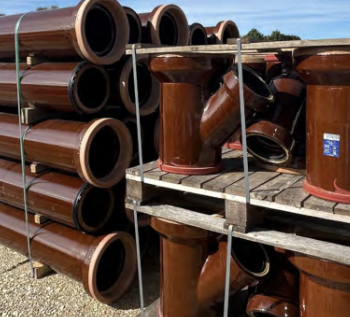
Why vitrified clay pipes are reclaiming their role in built projects.
Research by construction PR consultancy LMC published.
Roles and responsibilities of domestic clients

ACA Safety in Construction guide for domestic clients.
Fire door compliance in UK commercial buildings

Architect and manufacturer gives their low down.
Plumbing and heating for sustainability in new properties
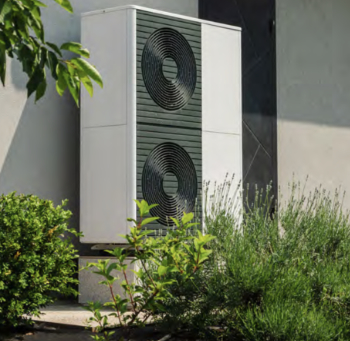
Technical Engineer runs through changes in regulations, innovations in materials, and product systems.
Awareness of the Carbon Border Adjustment Mechanism
What CBAM is and what to do about it.
The new towns and strategic environmental assessments
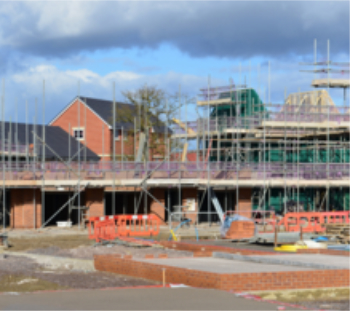
12 locations of the New Towns Taskforce reduced to 7 within the new towns draft programme and open consultation.
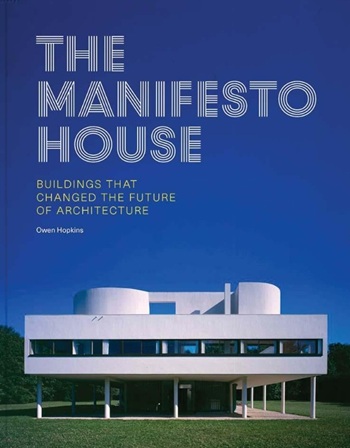
Buildings that changed the future of architecture. Book review.
The Sustainability Pathfinder© Handbook
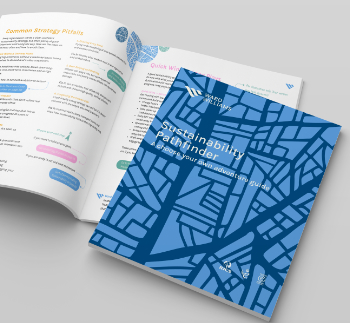
Built environment agency launches free Pathfinder© tool to help businesses progress sustainability strategies.
Government outcome to the late payment consultation, ECA reacts.
IHBC 2025 Gus Astley Student Award winners

Work on the role of hewing in UK historic conservation a win for Jack Parker of Oxford Brookes University.
Future Homes Building Standards and plug-in solar
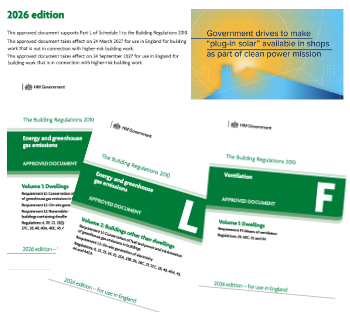
Parts F and L amendments, the availability of solar panels and industry responses.
How later living housing can help solve the housing crisis
Unlocking homes, unlocking lives.
Preparing safety case reports for HRBs under the BSA
A new practical guide to preparing structural inputs for safety cases and safety case reports published by IStructE.
Male construction workers and prostate cancer

CIOB and Prostate Cancer UK encourage awareness of prostate cancer risks, and what to do about it.