





Government backs SME builders
Contents |
[edit] Simpler rules, faster decisions for land, regulation and finance backed by SME cash-boost
Thousands of homes will be built faster on smaller sites across the country as complex planning rules are streamlined, onerous regulatory burdens eased, and financial firepower is provided to SME builders.
The current system makes it far too difficult for smaller builders to get spades in the ground – with a small site of 10 homes jumping through the same planning hurdles as one with 100 or more.
Smaller firms, which provide local jobs and train eight out of 10 construction apprentices, have seen their market share shrink since the 1980s, when SME builders delivered 40% of the country’s homes.
Today’s changes will help turn this around, driving up competition across the sector and helping deliver the Plan for Change milestone of 1.5 million homes, so more working families and young people can achieve the dream of homeownership.
[edit] The proposals
The proposals include:
- Faster decisions for small sites: Minor developments of up to nine homes will benefit from streamlined planning and eased Biodiversity Net Gain (BNG) requirements, with faster decisions being taken by expert planning officers, not planning committees;
- A new ‘medium site’ category: Sites between ten to 49 homes will face simpler rules and fewer costs – including a proposed exemption from the Building Safety Levy and simplified BNG rules, making it easier to deliver biodiverse habitats on these sites, delivering a win-win for nature and development;
- More land and financing options for SMEs: Homes England will release more of its land exclusively to SMEs, and a new National Housing Delivery Fund to be confirmed at the spending review will support long-term finance options, such as revolving credit facilities and lending alliances.
- A new pilot to unlock small sites for SMEs: the Small Sites Aggregator pilot in Bristol, Sheffield and the London Borough of Lewisham will unlock sites that would otherwise not have been developed, while attracting private investment to build new social rent homes. Building on a model developed by Lloyds Banking Group’s Social Housing Initiative, the Small Sites Aggregator will help tackle the housing shortage, address unviable small plots of land, and create local jobs supporting the government’s Plan for Change.
[edit] Further support
Further support announced today for local builders includes:
- £100 million in SME Accelerator Loans to help smaller firms to grow and invest using part of the £700 million extension to the Home Building Fund announced in December.
- £10 million for councils to fund more specialists to speed up environmental assessments, getting spades in the ground faster.
- A £1.2 million PropTech Innovation Fund to support innovation in small site delivery, for example through use of new data tools.
It comes as the government unveiled its plans to train up to 120,000 new apprentices, including within construction – ensuring the industry has what it needs to get building.
The wide-ranging package for SMEs today builds on the government’s planning overhaul so far, with the new National Planning Policy Framework alone expected to drive housebuilding to its highest level in over 40 years and add £6.8 billion to the economy by 2030.
[edit] Comments
Deputy Prime Minister and Housing Secretary, Angela Rayner said:
“Smaller housebuilders must be the bedrock of our Plan for Change to build 1.5 million homes and fix the housing crisis we’ve inherited – and get working people on the housing ladder. For decades the status quo has failed them and it’s time to level the playing field. Today we’re taking urgent action to make the system simpler, fairer and more cost effective, so smaller housebuilders can play a crucial role in our journey to get Britain building.”
Full details are being set out today for the modernising of planning committees – ensuring elected councillors focus on the most significant proposals and larger developments rather than small-scale projects or niche technical details, while more faster decisions are made by expert trained planners.
Under these plans, once a development has been agreed in principle technical details won’t keep going back and forth to committees - accelerating housebuilding and saving council planning departments time and money.
CEO of Lloyds Banking Group, Charlie Nunn said:
“We strongly welcome the government’s announcement today that it will pilot the Small Sites Aggregator in Bristol, Sheffield and Lewisham.
“Through the Social Housing Initiative, we’re proud to have helped ignite this innovation in housing development and finance – unlocking the small, brownfield sites in our communities which are lying empty yet have immense potential to provide good quality homes in our towns and cities.
“This exciting partnership between the public and private sectors will increase investment at pace into the new, genuinely affordable homes that are needed across the UK.”
Further information:
The government has published a new working paper on planning thresholds for small and medium housing sites.
The government has also launched a consultation reviewing Biodiversity Net Gain for minor, medium and brownfield development. This will be open for 8 weeks.
As part of the Planning and Infrastructure Bill, the government is also launching a new consultation on reforming planning committees and their role in the planning process. This consultation includes detailed proposals for a national scheme of delegation which would direct the majority of minor and technical applications to planning officers, freeing up committees to consider the most complex and controversial by categorising applications into Tier A or B. Tier A applications will go to officers, while Tier B applications have the ability to be considered by committees if necessary. It will be open for 8 weeks.
The Home Building Fund is administered by Homes England and is designed for SME housebuilders in England that are struggling to access loans from traditional lenders. Last year the government announced a £700 million extension to the Fund.
The new National Housing Delivery Fund will provide a range of funding tools to support SMEs, including support for revolving credit facilities. Further details will be announced at the Spending Review.
This government has also launched a £1.2m PropTech Innovation fund to inject innovation into small site delivery. Examples of potential solutions include the use of data and tools to provide certainty on future infrastructure capacity for SME housebuilders, meaning they can make the case for investment easier.
The government is making available a further £10m this financial year to help local planning authorities implement BNG, on top of £35m provided in previous years.
The government is also announcing today that it will consult on how we apply BNG for Nationally Significant Infrastructure Projects (NSIP) to provide consistent regulations for developers - many of them who are already delivering biodiversity gains at scale. Measures will be in place from May 2026.
Featured articles and news
Costs and insolvencies mount for SMEs, despite growth

Construction sector under insolvency and wage bill pressure in part linked to National Insurance, says report.
The place for vitrified clay pipes in modern infrastructure

Why vitrified clay pipes are reclaiming their role in built projects.

Research by construction PR consultancy LMC published.
Roles and responsibilities of domestic clients

ACA Safety in Construction guide for domestic clients.
Fire door compliance in UK commercial buildings

Architect and manufacturer gives their low down.
Plumbing and heating for sustainability in new properties

Technical Engineer runs through changes in regulations, innovations in materials, and product systems.
Awareness of the Carbon Border Adjustment Mechanism
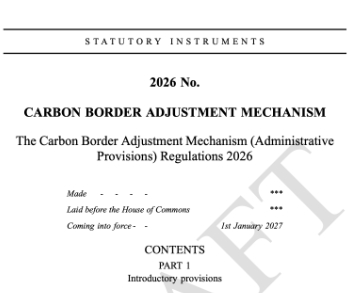
What CBAM is and what to do about it.
The new towns and strategic environmental assessments

12 locations of the New Towns Taskforce reduced to 7 within the new towns draft programme and open consultation.

Buildings that changed the future of architecture. Book review.
The Sustainability Pathfinder© Handbook
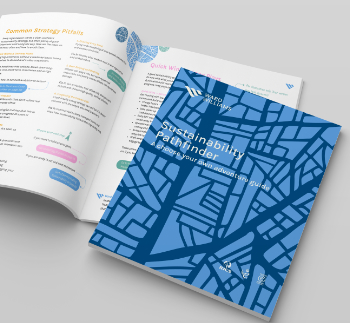
Built environment agency launches free Pathfinder© tool to help businesses progress sustainability strategies.

Government outcome to the late payment consultation, ECA reacts.
IHBC 2025 Gus Astley Student Award winners

Work on the role of hewing in UK historic conservation a win for Jack Parker of Oxford Brookes University.
Future Homes Building Standards and plug-in solar
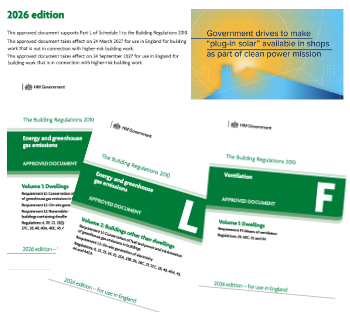
Parts F and L amendments, the availability of solar panels and industry responses.
How later living housing can help solve the housing crisis

Unlocking homes, unlocking lives.
Preparing safety case reports for HRBs under the BSA

A new practical guide to preparing structural inputs for safety cases and safety case reports published by IStructE.
Male construction workers and prostate cancer

CIOB and Prostate Cancer UK encourage awareness of prostate cancer risks, and what to do about it.