





Forklift truck

Contents |
[edit] Introduction
Forklift trucks are used to transport materials and goods on pallets or packs, and are able to move them both horizontally and vertically. They are most suited to use on firm and level ground, and so are common in warehouses and on industrial sites, but they are generally designed to operate in poorer conditions as well and so can be used on construction sites.
On construction sites, they are predominantly used as part of the materials and goods storage process, or for moving materials and goods where the height of the structure does not exceed three storeys.
[edit] Types of forklift truck
The common features of forklift trucks include their engine, the driver’s cab, and the lifting forks.
The selection of the appropriate type of forklift truck will depend on considerations such as:
- The load and lifting height required.
- The use of attachments (such as fork extensions, booms, rotating heads, drum clamps, paper roll clamps, bale clamps, load stabilisers and so on).
- Available power sources (electric batteries, liquefied petroleum gas (LPG), petrol or diesel).
- The terrain.
- The need to protect the operator.
- Exposure to the weather.
- The need for lighting.
- Noise restrictions.
There are three basic types of forklift truck:
[edit] Straight mast forklift
This has a telescopic straight mast that extends vertically, typically with a maximum lift height of 5.7 m, a maximum forward tilt of 3-degrees and a maximum backward tilt of 10-degrees. This type of forklift is capable of lifting 1.5 tonnes.
[edit] Telescopic boom forklift
This has a telescopic boom that is able to reach forwards 3.35 m and has a maximum lift height of 8.5 m. The maximum load is 2 tonnes.
[edit] Overhead forklift
This has a hydraulically controlled overhead lifting arm that is able to reach forwards 2.35 m and has a maximum lift height of 6.5 m. The maximum load is 1.5 tonnes.
[edit] Health and safety
According to the Health and Safety Executive (HSE), forklift trucks are involved in about a quarter of all workplace transport accidents.
HSE has published ‘Rider-operated lift trucks: Operator training and safe use, Approved Code of Practice and guidance’ (known simply as ‘L117’) intended for employers and those responsible for the safe operation of lift trucks, as well as those in control of worksites, the self-employed, managers and supervisors.
It includes:
- The main legal requirements relating to lift trucks.
- The Approved Code of Practice.
- Guidance on operator training for stacking rider-operated lift trucks.
- Guidance from HSG6 Safety in working with lift trucks, which it replaces.
The Management of Health and Safety at Work Regulations require that a suitable and sufficient risk assessment is undertaken to protect employees and others, and this is an important part of planning lifting operations. Other obligations include; providing training, proper maintenance and inspection, provision of suitable operating areas and suitable loads, and so on.
Particular care must be taken by operatives to ensure that loads are placed correctly on forks prior to lifting, that the forklift truck is not overloaded, and to reduce the crossing of operating areas with other transport and pedestrian routes.
Other relevant legislation includes:
- Health and Safety at Work etc Act.
- Provision and Use of Work Equipment Regulations (PUWER).
- Lifting Operations and Lifting Equipment Regulations (LOLER).
- Workplace (Health, Safety and Welfare) Regulations.
- Control of Substances Hazardous to Health Regulations (COSHH).
- Construction (Design and Management) Regulations (CDM).
Read about other types of construction plant here.
[edit] Related articles on Designing Buildings
- Back actor.
- Bituminous mixing and laying plant.
- Cherry pickers.
- Compressed air plant.
- Concreting plant.
- Construction plant.
- Construction tools.
- Crane supports.
- Earth-moving plant.
- Equipment in buildings.
- Excavating plant.
- Hoist.
- Lift table.
- Lifting device.
- Lock out tag out LOTO.
- Pallet jack.
- Post lift.
- Road sweeper.
- Scaffolding.
- Scissor lift.
- Stacker.
- Types of crane.
[edit] External references
- Fork Lift Truck Association
- ‘Building Construction Handbook’ (6th ed.), CHUDLEY, R., GREENO, R., Butterworth-Heinemann (2007)
- Major Causes Of Forklift Accidents
Featured articles
Check out some of the best features and news from Designing Buildings as well as key stories from around the web.
Bridging the gap between clients and contractors
Concerns remain around contractor quality, capability, and delivery.
Construction Management, 10 June.
Heat pumps beat boilers in new home tests.
Building Safety Act implementation in Wales

CIAT to host industry panel on 26 June.

New and updated CLC building safety guidance.
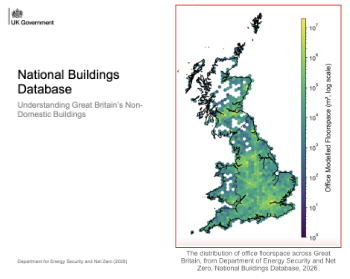
New UK National Buildings Database.
Building Safety Wiki Interviews

Chief executive of the British Woodworking Federation.
Planning condition discharge in England and Wales

A brief explanation from a building compliance expert, with further links.
Overheating guidance and tools for building designers

Guidance for dealing with element of building fabric control that have increasing importance.
Shading for housing, a design guide

From the Good Homes Alliance and British Blind and Shutter Association.
UK Standard Skills Classification (SSC)

A shared framework for describing skills needs.
Social media ban consultation comes to close

CIOB urges UK Government to consider social media’s role in careers guidance in ban debate.
Comments