






Carbon Neutrality and Circular Economy Drive Transformation of Mining Equipment in Latin America
Across Latin America, the mining and aggregate industries are undergoing a profound transformation. As global efforts toward carbon neutrality and circular economy accelerate, mining operators in the region are rethinking their production processes and equipment strategies. This shift is not only about meeting environmental regulations—it is also about improving efficiency, lowering costs, and ensuring long-term competitiveness.
From large-scale copper and lithium mines in Chile and Peru to infrastructure projects in Brazil and Colombia, sustainable and intelligent crushing solutions are becoming essential. In this context, upgrading traditional crushing systems to eco-friendly and energy-efficient models such as stone crusher plants, aggregate crusher plants, and mobile stone crusher plants is emerging as a key direction for the industry’s green transition.

[edit] The Rising Influence of Carbon Neutrality Goals
The global move toward carbon neutrality has reshaped mining and aggregate operations in Latin America. Governments are setting stricter environmental standards, while international investors increasingly demand sustainability reports before financing new projects.
In response, mining companies are adopting new technologies to cut emissions throughout the value chain. One major focus area is the optimisation of crushing and screening operations, which account for a significant portion of total energy consumption in quarrying and mineral processing.
Modern aggregate crusher plants are now designed with energy-efficient motors, variable-speed drives, and intelligent control systems that minimise unnecessary energy use. By optimising feed flow and load distribution, these systems can reduce power consumption by up to 20%, while maintaining consistent output quality.
Furthermore, renewable energy integration—such as solar and wind power—is becoming common at remote mining sites. Combined with modular and mobile stone crusher plants, these hybrid power systems allow operators to achieve both operational flexibility and lower carbon footprints.
[edit] Circular Economy Principles Redefine Material Management
The circular economy emphasises reusing, recycling, and reducing waste—principles that are increasingly being applied in Latin America’s construction and mining sectors. The adoption of circular practices is reshaping how raw materials and byproducts are managed throughout their lifecycle.
In urban areas, old concrete, asphalt, and demolition debris are being processed into new construction materials using stone crusher plants. This not only reduces the demand for virgin aggregates but also minimises landfill waste and transportation costs. Recycling operations supported by compact, mobile crushing units are gaining popularity in cities like Lima, São Paulo, and Bogotá, where space is limited and sustainability requirements are high.
At the same time, mining companies are finding value in processing tailings and waste rock. By using modern aggregate crusher plants, operators can recover usable minerals from residues, reduce environmental risks, and comply with stricter waste management regulations. These recycling-oriented solutions are not only environmentally responsible but also economically beneficial, turning waste into valuable resources.

[edit] Intelligent and Energy-Efficient Equipment Takes the Lead
Technological innovation plays a critical role in achieving sustainability. Equipment manufacturers are introducing smart, automated, and low-emission solutions that enhance productivity while reducing operational impact.
For example, next-generation mobile stone crusher plants feature hybrid or fully electric drives that significantly cut fuel consumption. Intelligent sensors and automation systems monitor equipment performance in real time, allowing for predictive maintenance and optimal energy use. These features are particularly important in remote Latin American mining regions, where maintenance access can be limited.
Automation also improves process stability. Intelligent systems can automatically adjust crusher settings based on material hardness and feed conditions, reducing the risk of overloading and ensuring consistent product quality. This leads to lower wear rates, extended equipment lifespan, and reduced spare parts consumption—all of which contribute to a more sustainable operation.
[edit] Environmental Policies and Market Incentives
Government policies are another powerful driver of change. Countries like Chile, Mexico, and Colombia have introduced national strategies to promote clean energy, sustainable mining, and waste reduction. These frameworks are encouraging both public and private sectors to invest in eco-friendly technologies.
In some regions, tax incentives and import benefits are available for companies that adopt energy-saving or low-emission equipment. This makes investing in modern aggregate crusher plants and mobile stone crusher plants not only environmentally responsible but also financially attractive.
Additionally, international mining corporations operating in Latin America are aligning their regional strategies with global environmental commitments. Many of them have pledged to reach net-zero emissions by 2050, creating new demand for electric and hybrid-powered crushing systems that can help meet those targets.
[edit] Challenges and Opportunities Ahead
Despite the progress, several challenges remain. Infrastructure gaps, limited access to renewable power, and uneven regulatory enforcement can slow the adoption of green technologies. However, these challenges also create opportunities for innovation and collaboration between governments, equipment manufacturers, and mining operators.
For instance, regional cooperation initiatives like the Pacific Alliance and Mercosur are fostering technology exchange and standardisation in sustainable mining practices. At the same time, international equipment suppliers are expanding local service networks, ensuring that modern stone crusher plants and other advanced machinery can be efficiently maintained in Latin America’s diverse environments.
As awareness of sustainability grows, local manufacturers are also beginning to integrate circular economy concepts into their designs, focusing on modularity, recyclability, and energy optimisation. This local innovation will play a key role in reducing dependence on imported equipment and promoting regional self-sufficiency.
[edit] Conclusion
The pursuit of carbon neutrality and circular economy principles is transforming Latin America’s mining and aggregate industries. Companies that embrace energy-efficient, intelligent, and modular crushing technologies will gain a decisive advantage in both performance and sustainability.
Whether through a fixed aggregate crusher plant optimised for high-capacity production or a flexible mobile stone crusher plant designed for recycling and relocation, the direction is clear—the future of crushing in Latin America is green, smart, and circular.
By investing in modern equipment and aligning with environmental policies, the region’s mining and construction sectors are not only contributing to global carbon reduction goals but also laying the foundation for a more resilient and sustainable industrial ecosystem.
[edit] Related articles on Designing Buildings
- A Short Overview Of An Asphalt Batching Plant Workflow
- A Summary of Concrete Plants: Advantages, Applications, and Types
- Adapting To Site Conditions And Improving Efficiency In Complex Latin American Terrain
- Asphalt mixing plant types and considerations
- Can a Mobile Asphalt Plant Mix While Moving?
- Carbon Neutrality and Circular Economy Drive Transformation of Mining Equipment in Latin America.
- Case Studies of Peru and Colombia: The Impact of Policies on Crushing Station Procurement
- Component parts of a mobile concrete plant
- Concrete batching plants
- Concrete batching plants; technical requirements for large-scale infrastructure projects
- Concrete boom pumps
- Concrete Pump Selection and Efficiency Improvement Strategies in Latin American High-Rise Building Construction
- Detailed Explanation of Pre-Installation Preparations for Aggregate Crushing Plants
- Does a Ready-Mix Concrete Plant Need to Use a Water Heater?
- Does the Installation of a Mobile Concrete Plant Require a Foundation?
- Fixed VS Mobile Asphalt Plants: Which is More Suitable for Project Contractors?
- Global Brands in Latin America and the Market Share of Asphalt Plant Manufacturers
- How Chilean Projects Achieve Green And Intelligent Production With Concrete Batching Plants
- How Peruvian Crushing Plants Can Achieve High Capacity And Low Energy Use
- How to Configure Aggregate Production Lines to Achieve Maximum Benefits
- How to Reduce the Energy Consumption of Drum Asphalt Plants?
- Investing in a Portable Concrete Plant
- Is a Self-Loading Concrete Mixer Suitable for Rugged Environments?
- Mobile asphalt stations
- Multi-Point Mobile Stone Crushers Under Dispersed Raw Material Distribution
- Potential environmental and circular economic value of concrete pumps
- Ready-Mix Vs Conventional Batching Plants: Intelligent Control Differences
- Self-loading concrete mixers
- Self-loading concrete mixer training and team management
- Small Concrete Plants vs Large Plants: Which One is More Suitable for Your Project Needs?
- Social Responsibility and Sustainability in Stone Crushing Plants in Latin America
- Technical Engineer's Perspective: Performance of Concrete Trailer Pumps in High-Rise Buildings
- The Impact of the Accuracy of the Weighing System on Asphalt Plants
- Top Rated Concrete Mixer Truck Parts In Your Town
- Tracked Mobile Aggregate Crusher Plant with Oil Electric Dual-use
- What Are the Basic Parameters of a Mobile Asphalt Plant?
- What Are The Hidden Advantages Of A Mobile Asphalt Plant That Can Be Remotely Monitored?
- Why Is the Concrete Trailer Pump Powerful?
- What to Look for in a Concrete Batching Plant
Featured articles and news
Costs and insolvencies mount for SMEs, despite growth

Construction sector under insolvency and wage bill pressure in part linked to National Insurance, says report.
The place for vitrified clay pipes in modern infrastructure
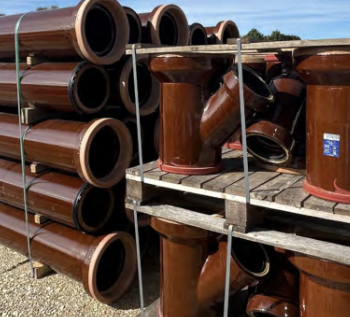
Why vitrified clay pipes are reclaiming their role in built projects.

Research by construction PR consultancy LMC published.
Roles and responsibilities of domestic clients

ACA Safety in Construction guide for domestic clients.
Fire door compliance in UK commercial buildings

Architect and manufacturer gives their low down.
Plumbing and heating for sustainability in new properties

Technical Engineer runs through changes in regulations, innovations in materials, and product systems.
Awareness of the Carbon Border Adjustment Mechanism
What CBAM is and what to do about it.
The new towns and strategic environmental assessments

12 locations of the New Towns Taskforce reduced to 7 within the new towns draft programme and open consultation.

Buildings that changed the future of architecture. Book review.
The Sustainability Pathfinder© Handbook
Built environment agency launches free Pathfinder© tool to help businesses progress sustainability strategies.

Government outcome to the late payment consultation, ECA reacts.
IHBC 2025 Gus Astley Student Award winners

Work on the role of hewing in UK historic conservation a win for Jack Parker of Oxford Brookes University.
Future Homes Building Standards and plug-in solar
Parts F and L amendments, the availability of solar panels and industry responses.
How later living housing can help solve the housing crisis

Unlocking homes, unlocking lives.
Preparing safety case reports for HRBs under the BSA

A new practical guide to preparing structural inputs for safety cases and safety case reports published by IStructE.
Male construction workers and prostate cancer

CIOB and Prostate Cancer UK encourage awareness of prostate cancer risks, and what to do about it.