




Selecting sandwich panel cores for industrial buildings
Contents |
[edit] Introduction
Sandwich panel selection on industrial projects is often reduced to a thickness - a 100 mm roof panel, a 75 mm wall panel - yet the choice of core material governs far more of the building's long-term behaviour than its thickness does. Fire classification, thermal performance, structural span capacity, moisture behaviour and cost all track the core, and the same nominal panel can behave very differently in a fire or a cold store depending on what is inside it. This article sets out the practical differences between the common core types and the selection logic that follows from them. It complements the general [Sandwich panel] article, which covers composition and history.
[edit] What the core determines
The two metal facings of a panel carry bending; the core keeps them apart, resists shear, and provides insulation. Three properties therefore follow the core directly:
- Reaction to fire - whether the core is combustible, whether it drips, and whether it holds its shape at elevated temperature. This drives insurer acceptance as much as building-code compliance.
- Thermal conductivity - lambda values range from roughly 0.022 W/m·K for polyurethane-family foams to around 0.035–0.040 W/m·K for mineral wool, which means the same U-value needs a very different panel thickness depending on the core.
- Structural behaviour - span tables are produced per core type and density, because the shear stiffness of the core sets the panel's allowable span and load.
[edit] The common core types
Expanded polystyrene (EPS) is the lowest-cost option and still widely used for cost-driven, low-specification storage and agricultural buildings. Its weaknesses are fire-related: it melts and drips, contributes to flame spread, and achieves only modest fire classifications. Where insurance conditions or fire codes intervene, EPS is usually the first core to be excluded.
Polyurethane (PU/PUR) foams offer closed-cell insulation at low lambda values, giving good thermal performance in relatively thin panels. Reaction-to-fire performance is better than EPS - the foam chars rather than melts - but it remains combustible.
Polyisocyanurate (PIR) is the upgraded member of the polyurethane family: chemically similar, but with a higher proportion of isocyanurate rings that raise temperature stability and slow flame spread. PIR is the default core where strong thermal performance and improved fire behaviour are needed together, and it dominates cold-store and cold-chain construction for exactly this reason.
Mineral wool (rock wool) is non-combustible and retains its structure at temperatures well beyond those at which foam cores have failed, which is why it is specified where fire compartmentation, insurer requirements or hot-process adjacency govern. It also provides acoustic mass. The trade-offs are lower insulation value per millimetre (so thicker panels for the same U-value) and higher weight.
Phenolic foam occupies a premium niche, combining low thermal conductivity with strong fire performance, at a cost that restricts it to demanding applications. Hybrid panels - typically polyurethane edge-sealing around a rock wool strip - attempt to combine the thermal efficiency of foam at the panel edges with the fire performance of mineral wool in the exposed core.
Panel manufacturers supply these cores as standard product families - for example, insulated sandwich panel ranges in PU, PIR, rock wool and EPS for wall, roof, cleanroom and cold-room applications - so in practice the selection decision is made between families rather than between custom variants.
[edit] Selection logic: what governs the building
Fire-governed buildings. Where the contents are combustible, where fire compartmentation is required between occupancy zones, or where insurers set the terms - high-bay storage, chemical and plastics warehousing, food processing with hot processes - mineral wool is the safe specification, with PIR acceptable where thermal performance must be preserved and the fire strategy permits it. Insurer guidance on combustible sandwich panels, published in the UK following fire losses in the 1990s, remains the reference point for storage occupancies.
Thermal-governed buildings. Cold stores, chilled distribution and food processing select PIR or PU, with thickness set by a dew-point calculation for the actual internal condition rather than by a generic U-value. At deep-freeze temperatures the panel joints, corner details and vapour sealing become the limiting factors - which is why cold-store panels are specified as tongue-and-groove or camlock systems rather than through-fixed.
Condensation-prone buildings. In humid climates and humid processes (laundries, breweries, swimming halls), the risk is interstitial condensation, not insulation shortage. A lower-lambda foam core keeps the dew point inside a thinner build-up, which is easier to detail correctly than a thick mineral-wool panel whose joints sit close to the dew line.
Acoustic requirements. Plant rooms, generator houses and production halls with noise-sensitive neighbours benefit from the mass of mineral wool cores; foam-cored panels alone rarely satisfy acoustic specifications.
Cost-governed buildings. Where none of the above governs - basic storage sheds, canopies, agricultural buildings — EPS remains a rational choice, provided the fire classification is acceptable to the insurer and the code.
[edit] Structural and detailing checks
Whatever the core, three checks belong in the specification:
- Span and load tables - confirm the panel's allowable span against the actual purlin spacing and the imposed loads, including snow drift zones and cleaning loads on roofs.
- Thermal bridging at fixings - through-fixed panels bridge the insulation at every fastener; concealed-fix systems avoid this but cost more and demand tighter tolerances.
- Joint and end-lap detailing - the panel is a system, not a product: gaskets, sealants and lap orientation determine airtightness and water tightness, and most in-service failures trace to joints rather than to the core.
[edit] Related articles on Designing Buildings
Featured articles
Check out some of the best features and news from Designing Buildings as well as key stories from around the web.

Dorset's first conservation campaigner?
Gov.uk - Hot-rolled steel plate

New anti-dumping measure imposed on South Korea.
ECA responds to the Milburn Report

Youth employment to be linked to workforce demand.
The construction industry urgently needs to attract new talent

CIOB responds to Neets report.
Grenfell Tower community update

Memorial columns to be retained as careful dismantling continues.

When buildings reflected the local resources available.

CIOB reports 57% are using artificial intelligence technologies.

More of England’s ‘hidden heroes’ will be celebrated.

CIAT calls for retrofit to be a priority.
Version 6 is now available, along with guidance for ECA members.
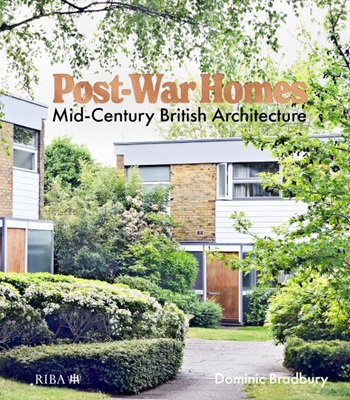
Post-War Homes: mid-century British architecture. Book review.

CIAT reflects on the party conferences.