





Thomas Hardy: Dorset's first conservation campaigner?
Dorset-born Thomas Hardy, who revived the name Wessex as the setting for most of his novels, was an architect and an active campaigner for historic buildings with SPAB.

|
| Looking up at the tower of Wimborne Minster (Photo: Duncan McCallum) |
Thomas Hardy died almost a century ago, but he remains one of the most popular English writers of all time. His 14 novels were written over a period of 25 years; his poems were published over 30 years; and his early career as an architect lasted about 20 years. Yet Hardy’s campaigning to save historic buildings through active, albeit occasional, service to the Society for the Protection of Ancient Buildings (SPAB) spanned over 45 years.
Hardy became a SPAB member in 1881 after he had stopped practising as an architect and was concentrating on his writing. He remained a supporter until his death in 1928. He was involved in at least 16 cases from 1881 to 1926, and from reading the casework correspondence in the SPAB archives, four points are clear:
- he was generous in offering his architectural knowledge and experience,
- he was happy to use his high-profile literary status to fight for heritage,
- the cases he was involved in have many similarities to those we deal with today,
- Hardy helped to continue to shine a national spotlight on threatened heritage through the media, by networking and by offering detailed advice, very much following in the path that William Morris had set.
Hardy’s involvement sometimes helped achieve a positive outcome for heritage, but it is clear that success was never a given, and in the absence of robust planning and heritage protection legislation many historic buildings were lost in the Victorian and Edwardian eras. This article explores a few of the cases Hardy was involved with. It draws partly on valuable detailed research carried out by former SPAB secretary, Philip Venning, and by Claudius JP Beatty in his 1995 book ‘Thomas Hardy: conservation architect’.
Given Hardy’s Dorset roots and his setting of most of his literary and poetic outputs in the county, it is no surprise that his casework involvement is largely focused there. As his fame as an author grew, he became very well connected with landowners, senior clergy and other movers and shakers in the county, and was able to lobby them directly or suggest to SPAB who to approach, and what kind of lobbying might change minds.
Hardy’s first recorded involvement with SPAB was in 1880 relating to worrying cracks in Wimborne Minster’s central tower. Hardy had become involved through his publisher Charles Kegan Paul, who had spotted Hardy’s literary potential and put him into print with great success. Paul, an enthusiastic SPAB committee member, wrote to SPAB’s secretary suggesting that Hardy might help in advising on necessary repairs: ‘Mr Hardy has only just settled at Wimborne, but his name will be well known to you as the author of ‘Far from the Madding Crowd’ and other very striking novels. He is an architect by profession though not now practising, and is I think a man who would be thoroughly in sympathy with our society’.
Hardy responded positively to SPAB’s overtures and offered ‘anything I can do to assist the Society in the matter of the Minster I will attend to with the greatest pleasure – for I am entirely in sympathy with its movements’. Hardy later went as part of a SPAB delegation to meet the minster’s architect Walter J Fletcher.
It was a success, with Fletcher reassuring SPAB’s secretary in November 1881 that ‘I have to thank the deputation of members of your Society for their kind help and useful hints in regard to the works being done to our beautiful Lantern Tower. The repair of the masonry and the pointing-in of the open joints has been done solely with the desire to arrest further decay, by keeping the wet from the interior of the masonry and making the walls as solid as possible.’
SPAB’s 1882 Annual Report noted that ‘the Society sent to the architect in charge a list of recommendations as to the best way of preventing further failure. He, in a very friendly spirit, accepted and carried out the Society’s scheme, with the happy result that up to the present time there has been no further sign of any further damage.’
The 1897 case of the church of St Andrew in East Lulworth shows Hardy drawing on his architectural and repair knowledge. He knew the church well because he had drawn up plans for its partial rebuilding as an apprentice to architect John Hicks in the 1860s, before he had undergone formal architectural training.
St Andrew’s incumbent, the Rev Robert Usher, asked SPAB for advice in repairing the 15th-century tower. SPAB’s secretary, Hugh Thackeray Turner, asked Hardy if he could visit the building to see if he agreed with the architect’s proposed works, but ‘if you cannot do this perhaps you could help us by asking your brother, Mr [Henry] Hardy, the Builder, whether he could visit the building for us, or better still, perhaps you could arrange to visit with him.’
Hardy responded noting that ‘this tower is one of exceptional grace and artistic proportions, in curious contrast to the customary local architecture of so late a date… and when in its prime… must have been of extraordinary beauty’. He included descriptions of work he deemed absolutely necessary although, somewhat surprisingly, he recommended Portland cement pointing in his schedule (although this was much weaker than it is today). For example, for the south-east buttress, ‘take down to level of second slope from top and replace stone for stone. These are large and can easily be numbered and marked. The re-erection to be done in Portland cement. No lime to be used, the salt air appearing to have disintegrating effect on mortar. Point all the lower part of the buttress with the same.’ The repairs were carried out.
In 1899 Hardy reported to Thackeray Turner a rumour that the church of St Mary the Virgin in Stratton, near Dorchester, was to be demolished. ‘I am not personally acquainted with the details of the building,’ he wrote, ‘but those who know its features inform me that judicious repair is all that is really necessary. It is a quaint church, and it would be a thousand pities if it were destroyed. Several persons feel as I do on the matter, and they have requested me to drop this line to you.’
A friend of Hardy’s, Horace Moule, provided further information on the proposed repair work, and of the rebuilding of the narrow chancel arch and squints, and a new chancel. The architect, GR Crickmay, explained his proposals to SPAB, but the secretary responded: ‘I am very sorry to say that every member of my Committee who was present at our meeting yesterday expressed regret to see what is proposed and I was desired to ask you whether you think your Client could be persuaded to be satisfied with less alterations?’
The architect replied the same day saying that ‘it is impossible to keep them [the walls] up. The building is positively unsound otherwise you may depend I would not rebuild but this has become a necessity. I dislike being the man to condemn this old building, but the time has arrived when it must be rebuilt, but every feature that it is possible to maintain shall be and I hope we shall be able to reuse the old facing stone.’
Turner suggested that Hardy ‘may be able to put in a word for its retention’. Hardy replied explaining that he had already been invited to attend the rebuilding committee ‘and I gathered from the tone of the meeting at its conclusion that my remarks had had the desired effect. As I thought the matter urgent… I took it upon myself to say that I represented the Society.’ He drafted the text of a long letter which he suggested SPAB could send to the chief subscriber, the Hon Mrs Ashly, and Hardy also wrote to the Bishop of Salisbury.
Sadly, Mrs Ashly died shortly after, but another rich parishioner offered to pay for the new chancel and the scheme progressed. The Ecclesiastical Commissioners wrote that ‘it would be a mistake to reinstate the old arch’, saying that it ‘does not appear to be possessed of any special beauty or interest’ and feeling that it would be ‘so inconvenient’. So, as is not infrequently the case when rich benefactors got involved in church repairs, their munificence was too generous for cash-strapped parishes to ignore, and the damaging scheme went ahead.
In 1897 the 17th-century thatched White Horse Inn at Maiden Newton was under threat. Owned by a Dorset brewer, SPAB described it as ‘a characteristic and most beautiful example of a West country inn and the chief feature of interest in the village’, and Hardy was asked to inspect. Arriving by bicycle, he looked over the building with the landlord and felt strongly that it could be retained. ‘The landlord’s contention that no ordinary traveller likes to occupy the bedrooms as they are, is obviously true. My own feeling is that the best course would be to insert new flooring where necessary, repair the old roof and re-thatch it. In doing this the internal partitioning, one of the staircases, etc, could be changed to meet modern requirements, as is of comparatively recent date.’
Despite considerable pressure, including from the National Trust, the owners were determined to rebuild, and would not even countenance the retention of the front elevation. The uninspiring replacement inn has now been converted to even less inspiring apartments. Hardy included the old inn in several of his short stories, so it lives on, if only in prose.
In 1901 Hardy was invited by the Rev Sidney Boulter to join the restoration committee of St George’s Church in Fordington, as it was very close to the author’s home. The restoration scheme, by architect WD Caröe, was to include the retention of a very attractive Georgian chancel. However, the plans slowly became more ambitious and Hardy withdrew from the committee. A fellow SPAB member said that it was because he ‘did not want to have the credit of sanctioning work he strongly disapproves of’. Hardy himself wrote privately to Boulter noting that ‘the fact is, architects do go on rather in a high-handed manner even nowadays; I think this one wants looking after’.
A change in incumbent brought about an even more ambitious plan to replace the Georgian chancel in 1906. Hardy commented to Turner that ‘the [current] chancel is substantially built and would stand a thousand years. It is quite the reverse of a “mean erection”, as the [new] architect describes it having, in fact, considerable dignity; but of course it is true that it contrasts with the Gothic portion of the church. It seems to depend upon how far down in the centuries our sentiments of veneration extend, whether the Society should protest on the ground of antiquity. But it certainly could protest on the ground that there is no reason whatever for pulling down so substantial a piece of 18th-century work merely to erect 20th-century imitation Gothic in its place.’
The new vicar continued to promote his gothic vision, in 1911 even having the temerity to write to Hardy to help fund it, to which he got a short reply: ‘Frankly, I have no money for church building, and still more frankly, I don’t care about altering the excellent proportions of the old church. It seems to me that the tower will be ruined by the extension.’ Even Caröe, who had been replaced as church architect by Jem Feacey, railed against the later scheme, noting that ‘every person of knowledge and taste was dead against it… A more deplorable and aggressive scheme in worse taste it would be impossible to imagine.’ It was completed by 1927 and, although I mourn the loss of much of the Georgian structure, some of the internal detailing is handsome.
After Hardy’s death the sale of his handwritten manuscript of a speech (Memories of Church Restoration) he wrote for SPAB’s general meeting in 1906 raised a considerable sum, which was used in part in 1931 to repair Winterborne Thomson Church. The proceeds also endowed the Thomas Hardy Memorial Fund, which continues to provide support for repairs to historic buildings in Dorset.
This article originally appeared in the Institute of Historic Building Conservation’s (IHBC’s) Context 187, published in March 2026. It was written by Duncan McCallum, chair of SPAB.
--Institute of Historic Building Conservation
Related articles on Designing Buildings
- Britain's Lost Churches
- Churches and the amenity societies
- Dorset Houses: from Bronze Age to 21st century
- Ecclesiastical exemption
- IHBC
- IHBC articles
- Nineteenth-century conservation thinking from Ruskin onwards
- Principles of conservation
- Restoration v repair
- Society for the Protection of Ancient Buildings
- Unlocking the Church: the lost secrets of Victorian sacred space
- Wessex: chalk and cheese
IHBC NewsBlog
Busaries open for IHBC's Annual School 10-12 June 2027

Apply for funded places for #IHBCBristolBath2027 until 1 February 2027
London's oldest restaurant given to National Trust

Rules will continue to open and income will fund conservation
No right to cross-pavment charging in England's conservation areas

Residents excluded from new permitted development rights
Save the Date for #IHBCBristolBath2027 on 'Climate Change & Significance'
Register now for updates on IHBC's Annual School 10-12 June 2027
Bath could pause UNESCO World Heritage Site status
Consultation on scheme to hit housing targets runs until 30 October 2026
Canals offer increasing innovation opportunities
Canal & River Trust sees canals playing role in UK's water security
IHBC sponsors Gardens Trust event 23-4 Sept 2026

'Learning from the Past, Shaping the Future’ takes place in Milton Keynes
Renovations to Frank Lloyd Wright's Fallingwater complete

World Heritage Preserved project opens house for tours again
Shakespeare Birthplace Trust places Hall's Croft on HAR Register
Stratford-upon-Avon home of Shakespeare's daughter is 'At Risk'
Lady Grange’s House repaired on St Kilda

National Trust for Scotland repairs stone cleit with link to famous island resident
Griff Rhys Jones on BBC Radio 4 Today programme

The Victorian Society’s President unveiled its latest Top Ten Endangered Buildings 2026.
Need a MATE? Book your place now.

IHBC offers free webinars on applying for IHBC accreditation (Full & Associate).
UK Stained Glass Repository finds windows new homes
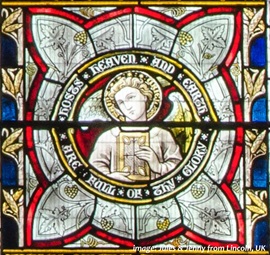
How are stained glass windows are rescued, stored and repurposed?
APPGEBE report sets high aims for quality
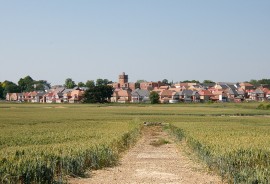
'Government must not sacrifice quality in drive to build 1.5m homes'
New measures protect Historic Shipwrecks from heritage crime

Underwater cultural heritage benefits from new HE guidance
How could the City of London skyline look in 6 years' time?

Visualisation shows approved planning applications as completed buildings
National Trust for Scotland calls for VAT cuts
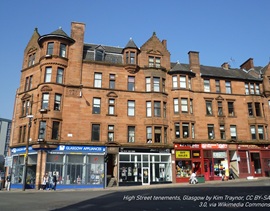
Heritage neglect is encouraged by current policies
IHBC's 'Context' Issue 186 features Industrial Heritage
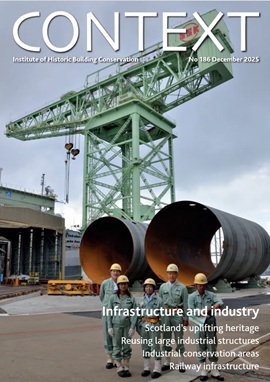
IHBC's members' journal reports on the challenges of conserving infrastructure
Book now for IHBC Annual School 2026

IHBC Annual School is taking place 18-20 June 2026 in Newcastle
RICHeS Research Infrastructure offers ‘Full Access Fund Call’
RICHeS offers a ‘Help’ webinar on 11 March
Latest IHBC Issue of Context features Roofing
Articles range from slate to pitched roofs, and carbon impact to solar generation to roofscapes
Three reasons not to demolish Edinburgh’s Argyle House

Should 'Edinburgh's ugliest building' be saved?
IHBC’s 2025 Parliamentary Briefing...from Crafts in Crisis to Rubbish Retrofit
IHBC launches research-led ‘5 Commitments to Help Heritage Skills in Conservation’
How RDSAP 10.2 impacts EPC assessments in traditional buildings

Energy performance certificates (EPCs) tell us how energy efficient our buildings are, but the way these certificates are generated has changed.