




Nineteenth-century conservation thinking from Ruskin onwards
John Ruskin’s and William Morris’ approach to repairing old buildings emphasised original fabric and authenticity, rather than more physically destructive approaches.

|
| The west front of Peterborough Cathedral in 2021 (Photo: Peterborough Cathedral, Tom Küpper). |
‘We wish to express our sorrow at the proposal to rebuild a portion of the west front of Peterborough Cathedral, the beauty and value of which it is impossible to overestimate. We earnestly hope that the Dean and Chapter will see their way to reconsidering their decision. John Ruskin’
These polite and restrained words in a signed letter from the 1890s may not be the great man’s most memorable sentences, but the document has long been cherished by the Society for the Protection of Ancient Buildings (SPAB). The original hangs framed and mounted in its headquarters building. It was part of a campaign spearheaded by SPAB which lasted several years to save the integrity of the cathedral from a heavy-handed restoration. William Morris had died in 1896, in the middle of the campaign, but Peterborough Cathedral was one of his last conservation fights.
Morris wrote: ‘It may seem too obvious to remark that the structure should be made stable before ornamental details are replaced (restored they should never be), but I cannot forget that it has been known to the Dean and Chapter for several years that the West Front wanted examination, and probably important and expensive structural repairs, but all that time money which should have been used for ensuring the safety of the building has been spent on ecclesiastical upholstery in the interior of the church. All I ask is that this kind of thing should not happen again and again till the words “too late” have to be written on this great work of art, as on so many others.’
John Ruskin (1819–1900) lived a long and very productive life, writing several hugely influential art and architecture books of the 19th century, most notably for heritage-lovers, The Seven Lamps of Architecture (1849) and The Stones of Venice (1851–1853). Ruskin’s impact on architects, artists and the wider public of the time was considerable, and those books are still in print more than 170 years on. The ideas they contained did not just deepen people’s appreciation of the subtleties of the historic buildings around them, they ensured that those old structures had a much better chance of survival in something close to their original form than had previously been the case.
Ruskin had a considerable passion for art and a deep appreciation of aesthetic beauty. It is notable, however, that when it came to the practicalities of managing change for historic buildings, he very clearly chose authenticity over aesthetics. This was, arguably, his most controversial proposition. It came in an era where architectural appearance was increasingly an aesthetic choice, rather than purely practical. Engineering and design innovation was allowing more design freedom, an explosion of wealth fuelled major redevelopment, and tidiness and civic responsibility were admired as desirable virtues.
The penultimate of Ruskin’s seven lamps was the Lamp of Memory, which stated that work to an old building should respect its cultural and historic context: ‘Do not let us talk then of restoration. The thing is a Lie from beginning to end. Take proper care of your monuments, and you will not need to restore them. Watch an old building with an anxious care; guard it as best you may, and at any cost, from every influence of dilapidation. Bind it together with iron where it loosens; stay it with timber where it declines; do not care about the unsightliness of the aid; better a crutch than a lost limb; and do this tenderly and reverently, and continually, and many a generation will still be born and pass away beneath its shadow.’
The Peterborough petitioners were an influential group. Alongside Ruskin and Morris were many other luminaries of the day, including W Holman Hunt, Walter Crane, Edward Burne Jones, John Lubbock, John James Stevenson, Prince Frederick Duleep Singh, Octavia Hill and Philip Webb. However, the conservation campaign failed to persuade the Dean and Chapter to alter their architect’s (John Loughborough Pearson) damaging restoration plans. One hundred and thirty years on, it can be hard to work out which bits of the building are medieval and which are Victorian. This is not to suggest that the Victorian work is not highly skilled nor beautiful in its own right, but it is not the ancient stonework most casual viewers probably think it is.
Ruskin’s and then Morris’ codification of an approach to repairing old buildings, which put great emphasis on original fabric and authenticity, pushed back against more physically destructive approaches. To Ruskin restoration to a previously imagined form meant ‘the most total destruction which a building can suffer; a destruction out of which no remnants can be gathered: a destruction accompanied with false description of the thing destroyed. False, also, in the manner of parody.’
Ruskin’s philosophical approach was followed closely in the drafting of SPAB’s 1877 Manifesto, written by William Morris and Philip Webb, who were great admirers of Ruskin. It was prepared to set out battle lines as clearly as possible. In the opposing restoration camp was the ecclesiological movement. It had grown rapidly from the 1840s and predated the rise of the Ruskin/Morris view of the world. Its supporters favoured a return to an idealised perception of the architectural beauty of medieval church buildings. This gothic revival rapidly became a powerful societal and architectural force. Its supporters genuinely felt that restoration was an important and necessary objective. They did not believe the often picturesque untidiness of many centuries-old churches, which is very visible in SPAB’s extensive collection of early church photographs, made them fit for purpose. The Ecclesiologist (the movement’s principal publication) noted: ‘We must, whether from the existing evidences or from supposition, recover the original scheme of the edifice as conceived by the first builder’ and sincerely believed that this was perfectly possible.
Other forces in the restoration camp tended not to be ideological but were nevertheless very powerful. These were principally business interests which fuelled the remarkable, if often destructive, construction boom in the second half of the 19th century. There were also those many people in positions of some authority in society who resented the loss of their power and influence as legislation and social change slowly gave more of a voice to a much wider range of opinions, and journalists were very keen to print the thoughts of popular figures such as Ruskin and Morris.
In the Church of England system of managing buildings, the priest in charge is the legal owner. There is evidence in the SPAB archives that many hugely resented being told by people, who they saw with some justification as being self-appointed experts, what they should and should not do. They felt that these outsiders were usually more interested in the history of the building than in its religious purposes. As the Rev Cass memorably replied to Morris’ outrage at what Morris called the ‘sham’ restoration of Burford Church in the 1870s: ‘The church, sir, is mine and, if I choose to, I shall stand on my head in it.’
Morris’ confrontational style did not go down well with many of those who were being challenged. As the organisation expanded and Morris began to spend more time on other passions, more diplomatic voices such as Emery Walker and, later, AR Powys, smoothed the way. However, Morris’ fiery rhetoric certainly got the movement the attention it vitally needed as it slowly won over much of the public.
You can lose a battle but win a war. As cases such as the Peterborough Cathedral one played out in the national press, they helped to shift the tide of public opinion towards conservation and away from restoration. Influential SPAB member Octavia Hill, who had very recently founded the National Trust in 1895, wrote to SPAB’s secretary about the ‘doomed’ Peterborough West Front in the following year: ‘It seems so monstrous a thing it hardly feels it possible. It seems like a victory which will be far worse for the victor than any defeat, one of those victories that seals the fate of the winners. But long before “the wise years decide”, the West Front as medieval work will be gone’.
Hill felt ‘thankful that, even in so small a way, I have been allowed to share in trying to save the Front, and to enter into something of the pain of the failure of your leaders. I think to have a place in a forlorn hope is a great privilege, and to be among the pioneers. I hope you are feeling this; somehow there is a blessing and an honour in pain, which is a help when one has done one’s best and the defeat with all its bitterness a sort of sureness goes with it that this is not the end, a consciousness that Time and the Angels are with us.’
Today there remains a range of conservation approaches in the UK, with the government and relevant agencies studiously not specifically endorsing a single approach. This helps ensure that the lively debates around the different approaches still continue.
We should, perhaps, be grateful that not all ideas about saving old buildings from that earlier era have subsequently gained traction. A letter in the SPAB archive from 1892 about a church in Essex, written by the eccentric architect and author the Rev Edward Lacey Garbett, suggests a novel approach to the management of historic buildings and how that might be linked to professional development.
‘I saw, a few days ago, a ruinous church totally unrestored, namely Chingford... and it struck me that every building about which anyone cares, should have a salaried keeper, subject to some rigorous conditions,’ Garbett wrote. ‘He should undertake to keep the building in perfect repair; that if two people point out to him any defect, he must get it repaired within a month, or else be reckoned dead, and a new keeper be appointed. Their salaries should be paid monthly. The first one would be an architect. Then they would agree never to become partner of any builder nor to receive anything of the nature of [profit]… and that the first farthing any keeper may be caught receiving in that manner he shall be deprived of the office and branded with a letter ‘F’ [a Roman practice for marking criminals] to prevent him ever holding another similar one. No keeper could object to an agreement of this kind. Keepers of buildings could become surveyors and architects and eventually the only ones.’
This article originally appeared in the Institute of Historic Building Conservation’s (IHBC’s). Context 184, published in June 2025. It was written by Duncan McCallum is chair of SPAB.
--Institute of Historic Building Conservation
Related articles on Designing Buildings Conservation.
- Conservation area.
- Conservation.
- Heritage.
- Historic Cities: issues in urban conservation.
- Historic environment.
- IHBC articles.
- IHBC.
- Modernist Architecture: international concepts come to Britain.
- Nikolaus Pevsner.
- Reading Ruskin's Cultural Heritage: conservation and transformation.
- Understanding vernacular architecture.
IHBC NewsBlog
IHBC sponsors Gardens Trust event 23-4 Sept 2026
.jpeg)
'Learning from the Past, Shaping the Future’ takes place in Milton Keynes
Renovations to Frank Lloyd Wright's Fallingwater complete
.jpg)
World Heritage Preserved project opens house for tours again
Shakespeare Birthplace Trust places Hall's Croft on HAR Register
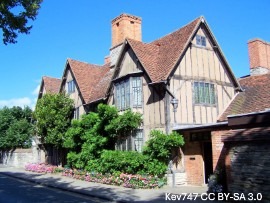
Stratford-upon-Avon home of Shakespeare's daughter is 'At Risk'
Lady Grange’s House repaired on St Kilda
.jpg)
National Trust for Scotland repairs stone cleit with link to famous island resident
Griff Rhys Jones on BBC Radio 4 Today programme
,_Green_Lane,_Derby.jpg)
The Victorian Society’s President unveiled its latest Top Ten Endangered Buildings 2026.
Need a MATE? Book your place now.

IHBC offers free webinars on applying for IHBC accreditation (Full & Associate).
UK Stained Glass Repository finds windows new homes
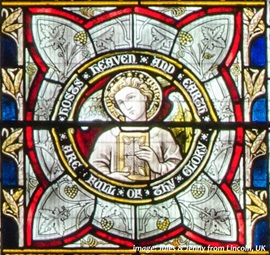
How are stained glass windows are rescued, stored and repurposed?
APPGEBE report sets high aims for quality
'Government must not sacrifice quality in drive to build 1.5m homes'
New measures protect Historic Shipwrecks from heritage crime

Underwater cultural heritage benefits from new HE guidance
How could the City of London skyline look in 6 years' time?

Visualisation shows approved planning applications as completed buildings
National Trust for Scotland calls for VAT cuts

Heritage neglect is encouraged by current policies
IHBC's 'Context' Issue 186 features Industrial Heritage
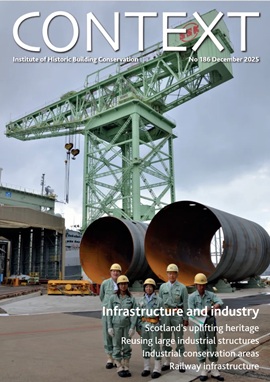
IHBC's members' journal reports on the challenges of conserving infrastructure
Book now for IHBC Annual School 2026

IHBC Annual School is taking place 18-20 June 2026 in Newcastle
RICHeS Research Infrastructure offers ‘Full Access Fund Call’
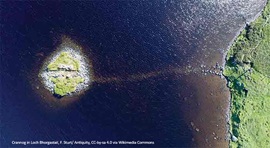
RICHeS offers a ‘Help’ webinar on 11 March
Latest IHBC Issue of Context features Roofing
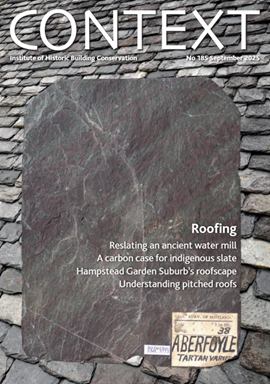
Articles range from slate to pitched roofs, and carbon impact to solar generation to roofscapes
Three reasons not to demolish Edinburgh’s Argyle House

Should 'Edinburgh's ugliest building' be saved?
IHBC’s 2025 Parliamentary Briefing...from Crafts in Crisis to Rubbish Retrofit
IHBC launches research-led ‘5 Commitments to Help Heritage Skills in Conservation’
How RDSAP 10.2 impacts EPC assessments in traditional buildings

Energy performance certificates (EPCs) tell us how energy efficient our buildings are, but the way these certificates are generated has changed.