





Raised floor
A raised floor (access floor, raised access floor or platform floor) is a floor created above a solid floor slab, leaving an open void between the two. This void can be used to distribute building services, such as:
- Cabling for data and telecoms.
- Electrical power.
- Water supply and drainage.
- Heating, ventilation and air conditioning (HVAC).
- Cabling for environmental controls, fire detection and suppression and security.
Raised floors first emerged in the 1960’s and have become more common with the increasing demand for technology in buildings. They are often found in offices, or in spaces that have a high demand for information and communications infrastructure such as data centres.
The raised floor system allows flexibility of layout for building services and, with the inclusion of removable floor panels, allows quick and easy access for reconfiguration and maintenance. It also allow spaces to be reconfigured or refurbished with minimal disruption by the repositioning floor boxes, furniture or partition walls.
Typically, the components of raised flooring include:
- Pedestals, providing an adjustable vertical support structure for the raised floor. These may be bonded to the sub floor and adjusted to provide a level plane.
- Stringer bars, which can be used to join the pedestals together creating a framework for floor panels and giving lateral stability, particularly for deep floor void constructions.
- Floor panels, creating the flat surface of the raised floor.
- Floor finish, often carpet tiles which can be lifted to give access to the floor void.
- Floor boxes cut into floor panels, allowing services to penetrate through the floor and providing connection points for power, data, telecoms and so on.
Raised floors can be gravity or loose-lay systems in which the floor panels rest loose on the pedestal head, providing easy access to the floor voids below, or lock-down or screw-down raised floors in which the floor panels are fixed onto the pedestal head for greater security.
Typically, floor panels are 600mm x 600mm. They may be formed of a chipboard core, encased with steel, or may be laminated with finishes such as wood or stone. Floor voids can be as little as 20mm deep, and commonly, up to 1,200mm, although greater depths can be achieved by bespoke systems.
For many years, the Property Services Agency Specification MOB PF2 PS/Spu, Platform Floors (Raised Access Floors) Performance Specification, set the standards for raised floors, the last edition of which was published in 1992. This graded raised floors in four structural categories: light, medium, heavy and extra heavy.
However, this was superseded in 2001 by BSEN 12825:2001 Raised access floors, which classifies floor systems according to ultimate load, safety factor, deflection under working load and dimensional tolerances.
Raised floors can create a flanking route for sound to transmit from one space to another under partition walls. Floor finishes and panels with an acoustic construction can be used to reduce the transmission of sound, and the joints between panels can be minimised or sealed.
Acoustic insulation can also be introduced below partition walls, or walls can run through the raised floor to the floor slab, although this will reduce future flexibility. Generally, flanking is more likely through ceiling voids as ceiling tiles tend to have less mass than floor panels.
Where floor voids are used as plenums (that is they are used as ducts through which air can be supplied to or extracted from a space to provide ventilation) it may be necessary to specify a tight fit between floor panels or to seal joints between floor panels to prevent pressure loss.
[edit] Related articles on Designing Buildings Wiki
- Acoustic insulation.
- Decking.
- Ductwork.
- Finished floor level.
- Flanking sound.
- Floating floor.
- Floor definition.
- Flooring.
- Flooring defects.
- Herringbone strut.
- Joist.
- Metal furring system.
- Plenum.
- Rubber flooring.
- Separating floor.
- Sprung floor.
- Suspended ceiling.
- Types of floor.
- Underfloor air distribution.
Featured articles
Check out some of the best features and news from Designing Buildings as well as key stories from around the web.
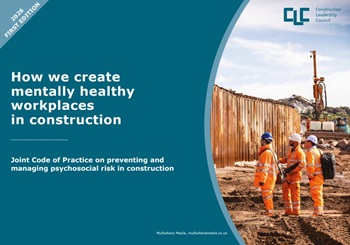
CLC publishes Mental Health Joint Code of Practice.
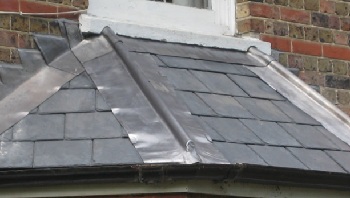
A quick introduction to its uses and risks.
Construction Management, 17 June

Government rolls out digital planning tool to all local authorities.

Your views needed - a strategy for the professions, trades and occupations.

Confronting competency, codes, capacity and costs.

The hidden risk in modern construction supply chains.
Construction Management, 10 June

24 months to 14: CITB launches accelerated apprenticeships.
Bridging the gap between clients and contractors

Concerns remain around contractor quality, capability, and delivery.
Construction Management, 10 June.
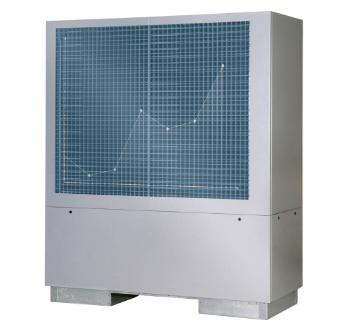
Heat pumps beat boilers in new home tests.
Building Safety Act implementation in Wales
CIAT to host industry panel on 26 June.

New and updated CLC building safety guidance.
Comments