





Lamella structure

Contents |
[edit] Introduction
A lamella or lamellar structure is normally made up of a series of smaller component parts, often of the same material and one that could potentially be a lamella board but also timber or steel. A lamella structure may also be referred to as a reciprocal grid because the individual members reciprocate support to neighbouring members in a grid form, thus acting as a whole in unison, they are similar to and may be referred to as gridshells, geodesic domes or reciprocal roofs and reciprocal grids as well as Zollinger roofs. See also Lamella Board.
[edit] Components
In most cases reciprocal lamella structures will be made up of elements which are twice the length of each grid unit, so that the next member is supported at the midpoint of the previous. This type of structure allows each member to be made up of relatively thin two dimensional linear beams or plates, in more complex structures these might be cut into certain shapes that interlink or slot together creating three dimensional structures or gridshells. A technique that expanded in popularity with the availability of CNC cutters or 2D routing in the 1970's and 80's.
[edit] Examples
There are many different examples of what might be referred to a lamella structures globally, one of the largest is perhaps the Houston Astrodome, which was the world's first multi-purpose, domed sports stadium, located in Houston, Texas, US, Although now closed it had a record attendance of 67,925 set by the World Wrestling Federation in 2001. The structure is often referred to as being a lamella dome, because it has a diamond shaped pattern on the underside of the spherical surface. It is a domed circular concrete and steel framed building, constructed of steel pieces joined and welded together form a complex domed grid in tension. The dome structure is 220m in diameter, with a ceiling 63 m above the playing surface stands and covering 9.5 acres or 3.8 hectares.

An earlier and well known example of a timber lamella roofing system is called the Zollinger roof, after the German architect, city planner and municipal construction official, Friedrich Zollinger who developed the system. Although relatively labour intensive to construct by skilled workers, the design had a number of advantages including the absence of long tie beams or supporting posts, significantly less material required than traditional roofs, it could adapt to openings and could be made entirely of short pieces of timber which could be prefabricated and installed without large machinery. s such the roofing systems was adopted at times when materials and costs were prohibitive, such as between the World Wars. Historical examples of Zollinger roofs can be found in a house in Schweicheln-Bermbeck and Augustinus church in Heilbronn, Germany, whilst modern examples can be found throughout Europe.
[edit] Related articles on Designing Buildings
- Braced frame.
- Bridge construction.
- Balloon framing.
- Concrete frame.
- Domestic roofs.
- Gridshell.
- Gusset.
- Hammerbeam roof.
- Lamella board.
- Long span roof.
- Pitched roof.
- Portal frame.
- Purlins.
- Sheathing.
- Space frame.
- Structural steelwork.
- Skeleton frame.
- Steel frame.
- Strut.
- Ties.
- Timber engineered structural frames.
- Timber gridshell.
- Timber roof.
- Timber framed buildings and fire.
- Timber post and beam construction.
- Timber preservation.
- Types of frame.
- Types of timber.
- Types of roof.
- Types of structural load.
Featured articles
Check out some of the best features and news from Designing Buildings as well as key stories from around the web.
Bridging the gap between clients and contractors

Concerns remain around contractor quality, capability, and delivery.
Construction Management, 10 June.
Heat pumps beat boilers in new home tests.
Building Safety Act implementation in Wales

CIAT to host industry panel on 26 June.

New and updated CLC building safety guidance.
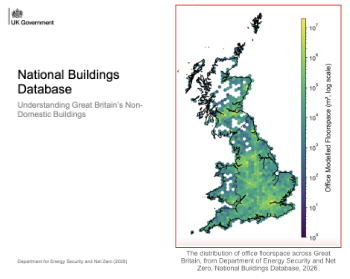
New UK National Buildings Database.
Building Safety Wiki Interviews

Chief executive of the British Woodworking Federation.
Planning condition discharge in England and Wales

A brief explanation from a building compliance expert, with further links.
Overheating guidance and tools for building designers

Guidance for dealing with element of building fabric control that have increasing importance.
Shading for housing, a design guide

From the Good Homes Alliance and British Blind and Shutter Association.
UK Standard Skills Classification (SSC)

A shared framework for describing skills needs.
Social media ban consultation comes to close

CIOB urges UK Government to consider social media’s role in careers guidance in ban debate.