





How Our Batching Plant Uses Intelligent Algorithms To Handle Raw Material Variability In Latin America
In Latin America’s construction sector, raw material variability is not an exception—it is the norm. Aggregate gradation shifts between quarry sites, sand moisture fluctuates with seasonal rainfall, and cement quality may vary depending on supplier and transport conditions. Under these realities, a conventional concrete batching plant(planta dosificadora de hormigón) operating on fixed parameter settings cannot consistently guarantee mix performance.
For contractors running a portable concrete batching plant in remote infrastructure projects or managing a large-scale concrete plant in Bolivia, adaptability is the difference between stable output and costly rework. True automation today goes beyond simple timer-based batching. It relies on intelligent algorithms capable of interpreting real-time data and dynamically adjusting mix proportions.

[edit] The Real Challenge: Material Variability Across Latin America
Latin America spans coastal, mountainous, tropical, and arid climates. Each environment influences aggregate and cement characteristics.
[edit] Aggregate Gradation And Moisture Instability
In high-altitude regions of Bolivia, aggregate sources often differ significantly in particle size distribution. Even within a single quarry, daily variations can affect fineness modulus and coarse-to-fine ratios.
Moisture fluctuation presents another challenge. A portable concrete batching plant(planta dosificadora de concreto portátil) operating in tropical climates must deal with sudden rainfall that increases sand moisture content within hours. Without dynamic correction, water-cement ratios drift, compromising strength and durability.
[edit] Cement And Admixture Variations
Transportation distances and storage conditions affect cement performance. In certain inland markets, delayed logistics can alter setting times. An advanced concrete batching plant must respond to these variations rather than rely solely on laboratory-designed mix recipes.
[edit] From Automatic Control To Intelligent Decision-Making
Traditional “automatic control” systems follow preset formulas. Intelligent control systems, by contrast, integrate sensor data, predictive modeling, and adaptive algorithms.
[edit] Real-Time Moisture Compensation Algorithms
Modern batching plants integrate moisture sensors within aggregate bins. Intelligent algorithms continuously adjust water dosage based on live readings.
Instead of applying a fixed correction factor, the system calculates actual free water contribution and compensates accordingly. This ensures that a concrete plant in Bolivia(planta de concreto en Bolivia) operating during the rainy season maintains consistent slump and compressive strength results.
[edit] Dynamic Gradation Analysis
Advanced control software can integrate data from periodic sieve analyses. By analyzing trends in aggregate gradation, the algorithm predicts potential strength deviations and adjusts sand-to-aggregate ratios automatically.
This capability is particularly valuable for portable concrete batching plant installations serving short-term infrastructure projects where aggregate sources may change frequently.
[edit] Data-Driven Mix Optimization
Intelligent batching plants are not only reactive—they are predictive.
[edit] Historical Performance Modeling
Every production cycle generates data: material weights, moisture levels, temperature, slump tests, and compressive strength results. Over time, this dataset forms a performance model.
By applying regression analysis and machine learning techniques, the concrete batching plant control system identifies correlations between raw material properties and final strength outcomes. When similar material conditions reappear, the algorithm proactively modifies the mix before quality deviations occur.
[edit] Self-Learning Correction Mechanisms
In a concrete plant in Bolivia supplying municipal projects, laboratory feedback can be integrated into the control system. If 7-day strength tests show slight variance, the algorithm recalibrates cement or admixture dosage for subsequent batches.
This self-learning loop reduces dependency on manual recalibration and shortens response time between quality detection and correction.
[edit] Enhancing Operational Stability In Remote Projects
Remote construction environments require robust and flexible systems.
[edit] Portable Systems With Centralized Intelligence
A portable concrete batching plant often operates with limited on-site laboratory facilities. Intelligent algorithms compensate by embedding quality control logic within the control architecture.
Even with minimal manual intervention, the system maintains stable production through automated anomaly detection. If aggregate moisture spikes or weighing errors exceed tolerance thresholds, alerts trigger immediate corrective actions.
[edit] Reduced Operator Dependency
Human error remains a common source of batching inconsistency. Intelligent systems standardize decision-making processes, ensuring that production quality does not fluctuate with operator experience levels.
This is especially valuable in regions where technical labor availability is limited.
[edit] Environmental And Cost Benefits Of Intelligent Control
Algorithm-driven adaptability not only improves quality but also enhances efficiency.
[edit] Cement Consumption Optimization
Cement represents the highest cost component in most concrete mixes. Overdesigning mixes to compensate for material uncertainty increases cost.
By precisely adjusting mix proportions based on real-time data, the concrete batching plant minimizes excess cement usage while maintaining structural performance standards.
[edit] Waste And Rework Reduction
Incorrect water content or gradation imbalance leads to rejected batches and material waste. Intelligent control reduces batch rejection rates, saving both raw materials and transport costs.
For a concrete plant in Bolivia serving infrastructure expansion zones, even small efficiency gains translate into substantial annual savings.

[edit] Practical Implementation Considerations
Adopting intelligent batching technology requires more than installing sensors.
System integration must include:
Accurate calibration protocols
Reliable data storage infrastructure
Operator training on interpreting system feedback
Regular laboratory validation
A portable concrete batching plant equipped with intelligent algorithms must still undergo periodic quality audits to ensure predictive models remain accurate under evolving site conditions.
[edit] Turning Material Variability Into Competitive Advantage
Raw material inconsistency across Latin America is unavoidable. However, it does not have to be a liability. By embedding intelligent algorithms within the concrete batching plant control architecture, producers transform variability into manageable data inputs rather than uncontrollable risks.
For contractors operating a portable concrete batching plant in remote corridors or managing a concrete plant in Bolivia under challenging environmental conditions, algorithm-driven adaptability ensures consistent quality, optimized costs, and improved project credibility.
In today’s competitive construction environment, the real differentiator is no longer basic automation—it is intelligent, data-driven decision-making that keeps production stable even when materials are not.
Featured articles and news
Costs and insolvencies mount for SMEs, despite growth

Construction sector under insolvency and wage bill pressure in part linked to National Insurance, says report.
The place for vitrified clay pipes in modern infrastructure
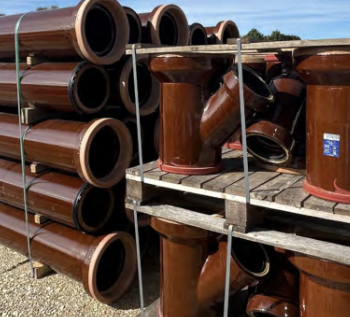
Why vitrified clay pipes are reclaiming their role in built projects.

Research by construction PR consultancy LMC published.
Roles and responsibilities of domestic clients

ACA Safety in Construction guide for domestic clients.
Fire door compliance in UK commercial buildings

Architect and manufacturer gives their low down.
Plumbing and heating for sustainability in new properties

Technical Engineer runs through changes in regulations, innovations in materials, and product systems.
Awareness of the Carbon Border Adjustment Mechanism
What CBAM is and what to do about it.
The new towns and strategic environmental assessments

12 locations of the New Towns Taskforce reduced to 7 within the new towns draft programme and open consultation.

Buildings that changed the future of architecture. Book review.
The Sustainability Pathfinder© Handbook

Built environment agency launches free Pathfinder© tool to help businesses progress sustainability strategies.

Government outcome to the late payment consultation, ECA reacts.
IHBC 2025 Gus Astley Student Award winners

Work on the role of hewing in UK historic conservation a win for Jack Parker of Oxford Brookes University.
Future Homes Building Standards and plug-in solar

Parts F and L amendments, the availability of solar panels and industry responses.
How later living housing can help solve the housing crisis

Unlocking homes, unlocking lives.
Preparing safety case reports for HRBs under the BSA

A new practical guide to preparing structural inputs for safety cases and safety case reports published by IStructE.
Male construction workers and prostate cancer

CIOB and Prostate Cancer UK encourage awareness of prostate cancer risks, and what to do about it.