






How to create a sustainable hotel

|
Contents |
[edit] Introduction
Whether a brand new building full of the latest innovations, or a refurbishment of an existing hotel which must meet rigorous and legally-enforced minimum energy efficiency standards, sustainability continues to force its way up the agenda in the hospitality sector.
But the impact of environmental measures can no longer be viewed in isolation: the way that green building design and fit-out interacts with policy, finance, customer loyalty, staff wellbeing and broader community issues defines good hotel management today.
[edit] Green strategy
Research carried out among European real-estate industry professionals reveals that more than three-quarters of commercial buildings have a sustainability strategy, which is itself increasingly interlinked with business objectives. These include preventing obsolescence, exploiting tax incentives and simply creating a ‘quality building’ which has market appeal. Buildings lacking such a strategy are viewed by many as an investment risk.
In the commercial property world, investment consultants use a number of tools in their scrutiny of green strategies. These include the FTSE EPRA Global Real Estate Index, the European Association for Investors in Non-Listed Real Estate Vehicles (INREV), the Institutional Investors Group on Climate Change and the Global Real Estate Sustainability Benchmark, new EPC legislation and near-zero carbon initiatives.
There is also substantial evidence that hotel chains seeking to attract and retain a new generation of skilled workers regard a sustainable building as an important element in their brand and corporate identity.
[edit] Sustainability initiatives
So, what form do the most effective sustainability initiatives take? Below is a checklist of the simplest measures that hotel owners and operators can use for quick wins.
- Upgrading boilers to more efficient models
- Insulating hot-water cylinders
- Installing a weather compensation system
- Reducing thermostat deadbands to prevent heating and cooling working simultaneously
- Introducing controls such as individual room thermostats or thermostatic radiator valves (TRVs)
- Checking air supply and extract systems are being operated in line with specification and installation details
- Installing heat-recovery units to allow for the transfer of thermal energy
- Using high-performance mechanical systems (including high-efficiency chillers, boilers, and thermal heat recovery from the floors)
- Upgrading insulation to roofs, floors and cavity walls
- Retrofitting external insulation/cladding to solid wall construction
- Addressing draughts
Lighting:
- Changing to LED or CFL technology
- Maximising daylight, where necessary combined with passive solar shading to reduce the need for air conditioning
- Using dimming lighting controls and PIR systems to allow lighting levels to be adjusted according to external daylight
Glazing:
- Replacing single-glazed windows with double or triple glazing
- Introducing motion sensors and adjusting timings on existing sensors
Supply chain:
- Specifying and sourcing sustainable materials
- Using local labour and products
Renewables:
- Introducing solar panels (both photovoltaic and solar thermal), biomass boilers, and air- or ground-source heat pumps
Biophilic design:
- Introducing more nature in the form of green walls and roofs, views of natural landscapes and internal planting
Metering:
- Measuring and monitoring data on energy savings and indoor air quality, and evaluating its effectiveness.
Clearly the skill for hotel owners and operators today is to balance the all-important people-centric features with ongoing energy and resource efficiency through the use of technology and good maintenance practices.
As it is increasingly acknowledged that customer and staff wellbeing is affected by the sustainability of the building in which they operate, sustainability in property is becoming synonymous with quality. And that is good news for both people and the environment.
[edit] About this article
This article was supplied by Trident Building Consultancy, a UK-based firm of surveyors.
--Trident Building Consultancy
[edit] Related articles on Designing Buildings Wiki
- BREEAM Responsible sourcing of materials.
- Circular economy in the built environment.
- Climate change science.
- Community energy network.
- Ecological impact assessment.
- Emission rates.
- Energy.
- Energy certificates.
- Energy Performance Certificates.
- Energy Related Products Regulations.
- Energy targets.
- Environment.
- Environmental impact assessment.
- Green building.
- Mean lean green.
- Passivhaus.
- Reduce, reuse, recycle.
- Sustainable development.
- Sustainable materials.
- Sustainable procurement.
- Zero carbon non-domestic buildings.
Featured articles
Check out some of the best features and news from Designing Buildings as well as key stories from around the web.
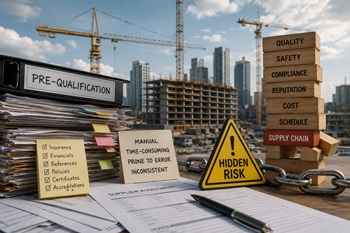
The hidden risk in modern construction supply chains.
Construction Management, 10 June

24 months to 14: CITB launches accelerated apprenticeships.
Bridging the gap between clients and contractors
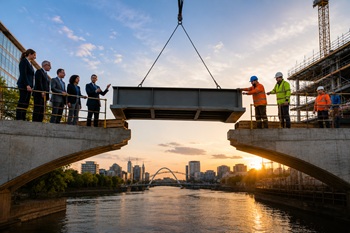
Concerns remain around contractor quality, capability, and delivery.
Construction Management, 10 June.
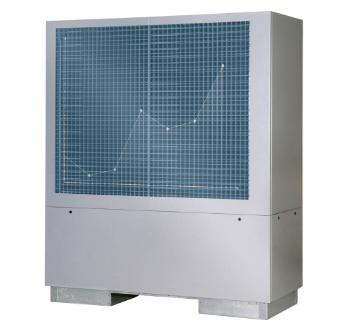
Heat pumps beat boilers in new home tests.
Building Safety Act implementation in Wales

CIAT to host industry panel on 26 June.
New and updated CLC building safety guidance.
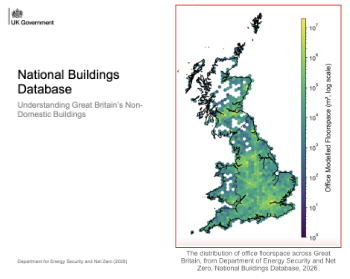
New UK National Buildings Database.
Building Safety Wiki Interviews

Chief executive of the British Woodworking Federation.
Planning condition discharge in England and Wales

A brief explanation from a building compliance expert, with further links.
Overheating guidance and tools for building designers

Guidance for dealing with element of building fabric control that have increasing importance.
Shading for housing, a design guide

From the Good Homes Alliance and British Blind and Shutter Association.
Comments
A really interesting article, sustainability is becoming front and centre in many people's minds and as you say, hotels don't have it easy, needing to strike the balance between customer satisfaction whilst doing what they can to be environmentally conscious.
I'm sure there are hotels out there doing this really well and can imagine for some customers this would be a big factor in their decision making process of where to stay.