





Heat Pumps in Historic Buildings

|
[edit] Air Source Heat Pump Case Studies – Large BuildingsPublished 13 January 2026 Download Air Source Heat Pump Case Studies – Large Buildings (PDF, 2.56 MB) |

Electrifying heat is key to reducing reliance on fossil fuels for historic buildings. No technology is better placed to electrify heat for space heating than heat pumps. The technology is mature, and if the entire heating system is well-designed, it will deliver comparable running costs to a natural gas system. Air source heat pump (ASHP) technology can be installed quickly and has lower capital costs than other heat pump technologies. This makes air source a key technology in the decarbonisation of space heating.
This report is a continuation of the previous study ‘HEAG0316: Heat Pumps in Historic Buildings, Air Source Heat Pump Case Studies – Small-scale Buildings’, and focuses on five large historic buildings across four sites. In 2022, we commissioned environmental building services engineers, Max Fordham LLP, to review the performance of ASHPs in larger historic buildings. The research aligns directly with Historic England’s objectives for climate change and sustainability.
The four site visits took place between November 2022 and February 2023. The engineers from Max Fordham LLP carried out visual inspections of the ASHP installations and associated heating systems. They also interviewed building users to gauge their opinions on running costs, thermal comfort, noise, cold air plumes, and visual appearance. The engineers took as many quantitative measurements as possible, but time constraints and minimising the intrusiveness of site visits meant that most of the findings were qualitative.
The key findings were:
- ASHPs work well in historic buildings and are a readily available means of decarbonising heating systems.
- Issues with the heating system’s performance were usually caused by the design of the heating distribution or delivery, rather than by the ASHPs themselves. For example, convectively heating draughty areas with a high air change rate can be problematic, regardless of whether the heat source is a boiler or a heat pump.
- The visual and noise impacts of the ASHP units were not an issue for any of the users, as was the case in the previous ASHP study.
- Carbon dioxide refrigerant systems present unique opportunities for reusing existing pipework, reducing embodied carbon emissions, and reducing unintended emissions caused by refrigerant leaks.
- Building users need to have a good understanding of how to use system controls to maximise the efficacy of the system.
Contents
- Introduction
- Method
- Key observations and findings
- Case Studies
- Conclusions
- Acknowledgements
- Additional Information
Series: Guidance Publication Status: Completed Pages: 64 Product Code: HEAG326
Accessibility: If you require an alternative, accessible version of this document (for instance in audio, Braille or large print) please contact [mailto:customers@HistoricEngland.org.uk customers@HistoricEngland.org.uk]
This article appears on the Historic England website as "Heat Pumps in Historic Buildings" dated January 2026.
[edit] Related articles on Designing Buildings
- Absorption heat pump.
- A decade for heat pumps.
- Air source heat pumps.
- Amber warnings raise building overheating concern.
- BSRIA domestic hot water heat pumps testing.
- BSRIA global heat pump market 2019.
- COVID-19 and the global heat pump market.
- Domestic heat pumps and the electricity supply system.
- Dynamic thermal modelling of closed loop geothermal heat pump systems.
- Earth-to-air heat exchangers.
- Exhaust air heat pump.
- Geothermal pile foundations.
- Getting the most out of heat pumps and heating.
- Ground energy options.
- Ground source heat pumps.
- Heat exchanger.
- Heat pump COP & EER and central plant SCOP in ambient loops.
- Heat pumps and heat waves: How overheating complicates ending gas in the UK.
- Heat recovery.
- Hybrid heat pump electric panel heating.
- Mechanical ventilation with heat recovery.
- Renewable energy sources: how they work and what they deliver: Part 3: Electrically driven heat pumps DG 532 3.
- Residential heat pump installations: the role of vocational education and training.
- Reversible heat pumps to provide comfort cooling.
- Room-based heat pumps.
- Smoothing the path to net zero.
- Solar-assisted heat pump.
- Sustainable heating for listed buildings.
- Tempering heating.
- The role of onsite renewables in tackling climate change.
- Types of heat pump.
- Underfloor heating.
- Water source heat pumps.
- What are the different types of heat pumps and where would you use them?
- What is diversity in HVAC systems?
Featured articles
Check out some of the best features and news from Designing Buildings as well as key stories from around the web.
Bridging the gap between clients and contractors

Concerns remain around contractor quality, capability, and delivery.
Construction Management, 10 June.
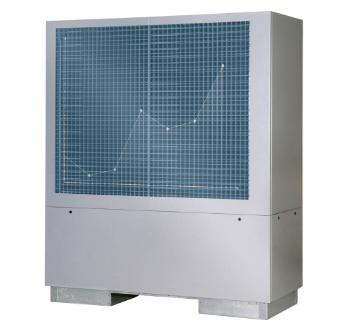
Heat pumps beat boilers in new home tests.
Building Safety Act implementation in Wales

CIAT to host industry panel on 26 June.

New and updated CLC building safety guidance.
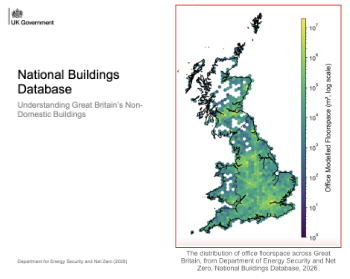
New UK National Buildings Database.
Building Safety Wiki Interviews

Chief executive of the British Woodworking Federation.
Planning condition discharge in England and Wales

A brief explanation from a building compliance expert, with further links.
Overheating guidance and tools for building designers

Guidance for dealing with element of building fabric control that have increasing importance.
Shading for housing, a design guide

From the Good Homes Alliance and British Blind and Shutter Association.
UK Standard Skills Classification (SSC)

A shared framework for describing skills needs.
Social media ban consultation comes to close

CIOB urges UK Government to consider social media’s role in careers guidance in ban debate.