




Hagia Sophia

Contents |
[edit] Introduction
Hagia Sophia (from the Greek `Αγiα Σοφiα - Holy Wisdom) is a religious monument of the Byzantine empire, located in Istanbul, Turkey. It is considered to be one of the most important architectural achievements in the world and is an iconic example of Byzantine architecture due largely to its dome which was a significant innovation at the time.
Hagia Sophia was the world’s largest cathedral for nearly a thousand years until the completion of Seville Cathedral in 1520. It was listed by UNESCO as a World Heritage Site in 1985.
Dating back to A.D. 532, the cathedral originally served as a Greek Orthodox Christian church and the seat of the Patriarch of Constantinople. When Constantinople was invaded by the Ottoman Turks in 1453, it was converted into an imperial mosque. In 1935, the founder of the Republic of Turkey, President Ataturk, changed it into a secular museum, but, in 2020, President Erdogan converted Hagia Sophia back into a mosque again.
[edit] Design and construction
In A.D. 532, Emperor Justinian I built a basilica on the site of two previous churches that originated from around A.D. 346 but had been destroyed by fire.
The church was constructed using ashlar and brick. It is rectangular in shape with a vast square nave measuring 31 m (102 ft). The nave is covered by a central dome, which at its highest is 55.6 m (182.5 ft) above floor level, making it one of the largest in the world. The dome rests on four pendentives - an innovative development for the time. For more information, see Pendentive dome.
The original construction was completed in just five years, in A.D. 537. However, it was flawed as more mortar was used than brick, which weakened the walls. The weight of the dome then caused the walls to lean outward and eventually to collapse following an earthquake in A.D. 558. When it was rebuilt five years later, the dome was raised by around six metres so that the lateral forces would be less and the weight could be transferred more easily down into the walls. In total, 40 ribs were incorporated that extend from the top to the base, allowing the load of the structure to transmit between the windows to the pendentives.
The distinctive illumination of the nave interior is achieved by the 40 arched windows that are built around the arcade at the base of the dome. Arched openings at the west and east of the church are extended by half domes. The building has two levels – a ground floor and a gallery, a common feature of Byzantine churches.

[edit] Post-completion
Four 60m (200ft)-tall minarets were added at each corner after the 15th century mosque conversion, one of which was constructed using red brick, and the other three using white limestone and sandstone. Over the centuries, the interior was adorned with many elaborate golden mosaics, icons and decorations, however many of these were plastered over.
A major restoration programme was carried out between 1847 and 1849, in which columns were straightened, the dome and vaults consolidated, the decorative features revised, and the minarets repaired and altered to make them of equal height. When the building was converted into a museum in 1935, white plaster was removed from the interior, revealing many concealed mosaics and marble decorations.
By the 1990s, the structure was in need of further repair due to rising ground water and moisture penetration that was rendering the brick and stonework unstable. By 2006, the dome had been fully repaired and the mosaics preserved under the guidance of the World Monuments Fund.
Today, the Hagia Sophia is one of the most iconic religious monuments in the world and a popular tourist attraction, with approximately 3.3 million visitors a year.
[edit] Related articles on Designing Buildings Wiki
- Angkor Wat.
- Apse.
- Basilica.
- Cathedral.
- Church.
- Conservation of the historic environment.
- Dome of the Rock.
- Edinburgh Castle.
- El Castillo.
- Florence Cathedral.
- Forbidden City.
- Golden Temple, Amritsar.
- Great Mosque of Djenne.
- Leaning Tower of Pisa.
- Library of Celsus.
- Mahabat Maqbara, India.
- Maqsurah.
- Minaret.
- Parthenon.
- Pendentive dome.
- Sagrada Familia.
- St Peters Basilica.
- Taj Mahal.
- The British Mosque: an architectural and social history.
- Types of dome.
- Unusual building design of the week.
[edit] External references
- Hagia Sophia - Official site
IHBC NewsBlog
IHBC sponsors Gardens Trust event 23-4 Sept 2026
.jpeg)
'Learning from the Past, Shaping the Future’ takes place in Milton Keynes
Renovations to Frank Lloyd Wright's Fallingwater complete
.jpg)
World Heritage Preserved project opens house for tours again
Shakespeare Birthplace Trust places Hall's Croft on HAR Register
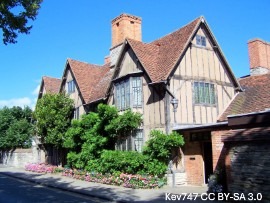
Stratford-upon-Avon home of Shakespeare's daughter is 'At Risk'
Lady Grange’s House repaired on St Kilda
.jpg)
National Trust for Scotland repairs stone cleit with link to famous island resident
Griff Rhys Jones on BBC Radio 4 Today programme
,_Green_Lane,_Derby.jpg)
The Victorian Society’s President unveiled its latest Top Ten Endangered Buildings 2026.
Need a MATE? Book your place now.
IHBC offers free webinars on applying for IHBC accreditation (Full & Associate).
UK Stained Glass Repository finds windows new homes
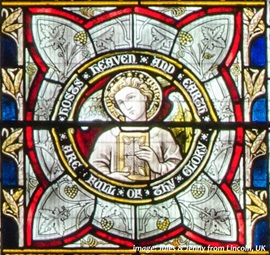
How are stained glass windows are rescued, stored and repurposed?
APPGEBE report sets high aims for quality
'Government must not sacrifice quality in drive to build 1.5m homes'
New measures protect Historic Shipwrecks from heritage crime

Underwater cultural heritage benefits from new HE guidance
How could the City of London skyline look in 6 years' time?

Visualisation shows approved planning applications as completed buildings
National Trust for Scotland calls for VAT cuts
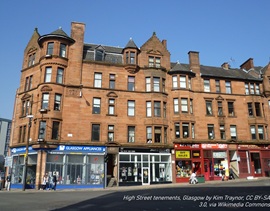
Heritage neglect is encouraged by current policies
IHBC's 'Context' Issue 186 features Industrial Heritage
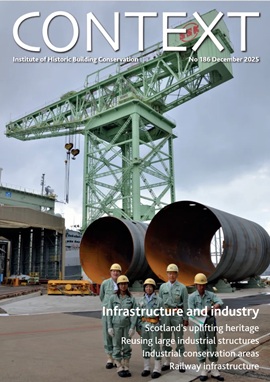
IHBC's members' journal reports on the challenges of conserving infrastructure
Book now for IHBC Annual School 2026
IHBC Annual School is taking place 18-20 June 2026 in Newcastle
RICHeS Research Infrastructure offers ‘Full Access Fund Call’
RICHeS offers a ‘Help’ webinar on 11 March
Latest IHBC Issue of Context features Roofing
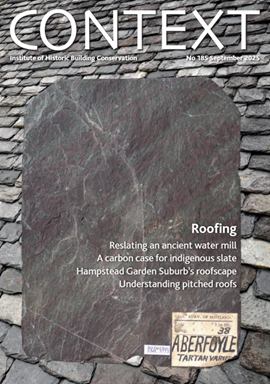
Articles range from slate to pitched roofs, and carbon impact to solar generation to roofscapes
Three reasons not to demolish Edinburgh’s Argyle House

Should 'Edinburgh's ugliest building' be saved?
IHBC’s 2025 Parliamentary Briefing...from Crafts in Crisis to Rubbish Retrofit
IHBC launches research-led ‘5 Commitments to Help Heritage Skills in Conservation’
How RDSAP 10.2 impacts EPC assessments in traditional buildings

Energy performance certificates (EPCs) tell us how energy efficient our buildings are, but the way these certificates are generated has changed.