






Core construction skills explained

Contents |
[edit] Preparing for a career in construction
Construction is a broad and fast-evolving industry, with everyone from bricklayers, plumbers and electricians through to construction managers, designers, architects, building safety managers and sustainability advisors playing their part to see a project through from an idea to a completed building.
This means that the construction sector requires a broad range of experts with specific skills, knowledge and experiences to work together to complete the final structure.
But there are also a range of core skills that are useful across all of these roles, that are important for those considering a career in the construction sector to develop.
[edit] What skills do you need to work in construction?
While most professionals draw on a common foundation of building and construction skills, the emphasis on the types and importance of these skills differs between trade and management roles.
Skilled trades may focus more on hands-on execution, craftsmanship, and deep expertise in a specific discipline such as carpentry or electrical installation, while management roles may require broader technical literacy across multiple trades, combined with leadership, planning, budgeting, and stakeholder management.
[edit] Transferable soft skills
Some of the most important transferable skills improve collaboration and problem-solving, such as:
- Communication and teamwork
- Problem solving and adaptability
- Time management and organisation
- Attention to detail and quality focus
- Resilience, stamina, and professionalism
- Commitment to lifelong learning
- Practical and technical skills
Individual roles also require technical abilities, which can include:
- Operating machinery: Safe and effective operation of hand tools, power tools, and machinery
- Reading drawings and specifications: Interpreting architectural and engineering drawings, dimensions, and tolerances
- Measurement, math, and estimation: Accurate calculations for materials, quantities, and costs
- Health, safety, and regulatory knowledge: Understanding site safety procedures, building rules and regulations, and risk management
- Quality control and inspection: Checking workmanship, alignment, finishes, and compliance
- Digital and technological skills: Using and understanding digital Building Information Management (BIM)systems, digital site management tools, and data-driven construction methods
[edit] How to develop construction skills
Construction skills are built over time through multiple routes, including through apprenticeships, vocational training, on-site experience, and ongoing Continuing Professional Development (CPD).
If you’re a student, there’s a role in construction regardless of the subjects your studying, with everything from Art & Design to Geography, Math, Science, Design and Technology, Physics, and Engineering all leading to a future career in construction. Our Early Careers Hubs includes more information on which school subjects can lead to different roles.
After leaving school, an apprenticeship can allow you to gain a qualification while working and getting paid. You could also attend university to become an architect, quantity surveyor, or a sustainability manager.
[edit] Ongoing development
Learning doesn’t stop when you get a job in construction. Those working in the sector regularly take short courses and study towards professional certifications, to continue expanding their knowledge and to keep up to date with the latest research and development.
Becoming a Student Member of CIOB can also allow you to build your knowledge by giving you access to free courses, webinars, and events, and also allows you to work towards becoming a chartered construction manager or chartered builder.
This article appears on the CIOB news and blogsite as "Core construction skills explained" and was written by David Burroughs CIOB Communications Officer dated 17th February 2026.
--CIOB
[edit] Related articles on Designing Buildings
- Building engineering business survey highlights persistent skills gap.
- Built environment.
- CIOB Academy.
- CIOB articles.
- Competence.
- Construction Industry Council.
- Core construction skills explained.
- Diversity and inclusion; free course from the CIOB Academy.
- Five ways mentoring can benefit a career.
- Helping avoid the skills gaps in construction.
- Looking back on CIOB Academy in 2025 and where it's going next.
- Mentor Match Me.
- Mentoring.
- National construction careers campaign needed to meet development demand.
- No improvement in the skills gap say project managers.
- Online mentoring can help professionals succeed.
Featured articles and news

We're expanding our collaborative mission by launching DB Intelligence, an exclusive market research advisory panel. Built environment professionals can now get paid to share their expertise on industry trends, products and services.
Panel members receive direct financial incentives for participating in research projects like short surveys, 1-2-1 interviews and focus groups. Register today to shape the future of the construction sector.
Building Control Independent Panel final report
A precis of a key report led by Dame Hackitt with full recommendations and link to the government response.
Guide to ISO 19650 for Architecture Firms (2026)
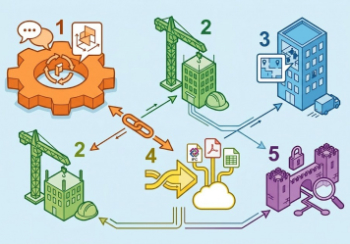
A user gives their low down.

A UK training and membership provider for mould remediation professionals.
Building Safety recap April, 2026
A short and longer run-through of the month, with links to further information and sources.

CIAT May 2026 briefing.

Independent NSI and BAFE study exploring how organisations are changing the way they buy fire safety services.

From medieval scribes to modern word art.

ECA welcomes crackdown on late payment and push for clean energy, whilst CIOB seek fixed cladding removal timeframes.
Cyber Security in the Built Environment
Protecting projects, data, and digital assets: A CIOB Academy TIS.
Managing competence in the built environment
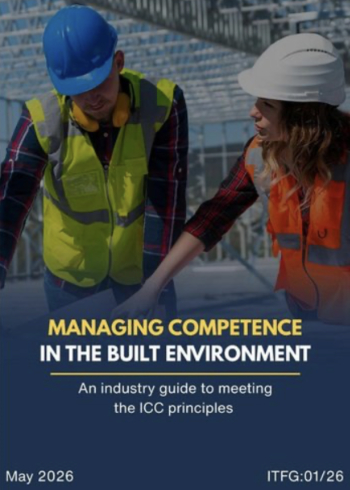
ITFG publishes new industry guide on how to meet the ICC principles.
The UK's campaign to reduce noise pollution: Mythbusting, articles and topic guides.