





Best Waterproofing Solutions for Indian Climate
[edit] 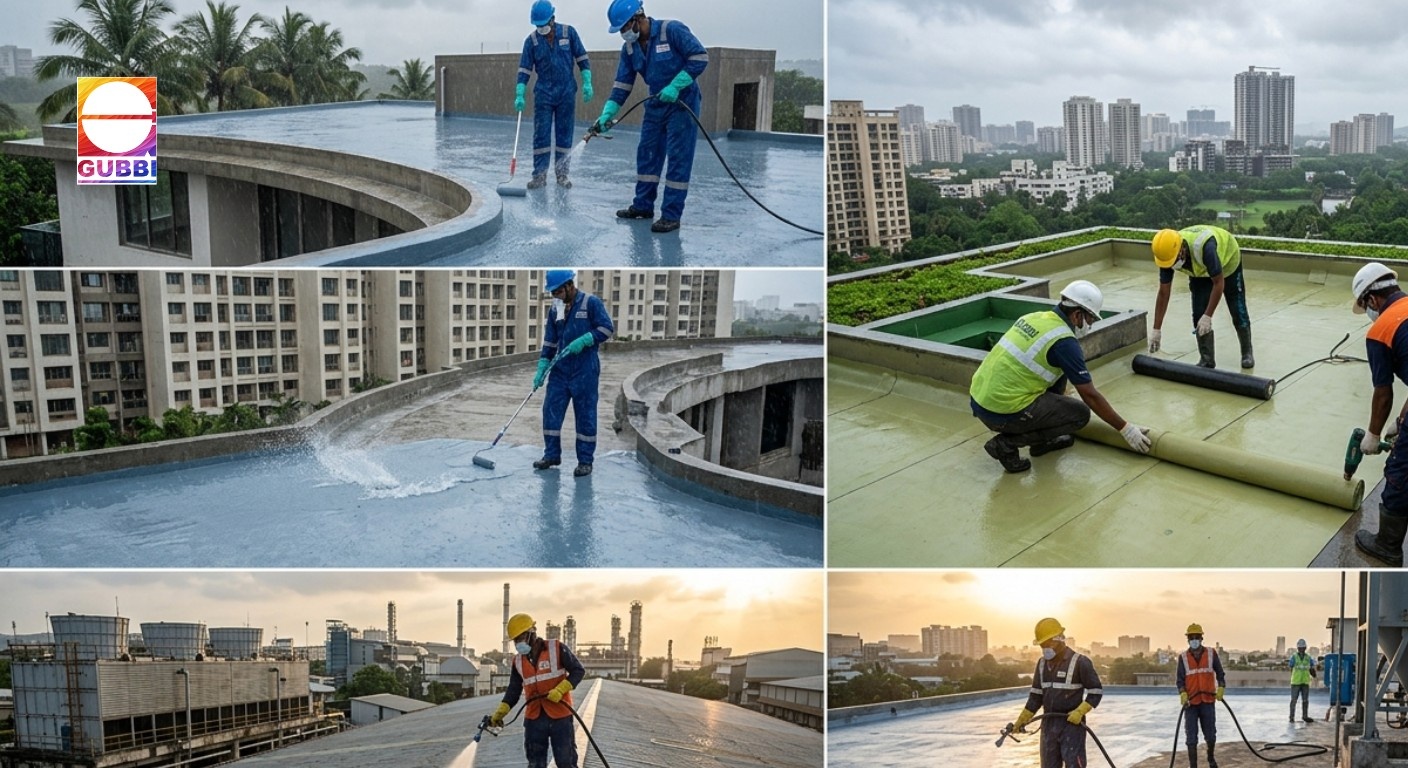
[edit] Introduction
India's climate presents significant challenges for the durability of buildings and infrastructure. Heavy monsoon rainfall, high humidity in coastal regions and extreme summer temperatures can all contribute to water ingress, dampness, deterioration of concrete and corrosion of embedded reinforcement. Effective waterproofing is therefore an important aspect of building design, construction and maintenance, helping to reduce moisture-related defects and extend the service life of structures.
The most appropriate waterproofing system depends on factors including the building type, construction materials, environmental exposure, the condition of the structure and the performance requirements of the project. Waterproofing should form part of an overall moisture management strategy that also considers roof design, drainage, detailing and maintenance.
[edit] Effects of inadequate waterproofing
Water penetration can lead to a range of defects, including:
- Roof leaks during periods of heavy rainfall.
- Water ingress through terraces and balconies.
- Damp walls and ceilings.
- Peeling finishes and decorative coatings.
- Basement water infiltration.
- Corrosion of reinforced concrete.
- Freeze-thaw damage in regions where temperatures fall below freezing.
- Reduced durability of structural elements.
Early investigation and repair of water ingress can reduce the likelihood of more extensive deterioration and costly remedial works.
[edit] Waterproofing systems for different structures
Different parts of a building require different waterproofing approaches depending on their construction and exposure.
[edit] Roof waterproofing
Roofs are continuously exposed to rainfall, solar radiation, temperature fluctuations and weathering. Common waterproofing systems include:
- Liquid-applied waterproofing membranes.
- Elastomeric coatings.
- Cementitious waterproofing systems for appropriate concrete applications.
- Polyurethane waterproofing membranes.
- Bituminous and modified bitumen membrane systems.
The selection of a system depends on factors such as roof type, expected movement, accessibility, maintenance requirements and compatibility with the roof construction.
[edit] Terrace waterproofing
Terraces and podium decks are vulnerable to water ingress where drainage is inadequate or waterproofing systems have deteriorated. Effective waterproofing can help protect the structural slab, reduce leakage into occupied spaces and improve durability. Waterproofing should be combined with appropriate falls, drainage and movement detailing.
[edit] Industrial buildings
Industrial facilities may require waterproofing systems capable of withstanding demanding operating conditions, including moisture, chemical exposure, thermal cycling and vibration. Waterproofing may be required for roofs, reinforced concrete structures, plant areas, retaining walls, cooling towers and below-ground construction.
[edit] Commercial buildings
Commercial buildings, including offices, hospitals, hotels, retail developments and educational buildings, often require durable waterproofing systems that minimise disruption arising from leaks and reduce lifecycle maintenance costs.
[edit] Selecting an appropriate waterproofing system
The choice of waterproofing should take account of:
- Local climate and rainfall intensity.
- Building design and construction.
- Type and condition of the substrate.
- Expected structural and thermal movement.
- Extent and cause of existing water ingress.
- Intended service life.
- Maintenance requirements.
- Compatibility with adjoining materials and finishes.
Before selecting a waterproofing system, the source of water ingress should be identified. Waterproofing alone may not resolve defects caused by structural movement, poor detailing, blocked drainage or construction defects.
[edit] Indicators that waterproofing may be required
Common signs of moisture-related problems include:
- Damp patches on walls or ceilings.
- Water leaks during rainfall.
- Peeling or blistering paint finishes.
- Mould growth.
- Cracking of concrete or masonry.
- Rust staining associated with reinforcement corrosion.
- Efflorescence on masonry or concrete surfaces.
Prompt investigation is recommended, as these symptoms may indicate defects that extend beyond the waterproofing layer.
[edit] Common waterproofing methods
A range of waterproofing technologies are used depending on the application and performance requirements.
Cementitious waterproofing is commonly used for concrete structures including water-retaining structures, basements and some terraces.
Polyurethane waterproofing provides a flexible membrane suitable for applications where movement resistance is required.
Bituminous waterproofing is widely used for flat roofs, foundations and below-ground structures through built-up or membrane systems.
Injection grouting can be used to seal cracks and control localised water ingress in concrete structures, although it is generally a remedial rather than primary waterproofing technique.
Sheet and liquid-applied membrane systems are widely used on roofs, terraces and podium decks to provide continuous waterproof protection.
No single waterproofing method is suitable for every application, and system selection should be based on the building design and exposure conditions.
[edit] Developments in waterproofing
Advances in waterproofing materials continue to improve durability and performance. These include:
- High-performance liquid-applied membranes.
- Polymer-modified cementitious systems.
- Flexible sheet membranes.
- Hybrid polymer waterproofing systems.
- Waterproofing systems with improved resistance to ultraviolet radiation and chemical exposure.
Modern waterproofing design increasingly emphasises whole-life performance, maintainability and integration with sustainable building design.
[edit] Conclusion
Effective waterproofing is an important component of building durability in regions subject to significant rainfall, humidity or other sources of moisture exposure. The most appropriate system depends on the building type, construction, environmental conditions and performance requirements. Careful design, correct specification, appropriate installation and regular inspection are all essential to achieving long-term protection against water ingress.
[edit] Related articles on Designing Buildings
Featured articles
Check out some of the best features and news from Designing Buildings as well as key stories from around the web.
Code of Practice for Electrical Energy Storage Systems.

ECA calls on members to comment on draft 4th edition.

Bringing together expertise and creating cultural benefits.

CIOB celebrates positive Ofsted report.

The Building Safety Regulator announces a call for evidence.

Government approach could undermine delivery and regeneration.
World's first mass timber data centre.

The overlooked environmental aspect of data centre development.
Introduction to radon awareness

New technical information sheet published by CIOB.

Updated supplier guide can help electrical contractors engage with NHP.

CIAT confirm the winners of the 2026 architectural technology awards.

Government launches a one stop shop for flood preparedness.

Sir Edwin Lutyens: Britain's greatest architect? Book review.

CIOB publishes free template to help assess and manage risks.