





Seagram Building
Contents |
[edit] Introduction
The Seagram Building is an iconic skyscraper located on Park Avenue in mid-town Manhattan, New York City. It was designed by architect Ludwig Mies van der Rohe in the International Style, which would influence the architectural style of New York’s skyscrapers for several decades.
Characterised by sleek glass and metal, rather than the ornamental heavy stone and brick facades of previous decades, the Seagram Building signalled a new era of functional skyscraper, adopting a minimalist, corporate aesthetic.
The building stands 157 m (515 ft) tall, with 38 storeys and was completed in 1958. It was originally designed as the headquarters for Joseph E. Seagram’s & Sons, and was Mies’ first tall office building project.
Today, it is owned by RFR Holdings and remains a prominent example of mid-century modernist architecture. However, it also has an Energy Star rating of 3 out of 100, the worst of any New York building.
[edit] Architectural design

[edit] Structure
One of the key traits of the International style was to articulate the structure of the building externally, rather than concealing it under applied ornamentation.
The Seagram Building was built using a combination of a steel moment frame and a steel and reinforced concrete core for lateral stiffness, one of the first buildings of its kind to do so. The structural engineering consultants, Severud Associates, claimed it was the first tall building to use high-strength bolted connections, and the first to combine a braced with a moment frame. In addition, it was one of the first buildings of its kind to use a vertical truss bracing system.
Mies had intended for the steel frame to be visible, however, this was prevented by the American building codes which required the covering of all structural steel with concrete or another fire-resistant material. To give the building the vertical articulation he wanted, Mies used non-structural bronze-toned I-beams instead, which run vertically (in the same way as mullions), surrounding the large glass windows, also helping to stiffen the skin for wind loading. This method of a larger non-structural edifice being supported by an interior reinforced concrete shell would go on to be widely adopted for other buildings.
[edit] Window blinds
A characteristic of the International style is the building’s uniform appearance. To avoid the undesirable, disordered irregularity of window blinds being drawn to different lengths, Mies specified blinds which were operationally limited to three positions – fully open, halfway open, or fully closed.
[edit] Interior
It was the use of expensive, high-spec materials and lavish decoration in the interiors which made the Seagram Building the world’s most expensive skyscraper at the time of its completion. The building used 1,500 tons of bronze, in addition to travertine and marble. This was intended to provide cohesion with the sleek, yet minimalist, external aesthetic.
[edit] Plaza
Another pioneering feature of the design was Mies’ decision to set the building back 100 ft from the edge of the street, creating an open plaza. This was part of his response to the dense environment of Manhattan, and was a rebuke to the conventional economics of skyscraper design and urban planning.
The plaza incorporates two large fountains and outdoor seating, encouraging the socialisation of the space, and providing a 'threshold' linking the city with the building.
Such plazas have now become something of an architectural cliché, but at the time it was celebrated as being innovative and unique.
[edit] Related articles on Designing Buildings Wiki
Featured articles and news
Costs and insolvencies mount for SMEs, despite growth

Construction sector under insolvency and wage bill pressure in part linked to National Insurance, says report.
The place for vitrified clay pipes in modern infrastructure
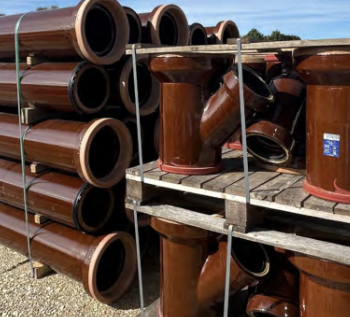
Why vitrified clay pipes are reclaiming their role in built projects.
Research by construction PR consultancy LMC published.
Roles and responsibilities of domestic clients
ACA Safety in Construction guide for domestic clients.
Fire door compliance in UK commercial buildings

Architect and manufacturer gives their low down.
Plumbing and heating for sustainability in new properties

Technical Engineer runs through changes in regulations, innovations in materials, and product systems.
Awareness of the Carbon Border Adjustment Mechanism
What CBAM is and what to do about it.
The new towns and strategic environmental assessments
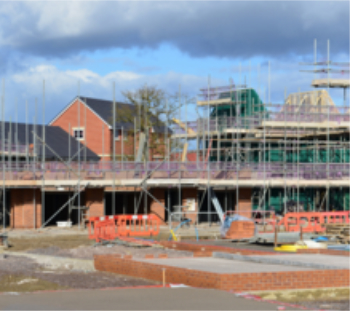
12 locations of the New Towns Taskforce reduced to 7 within the new towns draft programme and open consultation.
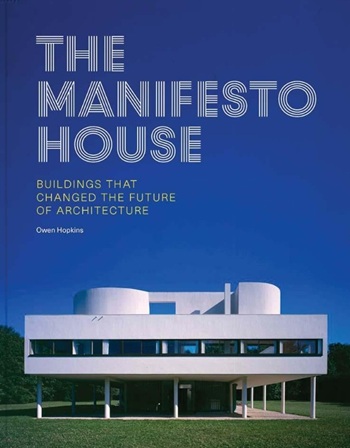
Buildings that changed the future of architecture. Book review.
The Sustainability Pathfinder© Handbook
Built environment agency launches free Pathfinder© tool to help businesses progress sustainability strategies.
Government outcome to the late payment consultation, ECA reacts.
IHBC 2025 Gus Astley Student Award winners
Work on the role of hewing in UK historic conservation a win for Jack Parker of Oxford Brookes University.
Future Homes Building Standards and plug-in solar
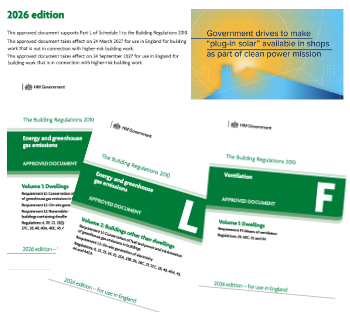
Parts F and L amendments, the availability of solar panels and industry responses.
How later living housing can help solve the housing crisis
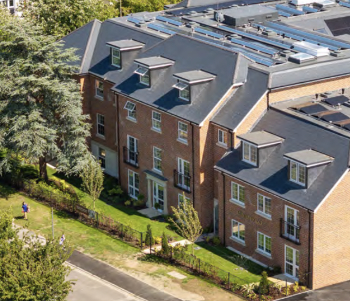
Unlocking homes, unlocking lives.
Preparing safety case reports for HRBs under the BSA
A new practical guide to preparing structural inputs for safety cases and safety case reports published by IStructE.
Male construction workers and prostate cancer

CIOB and Prostate Cancer UK encourage awareness of prostate cancer risks, and what to do about it.