





Types of bridge

A bridge is a spanning structure that creates a passage over an obstacle such as a river, gorge, valley, road, railway and so on.
There are a wide range of different types of bridge, including:
- Aqueduct (a bridge carrying water).
- Arch bridges (a load-bearing arch in a state of compression).
- Bascule bridge (a lifting bridge).
- Beam bridges (simple beam or cantilever structures).
- Drawbridge (lifted at one end by cables – sometimes associated with castles and other defensive buildings).
- Green bridge (a crossing that allows the safe passage of wildlife).
- Half through bridge (a bridge in which the lower chord carries the vehicular or pedestrian traffic).
- Lift bridge (a bridge that lifts to allow passage underneath).
- Movable bridge (a spanning structure that can change position or shape to accommodate different situations.
- Navigable aqueduct (structures that incorporate canals above other waterways, valleys or transportation infrastructure).
- Overbridge (a bridge crossing over a transport corridor).
- Pontoon bridge (a floating bridge).
- Retractable bridge (to accommodate different situations and different types of traffic – such as a thrust bridge).
- Submersible bridge (or ducking bridge).
- Suspension bridges (towers secured by cables that suspend the central structural span or deck).
- Swing bridge (a bridge that opens by swinging).
- Through bridge (a bridge in which the lower chord carries the vehicular or pedestrian traffic and having cross-bracing located above the traffic).
- Underbridge (a bridge crossing under a transport corridor such as a railway).
- Viaduct (a bridge like structure composed of a series of spans, used to carry roads and railways across valleys and other depressions).
NB The word 'bridge' can also be a used as a verb meaning to make a bridge over something or between things.
In the construction industry, the word bridge might also refer to a cold bridge. This is a situation in which there is a direct connection between the inside and outside of a building through one or more elements that are more thermally conductive than the rest of the building envelope. For more information see: Cold bridge.
[edit] Related articles on Designing Buildings
- 3D printed bridge.
- Assessing bridges.
- Bridge construction.
- Bridge structures.
- Clifton Suspension Bridge.
- Examples of bridges.
- Garden bridge.
- Genoa bridge collapse.
- Learning from the Genoa bridge collapse.
- London Bridge and its houses, c1209-1761.
- Optimal arch bridge.
- Queensferry Crossing.
- Saving Dick Nunn's bridge.
- The Iron Bridge.
- The Menai Suspension Bridge.
- The Millau Viaduct.
Featured articles
Check out some of the best features and news from Designing Buildings as well as key stories from around the web.

New and updated CLC building safety guidance.
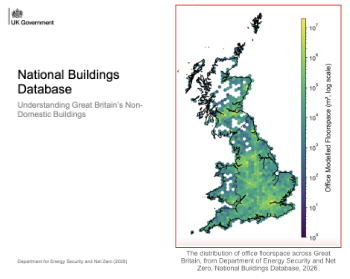
New UK National Buildings Database.
Building Safety Wiki Interviews

Chief executive of the British Woodworking Federation.
Planning condition discharge in England and Wales

A brief explanation from a building compliance expert, with further links.
Overheating guidance and tools for building designers

Guidance for dealing with element of building fabric control that have increasing importance.
Shading for housing, a design guide

From the Good Homes Alliance and British Blind and Shutter Association.
UK Standard Skills Classification (SSC)

A shared framework for describing skills needs.
Social media ban consultation comes to close

CIOB urges UK Government to consider social media’s role in careers guidance in ban debate.
The latest of eight Skills England apprenticeship units

The addition of battery manufacturing welcomed by ECA with a warning about the risks of fast-tracked apprenticeship units.
Building Control Independent Panel final report
A precis of a key report led by Dame Hackitt with full recommendations and link to the government response.
Building Safety recap April, 2026
A short and longer run-through of the month, with links to further information and sources.
Comments
[edit] To make a comment about this article, click 'Add a comment' above. Separate your comments from any existing comments by inserting a horizontal line.
Any more information about viaducts?