





Types of barrier

Contents |
[edit] Introduction
A barrier is any object or mechanism that is designed to prevent people, animals, vehicles and so on from entering a restricted area, or to contain them within an area. Barriers can constitute permanent or temporary obstacles. If temporary, their status can be changed periodically to allow entry and exit.
Typical forms of barrier include:
[edit] Fences
All fences are barriers to entry (or exit), although they can also be used for delineation purposes. They typically combine strong, immovable materials of a height to ensure they cannot be climbed, or at least, form a deterrent from straying into or out of an area. Fences can also be very low and easily traversable, if their purpose is more signatory e.g by keeping people to a pathway or discouraging walking on a grassed area. Fences may also be electrified as a further deterrent to either people or animals.
[edit] Gates
Gates are barriers to entry and exit, but have the advantage of being opened temporarily to allow passage in and out. They can be incorporated as part of fences or as part of permanent structures.
[edit] Boom barriers
Boom barriers (also known as boom gates), can be conceived of as gates which instead of opening in the horizontal plane, operate by rising and falling. They are typically pivoted on one side and counter weighted to allow smooth, easy manual operation. They can also be motorised and are usually painted in conspicuous colours such as with alternating red and white bands. To further increase their visibility, a second arm can be suspended around 300-400mm below the main arm by metal straps which gradually revert to the vertical position as the boom is raised.
[edit] Traffic barriers
Traffic barriers separate vehicles from people or vehicles from other vehicles. The latter are seen on the central reservations of motorways and are sometimes referred to as ‘crash barriers’ as they are designed to prevent vehicles from crossing the central reservation into oncoming traffic. They are usually made of steel, are typically around 600-700mm high and have a corrugated profile for extra strength. They are designed to absorb the energy of a collision and in so doing deflect the vehicle into a parallel path to the barrier; this helps prevent vehicles breaking through into the other carriageway. Motorway crash barriers can also be made of reinforced concrete or steel wire cables.
[edit] Security (vehicle) barriers
In an age where some buildings require protection from terrorist attack, centres of government are often provided with large, heavy barriers placed at strategic points to prevent entry or ramming by cars and other vehicles. They are usually very large weights, often less than 1m high, and must be craned into position. Once in place, they are difficult to move, other than by crane. They are usually placed with gaps to allow pedestrians to walk through.
[edit] Others
Other forms of barrier may include:
- Topographical features such as mounds or ditches.
- Landscape features such as hedges or other planting.
- Bollards.
- Water features.
- Some forms of hostile architecture.
- Railings.
- Banisters.
- Guarding.
NB Urban Design Guidelines for Victoria, published by the State of Victoria (Australia) in 2016, states: ‘Barriers such as bollards and fences can define boundaries and protect people from traffic hazards and level changes. They also protect trees and shrubs from people and vehicles. A barrier may be made as bollards, screens, rails, fences, kerbs and walls. Barriers and fences can provide an opportunity for public art or to communicate local stories. They may also provide opportunities for seating.’
[edit] Related articles on Designing Buildings
- 2021 survey on public safety in crowded places.
- Access control.
- Access to construction sites.
- Approved document Q.
- CCTV.
- Collective restraint systems.
- Commercial security systems.
- Entry control.
- Fence.
- Hostile architecture.
- Palisade.
- Portcullis.
- Purchasing security gates and barriers.
- Ram raid.
- Scarp.
- Security and the built environment.
- Security glazing.
- Talus.
Featured articles
Check out some of the best features and news from Designing Buildings as well as key stories from around the web.
A quick introduction to its uses and risks.
Construction Management, 17 June

Government rolls out digital planning tool to all local authorities.
Your views needed - a strategy for the professions, trades and occupations.

Confronting competency, codes, capacity and costs.

The hidden risk in modern construction supply chains.
Construction Management, 10 June

24 months to 14: CITB launches accelerated apprenticeships.
Bridging the gap between clients and contractors
Concerns remain around contractor quality, capability, and delivery.
Construction Management, 10 June.
Heat pumps beat boilers in new home tests.
Building Safety Act implementation in Wales

CIAT to host industry panel on 26 June.

New and updated CLC building safety guidance.
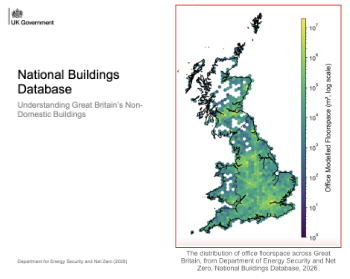
New UK National Buildings Database.