




New Architects Code of Conduct and Practice comes into effect in September 2025
|
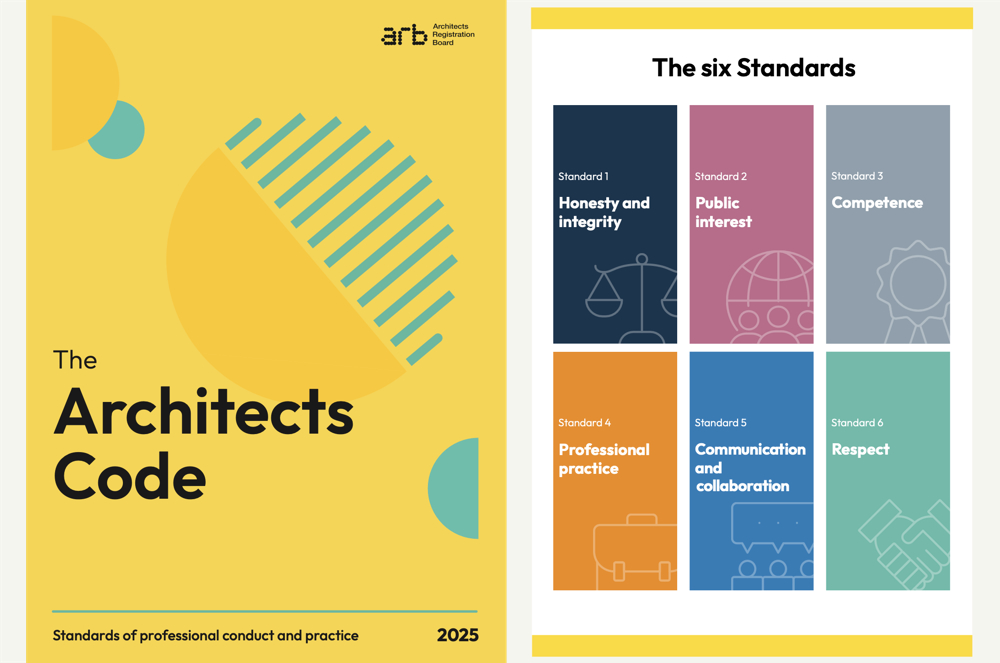
| The new Architects Code published by the ARB is available for free download here |
Contents |
[edit] Background to the code
On 19 June 2025 the Architects Registration Board (ARB) announced publication of a new version of the Architects Code of Conduct and Practice, which sets out the professional standards expected of all registered architects in the UK. Under the Architects Act 1997, it is legally required to publish a code of conduct and practice, and to keep that code under review.
The updated Code comes into effect on 1 September 2025, replacing the current version that has been in place since 2017. The ARB proposals for a new Architects Code were initially published in September 2024 followed by a three month consultation. It has been drafted to respond directly to the expectations of the public and clients as identified through independent research,and insights shared with ARB by architects and other built environment professionals.
A consultation on draft guidance for the Architects Code of Conduct covering Dealing with Complaints, Professional Indemnity Insurance, and Terms of Engagement (tranche one) ran between 26 February and 9 April 2025. A second consultation for the guidance addressing the specific topics of Managing Conflicts of Interest, Managing Finances and Raising Concerns and Whistleblowing (tranche two) opened on 19 Jun 2025 and closes 31 July 2025. The guidance as a whole aims to support architects in interpreting and applying the new Code.
[edit] The Six Standards
The previous code with 12 standards published in 2017 is replaced by the new code (as of September 2025) and is based on six standards that define professionalism for modern UK architects:
Honesty and integrity
- Architects must be honest and act with integrity and will meet the Standard when they:
- Use impartial judgment based on the evidence available
- Promote their services responsibly and accurately
- Declare and manage any conflicts of interest appropriately
- Are transparent about any inducements offered or received
- Report to ARB any instance where they or another architect may have fallen significantly short of the Standards within this Code
- Co-operate with any formal inquiries or ARB investigations
- Architects must act in the public interest and in a way that supports the environment and prevents harm to others and will meet the Standard when they:
- Use their best endeavours to enhance the environment
- Protect the health and safety of those who construct, maintain and use buildings and places
- Challenge others where their actions may put people or the environment at risk, and report the matter to an appropriate authority when those risks are not adequately managed
- Decline any work which requires them to act contrary to these Standards
- Do not knowingly break the law or assist others in unlawful actions
- Architects must be competent to carry out the work they do and will meet the Standard when they:
- Acknowledge and work within the limits of their competence
- Ensure they are up to date with current standards and good practice
- Adopt a reflective approach to their work by learning from feedback and addressing individual learning needs
- Assure themselves of the competence of anyone they engage to carry out work on their behalf
- Provide appropriate supervision and sufficient resources to people they engage to carry out work on their behalf
- Encourage the professional development of those for whom they are responsible
- Maintain their knowledge and understanding of guidance issued by ARB in support of these Standards
- Architects must carry out their work effectively, exercising skill and diligence and will meet the Standard when they:
- Provide clear, understandable, written terms of engagement to their clients before commencing work
- Plan, monitor and manage their work in a timely manner
- Have sufficient resources and capacity to provide their services effectively
- Establish processes to ensure that projects are regularly monitored and reviewed
- Maintain accurate records of their work and decisions
- Protect the confidentiality and security of information for which they are responsible
- Ensure their liabilities are covered by adequate and appropriate professional indemnity insurance
- Deal with disputes or complaints promptly and courteously
- Manage their professional finances appropriately
Communication and collaboration
- Architects must communicate effectively and collaborate with others and will meet the Standard when they:
- Communicate in a way that is appropriate to their audience
- Understand and confirm their clients’ initial requirements before committing to work
- Explain their role to their clients, and manage the expectations of others as to what can be achieved
- Communicate to their clients, in a timely manner, any issues that may impact the cost, time or quality of a project
- Collaborate proactively with other professionals
Respect
- Architects must treat others with respect and will meet the Standard when they:
- Are polite and considerate
- Have a committed approach to equality, diversity and inclusion in their approach to designing environments and in their relationships with colleagues, employees, clients and communities
- Contribute to a positive and inclusive working environment where unfair discrimination is not tolerated
Each standard includes examples of how architects can demonstrate their commitment to upholding it.
[edit] Comment
“The new Code represents a significant step forward in defining what it means to be an architect today. It reflects the values that the public rightly expects of the profession, and provides a practical framework that will help architects make decisions with confidence and integrity. We strongly encourage all architects to view the new Code on the ARB website and to familiarise themselves with the new Standards before the Code comes into effect on 1 September.”
[edit] Related articles on Designing Buildings
- ARB code of conduct.
- ARB proposals for a new Architects Code.
- Architect.
- Architect's fees.
- Architectural education.
- Architects Registration Board.
- Architectural styles.
- CIAT responds to the architects' regulation review.
- Concept architectural design.
- Hiring an architect as a domestic client.
- Professional conduct.
- Professional indemnity insurance.
- Review of regulation of architects: call for evidence.
- RIBA.
- RIBA Code of Professional Conduct.
- The Architects Act.
- The history of the architectural profession.
- The role of architects.
[edit] External links
- https://arb.org.uk/wp-content/uploads/The-Architects-Code-of-Conduct-and-Practice.pdf
- https://arb.org.uk/architect-information/architects-code-standards-of-conduct-and-practice/
- https://arb.org.uk/arb-publishes-new-architects-code-of-conduct-and-practice-coming-into-effect-september-2025/
- https://arb.citizenspace.com/policy-and-communications/consultation-on-guidance-for-the-architect-2/
- https://arb.org.uk/wp-content/uploads/2016/05/Architects-Code-2017.pdf
- View the Code consultation results
- View the tranche 2 guidance consultation
- View the Architects Act 1997
Featured articles
Check out some of the best features and news from Designing Buildings as well as key stories from around the web.

Government approach could undermine delivery and regeneration.
World's first mass timber data centre.

The overlooked environmental aspect of data centre development.
Introduction to radon awareness

New technical information sheet published by CIOB.

Updated supplier guide can help electrical contractors engage with NHP.

CIAT confirm the winners of the 2026 architectural technology awards.

Government launches a one stop shop for flood preparedness.

Sir Edwin Lutyens: Britain's greatest architect? Book review.

CIOB publishes free template to help assess and manage risks.
ECA's reflections on Party Conference season

Burnham wants to be confident of winning before asking for a fresh mandate.
New Chief Construction and Scientific Adviser

Sergio Cavalaro, Professor of Infrastructure Systems at Loughborough University.
Building safety levy for England

CIAT publish estimator tool for members.

Water sector faces a growing crisis that could slow the delivery of vital infrastructure.