





King post

King post is a term used to describe structural elements that rely on a single or key structural member, particularly in traditional timber framing. The term is commonly used in timber and steel structural design to describe a king post truss (other variations of a king strut truss and queen post truss are shown above).
It is also used to describe a type of wall construction. King post walls are often used in below ground foundation or retaining wall design, also referred to as king piles or soldier piles, with a series of posts with infill between, see image below.
The term king closer (or closure) is a type of cant brick used in a bricklaying technique to finish internal corners. A queen closer similarly is a cut brick or brick bat. The term king, may also be used to describe oversized building elements such king size bricks, blocks or beams as well as other items such as beds. It is also used in the phrase king pin, which is most commonly associated with automobile engineering but also a specific connection of a bicycle frame.

[edit] King post truss
A king post truss comprises a single horizontal tie beam, a pair of principal rafters and the central vertical king post into which the principal rafters are jointed at the apex (see above). The top of the king post acts like a key stone in a masonry arch, with the bottom of the post supporting the middle of the tie beam, rather than bearing on it. This helps achieve greater spans with smaller timber sections. Struts lie at angles between the middle of the post and the principal rafters, which in turn are supported at the top by a ridge beam which is also joined to the king post.
A king strut is part of a very similar truss with the only difference being a horizontal cross beam at its top end connecting to the rafters. A queen post truss is similar but has two posts spaced at the centre of the truss with a cross beam creating a square frame above the tie beam and no central post.

[edit] King post wall
King post walls contain main columns (king posts or soldiers) installed in equal spaces at a few metre centres along a construction line. The space between is filled with concrete panels, blocks, brick or stone and acts as a retaining wall (see above). Specification for king post walls can be found in the British standards or Eurocode 7 for temporary or permanent conditions and it is a common construction method.
Generally the king posts are driven into the ground, thus are also referred to as king piles, and connected with a beam, to form H shapes, as such one might refer to the lower half as king piles and the upper half as king posts. The upper part of the H structure is normally then in filled with precast concrete panels and may sit above ground.
One infamous example of this kind of wall design was employed in the earlier construction of the Berlin wall (which is also sometime used to describe this type of construction method). The posts or soldiers being driven into the ground and then the concrete reinforced panels infilling the gaps between creating the above ground wall, which was later supplemented by the free standing concrete panel wall system more readily associated with the Berlin wall.
The same design approach may also be entirely back filled and located underground for the construction of retaining walls, often referred to as king post piles, or pile walls, soldier walls or just retaining walls.
[edit] Related articles on Designing Buildings
Featured articles
Check out some of the best features and news from Designing Buildings as well as key stories from around the web.
Bridging the gap between clients and contractors

Concerns remain around contractor quality, capability, and delivery.
Construction Management, 10 June.

Heat pumps beat boilers in new home tests.
Building Safety Act implementation in Wales

CIAT to host industry panel on 26 June.

New and updated CLC building safety guidance.
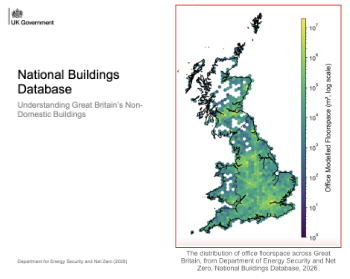
New UK National Buildings Database.
Building Safety Wiki Interviews

Chief executive of the British Woodworking Federation.
Planning condition discharge in England and Wales

A brief explanation from a building compliance expert, with further links.
Overheating guidance and tools for building designers

Guidance for dealing with element of building fabric control that have increasing importance.
Shading for housing, a design guide

From the Good Homes Alliance and British Blind and Shutter Association.
UK Standard Skills Classification (SSC)

A shared framework for describing skills needs.
Social media ban consultation comes to close

CIOB urges UK Government to consider social media’s role in careers guidance in ban debate.
Comments
To make a comment about this article, click 'Add a comment' above. Separate your comments from any existing comments by inserting a horizontal line.