






Biodiversity Net Gain: statutory must-haves, plus the delivery model that de-risks planning

Contents |
[edit] Ten percent base
Unlock what Biodiversity Net Gain (BNG) really means for your projects: the statutory essentials, a risk-proof delivery model, and how to turn the 10% minimum into nature-positive design.
BNG is now a statutory planning condition in England. Under Schedule 7A to the Town and Country Planning Act 1990, inserted by the Environment Act 2021, permissions are deemed subject to a biodiversity gain condition requiring a minimum 10% uplift measured with the statutory biodiversity metric. For major development, this has applied since 12 February 2024, and for small sites since 2 April 2024 (subject to limited exemptions and transitional provisions). Treat the 10% as your compliance floor, not your design ceiling.
[edit] What the planning authority will look for
Before starting works, you must have an approved Biodiversity Gain Plan showing: firstly, the measured baseline and post-development outcomes using the statutory metric; secondly, how you follow the mitigation hierarchy (avoid - minimise - compensate) in the design; and thirdly, how on-site 'significant enhancements' and any off-site units are secured and managed for at least 30 years. Off-site land must appear on the Biodiversity Gain Site Register and be locked in via s106 obligation or conservation covenant. Sequence legal drafting and registration early to avoid programme risk.
[edit] A repeatable delivery model (Work Stage-aligned)
- Stages 0-1 (Mobilise): Set ambition beyond 10% where feasible and align with local Nature Recovery priorities. Comission the ecological baseline; agree data standards for the metric and monitoring.
- Stage 2 (Concept): Masterplan around highest-value habitats and connectivity (hedgerows, dark corridors, green roofs/walls as stepping stones). Embed BNG targets in the brief, risk register, and outline cost plan.
- Stages 3-4 (Spatial/Technical): Produce the BNG Delivery Plan to include habitat drawings and schedules, soil and substrate specs, lighting controls, SuDS for biodiversity, phasing, and a 30-year management and monitoring plan. Integrate into specs, prelims and Employer’s Requirements so contractors' price the ecological intent. Reference BS 8683:2021 for process discipline.
- Stage 5 (Construction): Use ecological hold-points, site inductions and protection zones; maintain the auditable trail (photos, as-builts, planting certificates, lighting commissioning records).
- Stages 6-7 (Handover/Use): Activate the long-term management plan; set adaptive-management triggers linked to habitat condition scores.

[edit] How to professionalise at practice level
BNG is the project-level 'what'; pair it with organisational 'how' so outcomes scale. As highlighted in Martin Brown’s Regen Note (A Regenerative Imperative: Biodiversity, Net Gain, ISO & Biophilia), the emerging BS ISO 17298 (strategy: integrating biodiversity into governance, dependencies/impacts, and value chains) and BS ISO 17620 (process for designing and implementing BNG) create a complementary toolkit with BNG- project obligations + organisational standards, to drive consistent, auditable results. Use them to hard-wire roles (RACI), templates, KPIs, and supplier expectations into your QMS.
From compliance to regeneration. The profession’s opportunity is to treat 10% as a minimum and design for nature-positive outcomes but 20%, 50%, even 100%+, where context allows, prioritising connectivity, soil health, structural diversity, and long-term stewardship aligned to Nature Recovery Strategies. This is the 'regenerative imperative': bending the curve from loss to gain.
Make gains visible and valued. Biophilic design translates technical uplift into human experience, building user stewardship and lowering lifecycle risk. Shade, water, micro-topography, and species-appropriate lighting make the gains legible, loved and therefore maintained. Think of biophilia as the 'secret sauce' that keeps BNG working on the ground.
[edit] This week’s actions for ATs:
- Pre-screen live schemes for BNG applicability and exemptions.
- Lock a Stage-2 internal gateway for metric assumptions.
- Instruct legal on s106 or conservation covenant paths for any off-site units.
- Align construction information and contracts to the approved Gain Plan to avoid compliance drift.
Deliver the letter of the law, and the spirit of regeneration, with a process clients can trust and planning can approve, first time.
This article appears on the CIAT news and blogsite as "Biodiversity Net Gain: statutory must-haves, plus the delivery model that de-risks planning" dated 4 November, 2025 and was written by Sarah May FCIAT.
--CIAT
[edit] Related articles on Designing Buildings
- Biodiversity in building design and construction
- Biodiversity in the urban environment.
- Biodiversity Gain.
- Biodiversity gain plan.
- Biodiversity gain site.
- Biodiversity gain site register.
- Biodiversity net gain consultation.
- Biodiversity Net Gain; origins, updates and terminology.
- Biodiversity net gain regulations and implementation.
- Biodiversity offsetting.
- Biodiversity units.
- Biodiversity metric.
- Ecological impact assessment.
- Ecology.
- Environmental impact assessment.
- Habitat.
- Habitat management and monitoring plan HMMP.
- Local Nature Recovery Strategy LNRS.
Featured articles and news
Costs and insolvencies mount for SMEs, despite growth

Construction sector under insolvency and wage bill pressure in part linked to National Insurance, says report.
The place for vitrified clay pipes in modern infrastructure
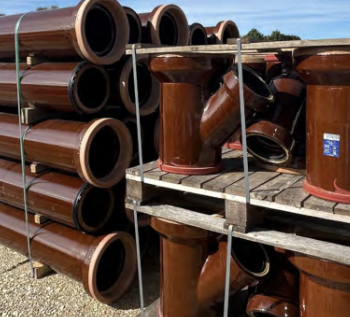
Why vitrified clay pipes are reclaiming their role in built projects.

Research by construction PR consultancy LMC published.
Roles and responsibilities of domestic clients

ACA Safety in Construction guide for domestic clients.
Fire door compliance in UK commercial buildings

Architect and manufacturer gives their low down.
Plumbing and heating for sustainability in new properties

Technical Engineer runs through changes in regulations, innovations in materials, and product systems.
Awareness of the Carbon Border Adjustment Mechanism
What CBAM is and what to do about it.
The new towns and strategic environmental assessments
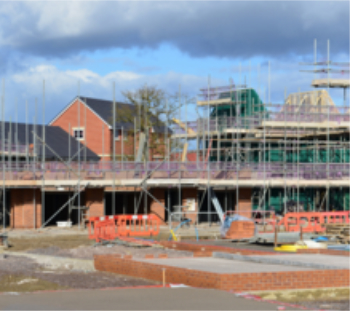
12 locations of the New Towns Taskforce reduced to 7 within the new towns draft programme and open consultation.
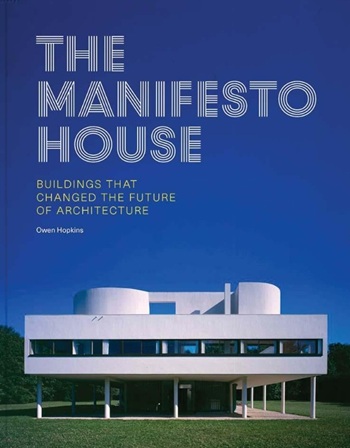
Buildings that changed the future of architecture. Book review.
The Sustainability Pathfinder© Handbook
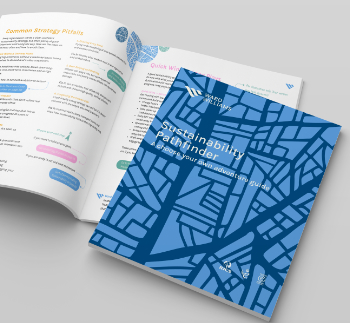
Built environment agency launches free Pathfinder© tool to help businesses progress sustainability strategies.
Government outcome to the late payment consultation, ECA reacts.
IHBC 2025 Gus Astley Student Award winners

Work on the role of hewing in UK historic conservation a win for Jack Parker of Oxford Brookes University.
Future Homes Building Standards and plug-in solar
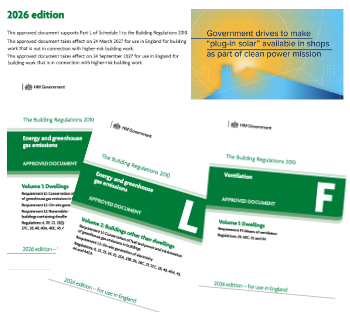
Parts F and L amendments, the availability of solar panels and industry responses.
How later living housing can help solve the housing crisis

Unlocking homes, unlocking lives.
Preparing safety case reports for HRBs under the BSA

A new practical guide to preparing structural inputs for safety cases and safety case reports published by IStructE.
Male construction workers and prostate cancer

CIOB and Prostate Cancer UK encourage awareness of prostate cancer risks, and what to do about it.