





Silicon
Contents |
[edit] Introduction
Silicon (chemical symbol Si) is a naturally occurring, non-metallic element and, after oxygen, is the second most abundant element in the earth’s crust, found mainly as silica in sand. Silicates are the chief constituents of many rocks, clays and soils and make up more than 90% of the Earth’s crust.
Hard and brittle, silicon has a crystalline structure and a metallic blue-grey lustre. Because it is classed as ‘metalloid’, it displays properties of both metals and non-metals.
Silicon has an affinity for oxygen and so is rarely found in its pure elemental form but as silicon dioxide (SiO2 or silica). Silica occurs in 12 different crystal modifications which include alpha quartz, a main constituent of granite and sandstone, rock crystal, rose quartz, smoky quartz, morion, amethyst and citrine. Also, as agate, onyx, jasper and flint.
Commercially, silicon is used mostly without processing in semiconductors, and is essential to integrated circuits. Its high conductivity also sees its use in solar power cells. But its main use is in steel refining, aluminium casting and chemicals. Silicon of up to 99% purity can be made using an electric arc furnace by reducing quartzite or sand with high-purity coke
[edit] Uses in construction
Many construction materials contain silica e.g asphalt, brick, cement, concrete, plasterboard, grout, mortar, tile and stone. It is also used as a filler in some plastics and is added to white ceramic ware such as porcelain and to some types of glass.
Silicates are used in the production of Portland cement for concrete, mortar and stucco, and also form the basis for the widely-used synthetic polymers called silicones. Silicates are also constituents of optical fibres, fibreglass and glass wool for thermal insulation.
Silicon resins are used in the construction industry as additions to coatings to which they impart resistance to heat, oils, salts, acids, and alkalis. Because they also provide water repellence, they are used in water repellent treatments for brickwork and masonry.
Silicon is also added to polishes, mechanical seals, high temperature greases and waxes, caulking compounds, breast implants, contact lenses, explosives and fireworks. Also, to hi-tech abrasives, hi-strength ceramics and in super alloys.
[edit] Silicone rubber
Silicone rubber is a synthetic rubber. Compared to natural rubber, it has better resistance to high and low temperatures.
[edit] Silicon carbide
This is used as an abrasive to smooth a variety of materials. It is formed when carbon and sand (or silica) are heated together in a furnace. It may be marketed under the trade name of ‘carborundum’.
[edit] Silicosis
Exposure to silica dust can pose a major health hazard and lead to silicosis of the lung or ‘pneumonoultramicroscopicsilicovolcanoconiosis’. It is a long-term disease usually caused by inhaling large amounts of crystalline silica dust, typically over many years.
The Health & Safety Executive’s ‘Control of Exposure to Silica Dust’ advises that when cutting, sanding or carving materials containing silica, a fine dust (Respirable Crystalline Silica (RCS)) is created that may get into the lungs. RCS is too fine to see under normal lighting conditions.
Typical activities that may generate RCS include:
- Construction and demolition processes – concrete, stone, brick, mortar;
- Quarrying;
- Slate mining and slate processing;
- Potteries, ceramics, ceramic glaze manufacture, brick and tile manufacture;
- Foundries;
- Refractory production and cutting;
- Concrete product manufacture;
- Monumental and architectural masonry manufacture, stone fireplace and
- Kitchen worktop manufacture, and
- Grit and abrasive blasting, particularly on sandstone.
For more information see: Silica.
[edit] Silicon, silicone and silica
Differentiating between silicon, silicone and silica
- Silicon is a naturally occurring element
- Silicone is a man-made polymer that is derived from silicon, a class of silicon-based chemical compounds used in paints, adhesives, lubricants and breast implants, among other applications
- Silica is another name for silicon dioxide (SiO2).
[edit] Related articles on Designing Buildings
- Caulk v silicone sealant.
- Concrete superplasticizer.
- Fabric structures.
- Glass.
- Laitance.
- Plastic cladding.
- Plastic.
- Polycarbonate plastic.
- Polymers.
- Putty.
- Rubber.
- Silica.
- Spalling.
- The development of structural membranes.
[edit] External links
Featured articles
Check out some of the best features and news from Designing Buildings as well as key stories from around the web.

The real barrier to getting more value from digital technology.

Your guide to The Construction Reset at UKCW Birmingham.

Accommodating the Victorian and Edwardian working woman. Book review.
Rethinking passive fire protection in design

PFP demands the same level of design rigour as structure or services.

38% of Gen Zs feel safe when a fire door is wedged open.
Stunning images from around the world
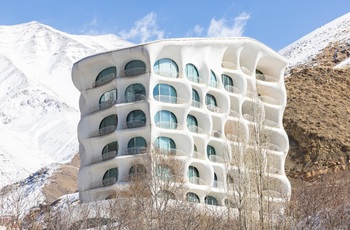
Shortlist for CIOB’s Art of Building photography competition.

Guidance for conversion of traditional pre-1919 stone buildings.
Industrial heritage in the Ruhr

A marked difference to the fate of industrial landscapes in the UK.

Communities will be able to build their own clean energy.
Why diversity and inclusion matters for SMEs

CIOB’s D&I Charter shows how practical changes can support long-term growth.
Cut electricity bills to power growth

Coalition sends joint letter to the Chancellor.

Gasholders: a history in pictures. Book review.
Comments
[edit] To make a comment about this article, click 'Add a comment' above. Separate your comments from any existing comments by inserting a horizontal line.