






Infrastructure under Mayor Sadiq Khan

Contents |
[edit] Introduction
'A City for All Londoners', published in late October 2016, offers the first opportunity since his campaign manifesto to see what Sadiq Khan has in store for the capital.
Although not particularly lengthy (as the document itself admits), it reveals the mayor’s direction of travel, giving a good indication of what to expect over the coming four years.
[edit] New terminology
The document introduces a number of new concepts and associated vocabulary. 'Good growth' is mentioned throughout, referring to the principle that development and regeneration must be looked at holistically, taking into account the local amenities, availability of green spaces, quality of the environment and affordability.
This means a shift to more mixed use developments and a renewed push for genuinely affordable housing. Transport has a big role to play here, with the mayor explicitly stating he will use transport infrastructure investment to spur regeneration.
The 'Healthy Street' is also a new term introduced in the document. This is a new approach to creating streets which promote active travel, have clean air and are safe. While this concept will be applied differently according to the location, examples such as the pedestrianisation of Oxford Street and the Rotherhithe to Canary Wharf cycle bridge are mentioned.
[edit] Transport priorities
In terms of transport, the document gives a number of infrastructure projects the mayor would like to see brought forward, including East London river crossings, extension of the Tramlink and Overground and improved bus services.
However, two projects are mentioned particularly frequently: Crossrail 2 and the Bakerloo line extension to Lewisham, both of which are highlighted as key to providing additional capacity to the system.
The devolution of suburban rail services, starting with Southeastern in 2018, is also mentioned as part of the mayor’s bid to the government for further fiscal and transport powers.
[edit] Energy and the environment
Much of the environmental policies are focused on the two goals of improving air quality and making London a zero-carbon city by 2050.
There has already been much work on the former target, with the proposed 'T-charge', extension of the Ultra Low Emission Zone and clean bus corridors. On the latter, the mayor will begin by creating a road-map to reduce carbon emissions to 2050 and will set up Energy for Londoners, a new agency focusing on smart meter roll out, supporting solar photovoltaics, retrofitting buildings and assisting in local community energy enterprises.
The document does also mention moving toward a circular economy, ensuring the city is resilient to extreme weather conditions caused by climate change and the need to break down silos between different environmental sectors.
[edit] Conclusion
Overall, the document provides a good introduction to a number of the mayor’s priorities and guiding principles for his term in office.
Now, the GLA will begin fleshing these ideas out and they have already begun the engagement process, with the ultimate aim of producing a new London Plan (a statutory spatial plan for London) as well as the seven other mayoral strategy documents (including the mayor’s Transport Strategy and the London Environmental Strategy).
This article was originally published here by ICE on 28 Nov 2016. It was written by Max Sugarman.
--The Institution of Civil Engineers
[edit] Related articles on Designing Buildings Wiki
- A city for all Londoners.
- Affordable housing and viability SPG.
- Articles by ICE on Designing Buildings Wiki.
- Cycling and walking plan.
- Draft housing strategy for London 2017.
- Draft London Plan.
- Healthy Streets.
- Investing in infrastructure for London.
- London car charging infrastructure.
- London infrastructure plan.
- London Power Tunnels.
- London View Management Framework.
- Response to Mayor’s consultation document.
- Supplementary Planning Guidance.
- The London Plan.
- Ultra Low Emission Zone.
Featured articles
Check out some of the best features and news from Designing Buildings as well as key stories from around the web.
Construction's sustainability reporting revolution
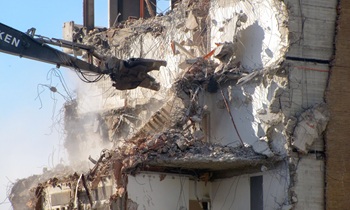
Tracking upfront embodied carbon with digital tools.
ECA welcomes procurement reforms

Public spending must back British jobs and skills.
Campaigning for Edinburgh: the Cockburn Association 1875-2049

The role of the civic voice in protecting character. Book review.

CIOB photography competition is open for entries.
ECA Edmundson apprentice of the year award

Finalists announced.
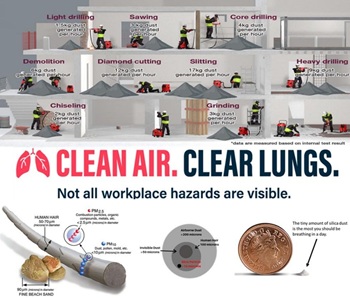
Major new study exposes serious knowledge gaps.

Generating energy from internal light as well as sunshine.
ECA welcomes plans to strengthen subcontractor quality control.

Combining mid-career qualifications with experience broadens career opportunities.

Why being a mentor can help your career.

Channel 4 broadcaster to host 125th anniversary ceremony.
Listed structures on the rail network
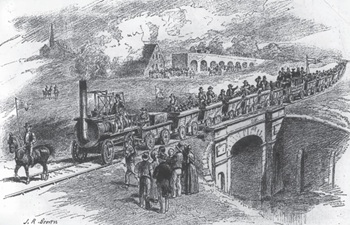
Heritage interests and operational requirements must be balanced.