





Why Old Buildings Need Retrofitting
Walk through any developed city and you’ll notice something important, most buildings are not new. Many were constructed decades ago, long before modern structural standards, seismic codes, and sustainability practices came into place.
This is exactly where retrofitting becomes critical.
Retrofitting is not just about fixing damage. It is about upgrading an existing structure so it performs like (or better than) a modern building, stronger, safer, and more durable.
If ignored, aging buildings slowly become unsafe, inefficient, and expensive to maintain. If upgraded correctly, they can serve reliably for decades more.
[edit] What is Retrofitting in Simple but Technical Terms?
Retrofitting is the engineering process of strengthening and upgrading an existing structure by improving its:
- Load-bearing capacity
- Structural stiffness
- Ductility (ability to absorb energy without failure)
- Durability and resistance to environmental effects
Unlike repairs, which restore original condition, retrofitting improves structural performance beyond original design limits.
[edit] Why Old Buildings Need Retrofitting?
[edit] 1. Natural Aging Weakens Structural Strength
Every building deteriorates over time even well-constructed ones.
Common causes:
- Reinforcement corrosion due to moisture
- Concrete carbonation reducing alkalinity
- Continuous load cycles causing fatigue
- Environmental exposure (heat, rain, pollution)
As a result, the structure loses:
Retrofitting restores and enhances these properties using advanced techniques like FRP wrapping, jacketing, and grouting.
[edit] 2. Old Buildings Were Not Designed for Today’s Loads
Decades ago, buildings were designed for:
- Lower population density
- Minimal equipment loads
- Basic usage patterns
Today, the same buildings face:
- Increased live loads
- Additional floors
- Heavy machinery or commercial usage
Retrofitting ensures the structure can safely handle new load demands without structural failure.
[edit] 3. Earthquake Risk is a Major Concern
One of the biggest reasons for retrofitting is seismic safety.
Older buildings often lack:
- Proper reinforcement detailing
- Shear resistance systems
- Ductile design principles
This makes them vulnerable to:
Retrofitting improves:
- Energy absorption capacity
- Lateral load resistance
- Structural stability during earthquakes
[edit] 4. Compliance with Modern Building Codes
Building regulations keep evolving to improve safety standards.
Old structures often fail to meet current codes, especially for:
- Seismic resistance
- Fire safety
- Structural loading standards
Retrofitting upgrades buildings to meet current engineering and safety codes, making them legally and functionally compliant.
[edit] 5. Visible Structural Damage is a Warning Sign
Many buildings already show signs of distress:
- Cracks in beams, slabs, or columns
- Concrete spalling
- Exposed reinforcement bars
- Water leakage and dampness
These are not just cosmetic issues, they indicate structural weakness.
Retrofitting addresses root causes, not just surface-level repair.
[edit] 6. Extending the Life of the Building
A typical building is designed for 50-100 years, but poor maintenance can reduce this lifespan significantly.
Retrofitting helps:
- Restore structural integrity
- Improve durability
- Prevent future damage
This can extend a building’s usable life by 20-40 years or more.
[edit] 7. Retrofitting is More Cost-Effective than Reconstruction
Demolishing and rebuilding involves:
- High construction cost
- Long project timelines
- Relocation challenges
- Faster execution
- Lower cost
- Minimal disruption
In most cases, retrofitting is far more economical than complete reconstruction.
[edit] 8. Improves Energy Efficiency and Sustainability
Older buildings are often energy inefficient due to:
- Poor insulation
- Outdated materials
- Inefficient systems
- Thermal performance
- Energy systems
- Overall efficiency
This reduces:
[edit] 9. Increases Property Value and Safety
A retrofitted building is:
This directly improves market value and long-term return on investment.
[edit] Common Retrofitting Techniques Used Today
[edit] 1. Column Jacketing
Increases load capacity by adding concrete or steel layers around columns.
[edit] 2. Beam Strengthening
Enhances bending and shear resistance of beams.
[edit] 3. FRP Wrapping (Carbon Fiber)
Lightweight and highly effective method to improve strength and ductility.
[edit] 4. Steel Bracing
Improves lateral stability and earthquake resistance.
[edit] 5. Shotcreting / Guniting
Used to repair and strengthen damaged concrete surfaces.
[edit] Key Benefits of Retrofitting
- Improved structural safety
- Increased load capacity
- Better earthquake resistance
- Extended building life
- Reduced maintenance cost
- Enhanced energy efficiency
[edit] 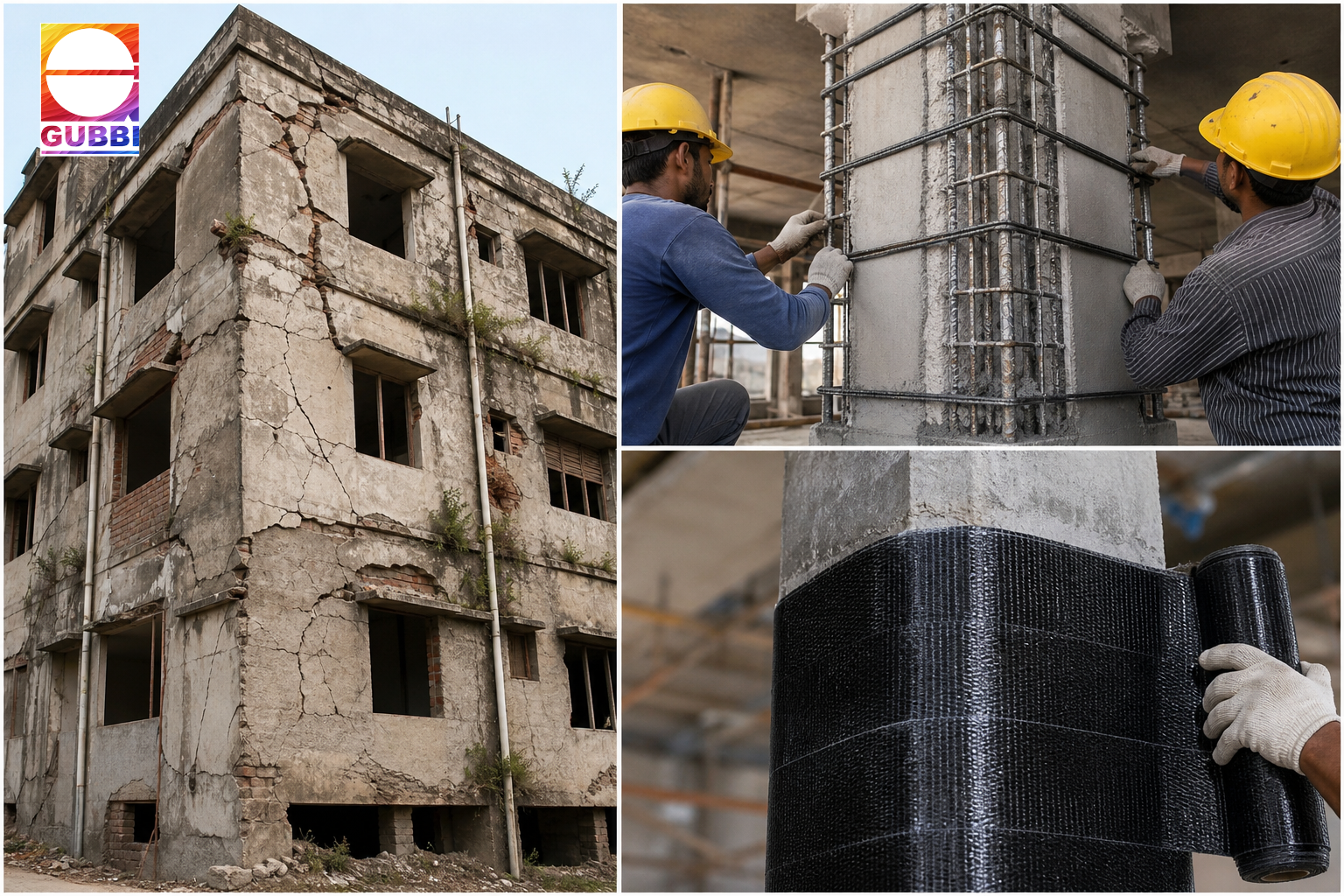
[edit] When Should You Consider Retrofitting?
You should consider retrofitting if:
- Building is more than 20-30 years old
- Visible structural damage exists
- Usage of building has changed
- Located in earthquake-prone zone
- Fails to meet current building codes
[edit] Conclusion
Retrofitting is no longer optional for old buildings, it is a necessary investment in safety, performance, and longevity.
Instead of waiting for structural failure or costly repairs, proactive retrofitting ensures that buildings remain:
- Safe
- Functional
- Future-ready
Retrofitting turns old buildings into modern, high-performance structures without rebuilding them from scratch.
Featured articles
Check out some of the best features and news from Designing Buildings as well as key stories from around the web.

Government launches a one stop shop for flood preparedness.

Sir Edwin Lutyens: Britain's greatest architect? Book review.

CIOB publishes free template to help assess and manage risks.
ECA's reflections on Party Conference season

Burnham wants to be confident of winning before asking for a fresh mandate.
New Chief Construction and Scientific Adviser

Sergio Cavalaro, Professor of Infrastructure Systems at Loughborough University.
Building safety levy for England

CIAT publish estimator tool for members.

Water sector faces a growing crisis that could slow the delivery of vital infrastructure.
Undervaluing our industrial past

Heritage value changes as taste for building styles changes.
Changing expectations around competence and compliance

New information sheet from CIAT.
Grenfell investigation files passed to CPS

Angela Rayner apologises on behalf of the British state.

Electrical contractors need to understand the practical implications.

The real barrier to getting more value from digital technology.