





The fate of industrial conservation areas
We undervalue our industrial past by not understanding industrial sites or acknowledging that heritage value has a tendency to change as the taste for building styles changes.

|
| Sand’s End Conservation Area viewed from Wandsworth Bridge. Photo by author. |
Several years ago, when working on an expert witness testimony for an appeal case, research provided the opportunity to really understand a conservation area that had been much altered. This was a former industrial site in the east end of London. A conservation area appraisal had been done in 2010, after a conservation area designation in 2008. It set out the architectural typology as ranging from mid- to late-nineteenth-century warehousing and factory sites to mid-twentieth-century factory sites.
The description highlighted 31 buildings of note, including chimneys, gantries, access to the canal behind, enclosing yard walls and decorative art deco parapets. It noted the meandering lane with wide entranceways to each organisation’s yard and glimpses of buildings above their walls, the quiet nature of the conservation area and the heights of the buildings. By the time of the relevant date for the appeal case (2016), only 13 of those buildings remained, the lane had largely disappeared and the relationship between the site, the canal and the industrial past was illegible. Only six years after the conservation area appraisal had been written, the document was already obsolete; it no longer described the conservation area as it actually presented.
This area was part of the redevelopment of the Olympic site for 2012. Used largely for storage during the games themselves, it is, however, the site of the Torch Totem tower, which replaced one of the buildings of note, demolished the year after the conservation area appraisal was written. Historic England (then English Heritage) commented on every consent for demolition and strenuously objected on several of them, but these comments were buried in a file that covered a much larger development already approved before the Olympics commenced. In the process this area was renamed and the conservation area appraisal now relates to a street name, not an industrial and geographic area as it once did.
From a heritage perspective, the legislation that protects a conservation area sets out the intentions of how it should be treated. It respects the group value and the special character that gave rise to the designation in the first place. It reassures the public that their neighbourhood has significance in the development and history of that area, setting out what made it important in times gone by. This can often be a source of local pride and unite the inhabitants through a shared history that many of their predecessors shaped. But the biggest issue with protecting a conservation area is that change is not enforceable. Unlike with listed buildings, where an enforcement notice could be issued and the changes would have to be returned to the original, in a conservation area there is not such provision.
Demolition needs consent but there is no threat of prosecution if this is not adhered to, and in recent times applications for consent have been relaxed to be included in the planning application for the overall development of the site. Local planning authorities tell us that conservation area designations are awarded to protect against over-development, but this has now become a point of interpretation.
If interpretation means assessment for heritage value, this favours the asset, because conservation areas are intended to be appreciated for their contribution to our built heritage as a collection of evidence from past development. In fact what is being interpreted is how many residential units are acceptable on sites that have never provided accommodation in the past. The heritage of the area has nothing to do with this – and because so many assessments are high-level, desk-based research, there is not even a site visit to provide context.
The industrial past has left buildings that in many areas have stood empty for decades. Battersea Power Station is one such example. The Thames embankments are included in conservation areas that bound the river and meet their neighbouring boroughs down the centre of the water. There is an intention that these designations will protect against over-development. This phrase is included in the conservation area appraisal of my local conservation area, Sand’s End. That prompted my renewed interest, because only three buildings of note survive in Sand’s End. Its conservation area appraisal is also obsolete; it neither shows any of the modern additions to the conservation area nor describes how they protect the character or contribute to the group value – because they do not. It is impossible to tell that this area has an industrial past from three buildings; they have no relationship to each other and provide no context for the past development of the area.
Adjacent to Sand’s End Conservation Area, Imperial Square has two terraces of workers’ cottages and a Grade II* gasolier – surrounded by modern residential towers. Beyond that is Lots Village, with a power station and chimneys, now dwarfed by a residential tower of about 30 storeys on a bend of the river, and further east again is the Thames Embankment. To the west is Hurlingham Conservation Area, another collection of wharves, with a park created for the workers in the area, so from Chelsea Bridge to Putney Bridge, the north side of the Thames is a consecutive stretch of conservation areas. Yet the level of development on this stretch of the river, as in the east end, has no relationship with the industrial past. The height of river and canalside buildings was determined by their need to load barges from their gantries. This is part of the character of our industrial heritage – the transportation of goods and materials on our waterways. As such, the Thames played an important part in the movement of our industrial product and at the time was a major thoroughfare, but now the Thames Clipper Uberboat service is the most frequent vessel on this stretch of water. The Thames in this area is a heritage thoroughfare.
Industrial sites have only more recently been considered important indicators of our heritage and provide an excellent example of the approach to development in areas that were not previously residential. The area plan, amended by each borough to incorporate their specific issues and significance as the local plan, sets out building height restrictions according to the classification of the roadways that buildings face – a tool for wayfinding. Where the river is concerned, height restrictions in this area relate neither to the past – not usually exceeding six or seven storeys – nor to the local plan, as dictated by the roadways. They have created an architectural typology that relates neither to the specific area nor indeed to the buildings that have survived. These once industrial sites cannot be read, there is no signage telling people what is significant or what has been lost. Even with heritage awareness, it is impossible to tell that you might be walking through a conservation area, something protected because of its heritage significance and group value.
The designation, therefore, rather than protecting a conservation area with an industrial heritage, provides a baseline. The local planning authority does not maintain conservation area appraisal documents because it is not in their interest to do so. They are understaffed and underfunded, but they have to find space for additional homes and industrial sites offer areas that already have infrastructure. A conservation area appraisal does the opposite of what it says; it defines what is underdeveloped, thus setting out the potential for change. Suggesting that a conservation area appraisal creates guidance for the style of proposed development is not supported by the images attached.
No two industrial conservation areas have the same features. The three mentioned above are only united by their Thames frontage and viewpoints, even though it is possible to walk a triangular path through them in 20 minutes. The one in the east end was more complete, but today only four buildings of note remain. The local planning authority has chosen which buildings it considered most significant and sacrificed the rest, ignoring how this area grew over time as industry and occupants changed.
For historic environment legislation to achieve any kind of protection, it must first be transparent and based on an accurate assessment of the site. Historic England set out so clearly that change must be recorded, but placing the responsibility for conservation areas in the hands of the local planning authority means that it is unlikely to protect something that has only had a very high-level assessment of its heritage value when a development company can achieve housing targets by using this site.
We are undervaluing our industrial past by not understanding industrial sites or acknowledging that heritage value has a tendency to change as taste for building styles changes. Gavin Stamp, who was convinced that buildings should be valued on the quality of their design, not on the style, described the ‘pendulum of taste’. Once something is lost, it can never be brought back.
This article originally appeared in the Institute of Historic Building Conservation’s (IHBC’s) Context 186, published in December 2025. It was written by Diane Harvey-White, a heritage consultant based in London, who has worked almost exclusively in the last three years on buildings in industrial conservation areas in Ramsgate and London.
--Institute of Historic Building Conservation
Related articles on Designing Buildings Conservation.
- Britain's industrial heritage.
- Conservation area.
- Cranes.
- Gasholder.
- Gasholders: a history in pictures.
- Heritage.
- Heritage, industry and slavery.
- Historic England and infrastructure.
- Historic environment.
- IHBC articles.
- IHBC.
- Industrial heritage in the Ruhr.
- Journeys in Industrious England.
- Power for the people.
- Scotland’s uplifting heritage.
IHBC NewsBlog
IHBC sponsors Gardens Trust event 23-4 Sept 2026
.jpeg)
'Learning from the Past, Shaping the Future’ takes place in Milton Keynes
Renovations to Frank Lloyd Wright's Fallingwater complete
.jpg)
World Heritage Preserved project opens house for tours again
Shakespeare Birthplace Trust places Hall's Croft on HAR Register
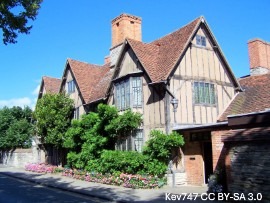
Stratford-upon-Avon home of Shakespeare's daughter is 'At Risk'
Lady Grange’s House repaired on St Kilda
.jpg)
National Trust for Scotland repairs stone cleit with link to famous island resident
Griff Rhys Jones on BBC Radio 4 Today programme
,_Green_Lane,_Derby.jpg)
The Victorian Society’s President unveiled its latest Top Ten Endangered Buildings 2026.
Need a MATE? Book your place now.

IHBC offers free webinars on applying for IHBC accreditation (Full & Associate).
UK Stained Glass Repository finds windows new homes

How are stained glass windows are rescued, stored and repurposed?
APPGEBE report sets high aims for quality
'Government must not sacrifice quality in drive to build 1.5m homes'
New measures protect Historic Shipwrecks from heritage crime

Underwater cultural heritage benefits from new HE guidance
How could the City of London skyline look in 6 years' time?

Visualisation shows approved planning applications as completed buildings
National Trust for Scotland calls for VAT cuts
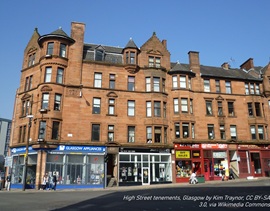
Heritage neglect is encouraged by current policies
IHBC's 'Context' Issue 186 features Industrial Heritage
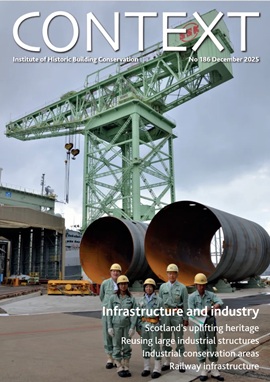
IHBC's members' journal reports on the challenges of conserving infrastructure
Book now for IHBC Annual School 2026

IHBC Annual School is taking place 18-20 June 2026 in Newcastle
RICHeS Research Infrastructure offers ‘Full Access Fund Call’

RICHeS offers a ‘Help’ webinar on 11 March
Latest IHBC Issue of Context features Roofing
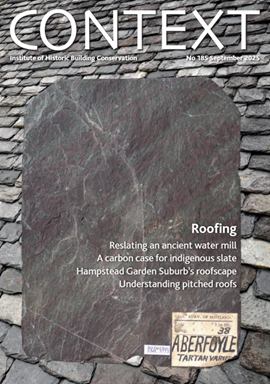
Articles range from slate to pitched roofs, and carbon impact to solar generation to roofscapes
Three reasons not to demolish Edinburgh’s Argyle House

Should 'Edinburgh's ugliest building' be saved?
IHBC’s 2025 Parliamentary Briefing...from Crafts in Crisis to Rubbish Retrofit
IHBC launches research-led ‘5 Commitments to Help Heritage Skills in Conservation’
How RDSAP 10.2 impacts EPC assessments in traditional buildings

Energy performance certificates (EPCs) tell us how energy efficient our buildings are, but the way these certificates are generated has changed.