





Pride in Place Programme prospectus

Published on 3 December, 2025, the Pride in Place Programme prospectus named 244 communities across Great Britain, including 75 phase 1 places and 169 phase 2 places.
Phase 1 of the Pride in Place programme selection methodology was developed and carried out under the previous Conservative government, originally named the Long-Term Plan for Towns (LTPT). The 75 phase 1 places were selected in two parts. An initial 55 places in ‘Part A’ in October 2023, followed by a further 20 places in ‘Part B’ in March.
Phase 2 will help build strong, resilient and integrated communities in areas that experience the most entrenched social and economic challenges. Neighbourhoods were selected using a robust methodology based on deprivation (Index of Multiple Deprivation) and community need (Community Needs Index), to identify areas with the poorest social and economic outcomes.
The Pride in Place Programme prospectus describes it as a non-competitive fund providing each place with up to £20 million over a ten-year period, ensuring long-term investment to tackle entrenched social, economic, and infrastructure challenges. The programme emphasises a collaborative approach, with each Board co-creating a Pride in Place Plan in partnership with local authorities, MPs, and, most importantly, the community itself. These plans are expected to reflect residents’ genuine priorities, offering flexibility in investment and the freedom to pursue innovative interventions, from revitalising public spaces to improving local services and infrastructure.
At its core, the Programme is guided by three strategic objectives: stronger communities, thriving places, and giving residents control over their neighbourhoods. Stronger communities focus on addressing social division, fostering trust, and rebuilding relationships among residents. By empowering people to collaborate on local projects and initiatives, the Programme seeks to restore a collective sense of pride and belonging, which research shows can have wider economic benefits. Case studies from Leicester, where faith and ethnic groups were brought together to engage in collaborative projects, and Sheffield, where community centre expanded services and volunteer engagement, demonstrated the impact of trust-building and active community participation. These examples highlight strong, inclusive social networks not only enhance well-being but also strengthen civic engagement and community resilience.
Thriving places aim to rejuvenate local high streets, neighbourhoods, and public services. The Programme recognises that many areas have experienced long-term neglect, with poor-quality infrastructure, declining high streets, and limited access to essential services. By integrating public service provision into community spaces and leveraging local assets, neighbourhoods can become hubs of opportunity and activity. Barnsley’s Glass Works Community Diagnostic Centre exemplifies this approach by co-locating healthcare services within a town centre, improving access to care, reducing appointment backlogs, and stimulating local economic activity. Through such interventions, communities can address health inequalities, enhance economic resilience, and foster civic pride, aligning physical regeneration with social and economic benefits.
Taking back control emphasises equitable opportunities and giving residents the ability to shape their own futures. The programme ensures that local people have genuine influence over decision-making, from prioritising investments to determining service delivery. This approach is particularly crucial in deprived areas where opportunities have historically been limited. Initiatives such as the Coleraine Neighbourhood Renewal Partnership in Northern Ireland demonstrate how coordinated, long-term, community-led strategies can address inequality by providing access to early years programmes, affordable business facilities, and other services that improve residents’ life chances. Similarly, examples from Lawrence Weston in Bristol and community-led regeneration projects across Wales illustrate how strategic, locally controlled investment can foster sustainable economic growth, strengthen social cohesion, and build local capacity.
Neighbourhood Boards serve as the cornerstone of the Pride in Place Programme. Each Board, chaired independently and supported by local MPs and authorities, is responsible for representing diverse community voices and co-creating the decade-long plan. Membership is expected to include residents, grass roots activists, local businesses, cultural and sports organisations, and anchor institutions such as schools or healthcare providers, ensuring that boards reflect the community they serve. Boards must maintain a majority of residents over elected representatives and actively engage traditionally under-represented groups, such as those facing socioeconomic, linguistic, or accessibility barriers. Extensive, ongoing community engagement is central, including workshops, listening campaigns, participatory budgeting, and forums that enable residents to influence decisions meaningfully. Boards are also encouraged to innovate, delegating delivery responsibilities to local community organisations where appropriate, and to use participatory approaches to foster long-term ownership and accountability.
The Programme also provides robust support structures to ensure effective delivery. A dedicated Communities Delivery Unit within MHCLG will work with every neighbourhood to provide guidance, mentorship, and technical expertise, while the Network for Neighbourhoods will facilitate sharing best practice across communities. This approach aims to reduce reliance on external consultants and strengthen local capacity, ensuring that the skills and knowledge developed during the programme endure beyond its ten-year timeframe. By offering flexible investment options, technical support, and training, the Programme enables Boards to leverage private, public, and philanthropic funding to achieve sustainable regeneration outcomes.
Importantly, the Programme promotes long-term, community-led delivery. By year three, all areas are expected to transition towards models of delivery managed by local organisations, cooperatives, or charities, establishing institutions capable of sustaining progress after government funding ends. Case studies, such as the Community Economic Development programme led by Co-operatives UK and the Invest Local programme in Wales, highlight the value of asset-based, community-driven approaches that combine financial investment with local empowerment. These initiatives have demonstrated that placing communities at the centre of planning and delivery leads to more effective, tailored, and sustainable outcomes, from revitalising derelict properties to improving social services and local infrastructure.
In conclusion, the Pride in Place Programme is one of the most ambitious and long-term investments in deprived neighbourhoods across Great Britain in a generation. By combining substantial funding, devolved decision-making, flexible intervention options, and extensive support, it seeks to empower local communities to rebuild pride, improve social cohesion, enhance local services, and regenerate their areas. Through its community-led approach, the Programme prioritises local knowledge, fosters participation from traditionally excluded groups, and establishes enduring delivery models capable of sustaining transformation beyond the ten-year funding horizon. By placing residents at the centre of planning, decision-making, and implementation, Pride in Place aims to create stronger, more resilient, and thriving communities across the UK.
[edit] Related articles on Designing Buildings
- Adverse possession.
- Breach of condition notice.
- City deals.
- Collaboration needed to deliver national and regional transport strategies.
- Community.
- Community Infrastructure Levy.
- Community right to bid.
- Community right to build.
- Community right to reclaim land.
- Community rights.
- Devolution.
- Devolution and development.
- Empty dwelling management orders.
- Empty housing in London - documentary.
- Excluded occupier.
- Housing tenure.
- How to evict a tenant.
- Land registry.
- Local development order.
- Local Enterprise Partnerships.
- Local government.
- Local resident.
- Localism Act.
- National Planning Policy Framework.
- Neighbourhood planning.
- Neighbourhood development order.
- Permitted development.
- Place-shaping: a shared ambition for the future of local government.
- Planning legislation.
- Pride in Place Programme prospectus.
- Property guardianship.
- Rating (Property in Common Occupation) and Council Tax (Empty Dwellings) Bill.
- Repurposing Empty Spaces. Addressing the Housing Crisis Across England, Scotland and Wales in 2025.
- Repurposing Empty Spaces a report by Habitat for Humanity.
- Right of entry.
- Right to access land.
- Right to regenerate.
- Self build initiative.
- Social housing.
- Special licences.
- Squatting.
- Tenant management organisation.
- The UK Pride in Place Programme.
- Town and Country Planning (Local Planning) (England) Regulations 2012.
- Village green registration.
Featured articles
Check out some of the best features and news from Designing Buildings as well as key stories from around the web.

A quick introduction.
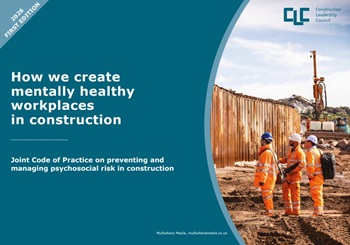
CLC publishes Mental Health Joint Code of Practice.

A quick introduction to its uses and risks.
Construction Management, 17 June

Government rolls out digital planning tool to all local authorities.

Your views needed - a strategy for the professions, trades and occupations.

Confronting competency, codes, capacity and costs.

The hidden risk in modern construction supply chains.
Construction Management, 10 June

24 months to 14: CITB launches accelerated apprenticeships.
Bridging the gap between clients and contractors

Concerns remain around contractor quality, capability, and delivery.
Construction Management, 10 June.

Heat pumps beat boilers in new home tests.
Building Safety Act implementation in Wales

CIAT to host industry panel on 26 June.