





Permitted Development Rights
Permitted development rights refer to the right for an owner to make changes to a property without the need for planning persmission, the specifics of what is covered by permitted development rights can be complex and has changed overtime. For information about the changes to these rights over time see the article about Permitted Development.
The typpes of alterations that might be considered a right to carry out without planning permission could include:
- Enlargements or alterations to houses (not exceeding 50% of the curtilage) under certain cirtcumstances.
- Provision of certain pet enclosures, sheds and fuel storage containers (not exceeding 50% of the curtilage).
- Certain porches, doors and windows.
- Installation of antenna, satellite dishes (specified sizes) or microgeneration systems under MCS guidance.
- Gates, fences, walls and other enclosures (no more than 2 m high).
- The provision of certain hard surfaces and means of access to a highway.
- Installation and alterations to certain chimneys.
- The installation of CCTV for security purposes.
- Exterior painting (other than advertisements) and internal alterations.
- Certain changes of use class.
- Temporary structures and plant for construction purposes or remaining for no more than 28 days.
The Town and Country Planning (General Permitted Development etc.) (England) (Amendment) Order 2024 was made and laid before Parliament on 30 April 2024, it came into force on 21 May 2024. The changes brought about by the new order aimed to streamline and expand permitted development rights in specific areas, in particular agricultural buildings, simplifying the process of converting and developing properties without the need for full planning permission.
On 4 February 2025 the Permitted Development Rights (Extension) Bill, a private member’s bill tabled by Lord Lucas (Conservative) was published. The Permitted Development Rights (Extension) Bill [HL] would establish new PDRs in primary legislation in England and Wales, they are currently made available through secondary legislation.
The PDRs proposed in the bill are listed in its schedule and would apply to developments including; making changes to the height of the roof of a building, adding side and rear extensions, raising party walls, adding floors to a bungalow, increasing the height of buildings in town centres by up to four stories, installing air source heat pumps, solar panels and electric vehiclecharging points.
The schedule also sets out criteria that developments should meet in order to qualify for the new PDRs created by the bill. For example, the bill states the ridge height and eaves of a building may only be raised by up to one metre in order for the development to qualify. Other specifications include limits to the size of side or rear extensions to a property and to the maximum height that solar panels placed on top of a building may rise above the roof. Developments would also need to meet general restrictions set out in the bill: That developments must not erase a right of way or an easement, infringe on the right to light, substantially reduce the light available to existing solar panels or infringe on other private rights unless this is agreed with the other parties concerned. It also states PDRs would not apply to listed buildings.
The bill would enable a planning authority to impose design requirements in relation to PDRs (though these may not have the effect of making a development “unreasonably impracticable or uneconomic”) and assigns them powers to impose:
- measures to slow the run-off of rainwater from the property being developed
- requirements concerning the building’s structural safety
- standards for insulation or energy efficiency
- requirements for new roof areas created as part of the development, such as a requirement to install a ‘green roof’ (a roof partially or completely covered by vegetation)
The specific requirements that would be applied would be established by the secretary of state using delegated powers in the bill. The planning authority would also be given the power to impose charges to cover the cost of providing additional infrastructure if the development increased the number of rooms in a property beyond a limit set out in secondary legislation.
The bill includes a further restriction on the application of the new PDRs for the development of residential buildings in medium and high flood risk areas (flood risk vulnerability classifications 2 and 3). Properties in these areas would need to be “well served by public transport” (the definition of which would be set out in secondary legislation) and modified to be flood resilient in order to qualify for PDRs.
[edit] Related articles on Designing Buildings
- Alterations to existing buildings.
- Article 4 direction.
- Change of use class.
- Changes to permitted development rights for agricultural buildings in 2024.
- Class Q permitted development.
- CLC calls for rethink of permitted development rights.
- Conservation area.
- Curtilage.
- Enforcement notice.
- Established use certificate.
- Exploring Lesser-Known Permitted Development Rights for Change of Use.
- IHBC responds to supporting defence infrastructure and the future of time-limited permitted development rights.
- Lawful development certificate.
- Listed building.
- Local development order.
- National planning policy framework.
- Party walls, rights of light and permitted development rights.
- Permitted development.
- Permitted development: The end of the high street or a blessing in disguise?
- Permitted development rights for the change of use of agricultural buildings.
- Planning enforcement.
- Planning fee.
- Planning permission.
- Prior approval.
- Renovation.
- Restriction of permitted development rights for pubs.
- Section 215.
- Sui generis.
- Town and Country Planning Act.
- Town and Country Planning (General Permitted Development) (Amendment) (England) Order.
- Use class.
Featured articles
Check out some of the best features and news from Designing Buildings as well as key stories from around the web.
Bridging the gap between clients and contractors

Concerns remain around contractor quality, capability, and delivery.
Construction Management, 10 June.
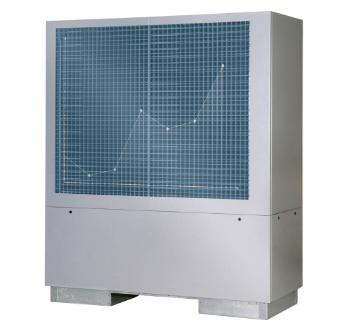
Heat pumps beat boilers in new home tests.
Building Safety Act implementation in Wales

CIAT to host industry panel on 26 June.
New and updated CLC building safety guidance.
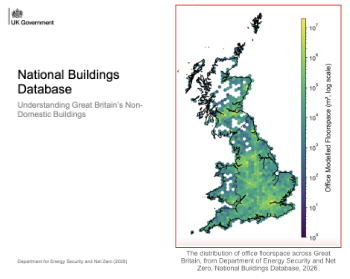
New UK National Buildings Database.
Building Safety Wiki Interviews

Chief executive of the British Woodworking Federation.
Planning condition discharge in England and Wales

A brief explanation from a building compliance expert, with further links.
Overheating guidance and tools for building designers

Guidance for dealing with element of building fabric control that have increasing importance.
Shading for housing, a design guide

From the Good Homes Alliance and British Blind and Shutter Association.
UK Standard Skills Classification (SSC)

A shared framework for describing skills needs.
Social media ban consultation comes to close

CIOB urges UK Government to consider social media’s role in careers guidance in ban debate.