





How Modular Mobile Stone Crusher Plants Can Shorten Delivery Cycles?
In the competitive world of mining and aggregate production, time is quite literally money. For operators across Latin America, from the copper belts of Chile to the construction hubs of Peru, the gap between placing an equipment order and commencing production can determine whether a project turns a profit or falls behind schedule. Traditional stationary crushing installations often require months of civil engineering work, foundation curing, and on-site assembly. However, a significant shift is underway. The adoption of modular mobile stone crusher technology is revolutionizing how quickly operations can go from contract signing to crushing rock. By utilizing pre-assembled modules that travel on standard trailers, a modern mobile stone crusher(trituradora móvil de piedra) can be operational in a fraction of the traditional time. This speed is particularly critical for contractors working on short-term infrastructure projects or miners needing urgent replacement capacity. For example, a company searching for a reliable stone crusher Peru operation might find that modular designs are the key to meeting tight governmental deadlines. Similarly, for those servicing the mining giants, a modular stone crusher Chile installation can mean the difference between winning a seasonal contract or watching it pass by.

Contents |
[edit] The Fundamental Difference: Modular vs. Traditional Design
To understand the time savings, it is essential to distinguish between a traditional fixed plant and a modular mobile system. While both may ultimately crush rock, their path to operational status could not be more different.
[edit] Pre-Engineered Components and Parallel Workflows
Traditional stone crusher plants require sequential work. You cannot install the crusher until the concrete base is poured and cured. You cannot pour the base until the ground is excavated and leveled. Each step waits for the previous one. Modular mobile stone crusher plants flip this model. The crushing units, screens, and conveyors are pre-engineered and factory-tested as complete modules. While the client is preparing the site—perhaps just leveling a hard-packed area—the equipment is already being manufactured and assembled in a controlled factory environment. This parallel workflow can shave weeks, if not months, off the delivery cycle. When you order a mobile stone crusher designed for modular transport, you are essentially buying production time.
[edit] Simplified Foundation and Civil Requirements
A major bottleneck in traditional installations is the civil work. Pouring concrete for a stationary plant often involves significant excavation, rebar installation, and curing time, which can take 30 to 60 days depending on climate conditions. In contrast, a modular mobile stone crusher is designed to sit on a compacted gravel pad or even on concrete blocks. The structural integrity is built into the steel frames of the modules themselves, not into the ground beneath them. This is a game-changer for a stone crusher Peru(chancadora de piedra Perú) operation located in the Andes, where pouring concrete in cold weather is a slow process. It also benefits a stone crusher Chile installation in the Atacama Desert, where water for concrete might be scarce.
[edit] Accelerating Permitting and Compliance
Beyond the physical construction, delivery cycles are often delayed by bureaucratic hurdles. Modular design can help navigate these waters more smoothly as well.
[edit] Reduced Environmental Review Time
In many Latin American countries, the environmental impact assessment for a project is directly tied to the amount of permanent infrastructure being built. A stationary plant requires a larger footprint and permanent alterations to the landscape, often triggering lengthy reviews. A modular mobile stone crusher is considered temporary or semi-permanent equipment. Because it can be removed, the environmental review process is often streamlined. For a contractor needing a stone crusher Peru permit quickly, presenting a modular plan to the authorities can result in faster approval, directly shortening the overall delivery cycle from project award to first aggregate production.
[edit] Faster Transport Logistics
Shipping large, irregularly shaped components across borders or through difficult terrain is a logistical nightmare. Modular crushers are designed to be broken down into transportable units that meet standard shipping container dimensions or legal road widths. This means that when you order a mobile stone crusher for a remote site in Chile, the modules can travel via standard flatbed trucks without requiring police escorts or road closures for oversized loads. This logistical simplicity ensures that the equipment arrives at the site faster and with less risk of damage or delay compared to a monolithic stationary structure.
[edit] Practical Applications Across the Region
The benefits of modular design are not theoretical; they are being realized daily on project sites from the altiplano to the coast.
[edit] Responding to Emergency Production Needs
Mines sometimes face unexpected breakdowns of their primary crushers. In such cases, the delivery cycle for a replacement is critical. A stationary plant might take six months to procure and install, leaving the mine unable to process ore. A modular mobile stone crusher can often be sourced, shipped, and installed within weeks. For a stone crusher Chile(trituradora de piedra Chile) operation facing a primary crusher failure, having a modular mobile unit on-site as a backup or temporary replacement can save millions in lost revenue. The ability to plug-and-play these modules means they can be integrated with existing stockpiles and conveyors almost immediately.
[edit] Scaling Operations for Seasonal Projects
In Peru, many aggregate projects are tied to the dry season. If heavy rains delay the start of a project, the contractor has a very narrow window to produce the required materials. Waiting three months for a stationary plant is not an option. By choosing a modular mobile stone crusher, the contractor can mobilize the plant as soon as the ground dries. The fast setup means they can maximize production during the available weather window. Searching for a "stone crusher Peru" provider that offers modular solutions is often the first step in ensuring that a seasonal project stays on schedule and within budget.
[edit] Maintenance and Future Adaptability
Shortening the initial delivery cycle is just the beginning. The modular nature of these plants also shortens maintenance cycles and future upgrade timelines.
[edit] Quick Component Swaps for Maximum Uptime
When a critical component in a stationary plant fails, the entire operation often grinds to a halt while technicians work in situ, often in awkward and unsafe conditions. With a modular mobile stone crusher, maintenance is simplified. If a cone crusher module needs repair, it can often be detached and swapped out for a replacement module in a matter of days. The faulty unit can be sent to a workshop for proper overhaul while the plant continues producing. This "hot-swap" capability keeps delivery cycles for output—rather than just equipment—short and predictable.
[edit] Easy Reconfiguration for Changing Markets
The aggregate market in Latin America is dynamic. One year, the demand might be for high-quality railway ballast in Chile; the next, it might be for fine sands for concrete in Peru. A stationary plant is difficult and expensive to reconfigure. A modular mobile stone crusher can be rearranged by adding or removing modules. If you own a stone crusher Chile operation and secure a new contract in Peru requiring a different product specification, you can partially disassemble your modular plant, transport the necessary modules, and reconfigure them with new screening units at the new site. This flexibility ensures that your equipment investment remains relevant, and your delivery cycles for new projects remain short.

[edit] Evaluating the Investment in Modular Technology
For project managers and procurement officers, the decision to go modular involves looking beyond the initial price tag. The value lies in the speed to revenue.
[edit] Total Cost of Ownership and Time-to-Revenue
While a modular mobile stone crusher might have a similar or slightly higher upfront cost than a comparable stationary unit, the total cost of ownership often favors the mobile option when factoring in lost revenue during installation. A plant that is operational in two weeks rather than two months starts generating revenue sooner. For a contractor who has financed the equipment, this shorter delivery cycle means interest payments are covered by production income rather than burning capital. When evaluating options for a stone crusher Peru project, running the numbers on time-to-revenue often highlights the economic superiority of the modular mobile approach.
[edit] Partnering with the Right Supplier
The effectiveness of a modular system depends heavily on the quality of the engineering and the availability of support. When looking for a mobile stone crusher for the Chilean market, it is essential to partner with a manufacturer who understands the specific challenges of the region—high altitudes, seismic activity, and varying power availability. The best suppliers offer modules that are not only easy to transport but also easy to connect, with standardized electrical and control systems that reduce on-site commissioning time. Asking potential vendors for references from other stone crusher Chile or Peru installations can provide valuable insight into their actual delivery and setup performance.
Ultimately, the adoption of modular mobile stone crusher plants represents a fundamental shift in how the aggregate industry approaches project timelines. By decoupling the equipment from the ground it sits on, and by manufacturing in parallel with site preparation, these innovative systems unlock unprecedented speed. Whether you are racing against a seasonal deadline in Peru or responding to a production crisis in Chile, the ability to deploy a fully functional crushing operation in days rather than months is a competitive advantage that cannot be ignored. The modern aggregate producer who embraces modularity is not just buying a machine; they are buying the most valuable commodity in construction: time.
Featured articles
Check out some of the best features and news from Designing Buildings as well as key stories from around the web.

Accommodating the Victorian and Edwardian working woman. Book review.
Rethinking passive fire protection in design

PFP demands the same level of design rigour as structure or services.

38% of Gen Zs feel safe when a fire door is wedged open.
Stunning images from around the world

Shortlist for CIOB’s Art of Building photography competition.

Guidance for conversion of traditional pre-1919 stone buildings.
Industrial heritage in the Ruhr
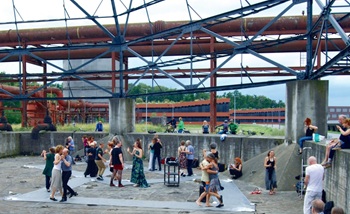
A marked difference to the fate of industrial landscapes in the UK.

Communities will be able to build their own clean energy.
Why diversity and inclusion matters for SMEs

CIOB’s D&I Charter shows how practical changes can support long-term growth.
Cut electricity bills to power growth

Coalition sends joint letter to the Chancellor.

Gasholders: a history in pictures. Book review.
Recognition, influence and growth

SocEnv identifies three strategic pillars in new strategy to 2045.
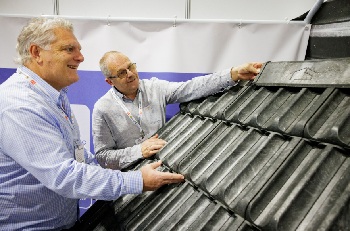
Discover the future of roofing, cladding and insulation.