





How to become a permit expediter

|
|
Article written and sponsored, for further information from the author pease visit: https://www.tejjy.com/our-services/permit-expediter/permit-expediter-baltimore-md/ |
Contents |
[edit] Introduction
If a permit process is not executed correctly matching the construction codes by the building permit expeditors, the construction will be exposed to several threats. Now, what is permit expedition?
[edit] How to Become a Permit Expediter In Maryland, USA?
Through permit expediting services, AEC professionals get government approvals before construction. Obtaining approval is a must before commencing a new or existing structure. Many people want to become permit expediters. So, what is the process? What steps should they follow to become an expert permit expediter in Maryland or Baltimore?
The steps of becoming a permit expediter in Maryland would surely be discussed. However, before that, let’s take a quick look at the role, economic forecast, key competencies, and essential educational qualifications.
[edit] Role of expeditors:
Permit expeditors operate in the construction industry and are known as residential or commercial permit expeditors or building and zoning permit expeditors. They gather information, process paperwork, file permits, monitor each stage of the permit approval process, and try to expedite the procedure. Throughout the process, they frequently meet with local authorities and project consultants. Expeditors also frequently travel to construction sites. They help construction companies and architectural firms obtain building permits, supervising the approval process by analyzing plans and papers, as well as assuring zoning and building code compliance, submitting for approval, and other duties. Many work hours are spent at a desk.
[edit] Economic Forecast:
According to the US Bureau of Labor Statistics, the median annual compensation for production, planning, and expeditors was $48,260 in May 2019. Even though construction is one of the country's largest businesses, employment in production, planning, and expediting is predicted to expand by 4% on average between 2019 and 2029. The median annual salary for 2020 increased to $49,640.
[edit] Key Competencies:
- Strong communication and leadership skills as well as the ability to multitask, solve problems, meet deadlines, and present as an individual or in groups.
- Knowledge of basic architectural systems and schedules, structural & electrical systems, local building codes, construction laws & regulations.
- Ability to interpret blueprints and understand building designs.
- Should be a computer literate with proficiency in using database spreadsheets, word processing & software applications like Oracle Primavera, Contract Manager 13, AutoCAD, etc.
- Must possess a valid driver's license as the expeditor's employment necessitates frequent travel.
[edit] Essential Educational Qualification:
Usually, a high school diploma is required for a permit expeditor. Further, many employers prefer a bachelor's degree for an applicant. An architecture or bachelor's degree in engineering is often recommended. Architecture, engineering, construction management and urban planning are all relevant majors. Some employers prefer a candidate who has a similar balance of coursework and work experience. Permit expeditors should ideally have a minimum of 2 years of experience in the relevant field.
What are the stages of becoming a permit expeditor?
- Get a degree or certificate: Many firms prefer people with associate degrees or technical school certificates in construction management, urban planning, or a related profession. Safety, building construction methods, residential code inspection, financial accounting, project management, quality assurance and other construction supervision topics may be covered in an associate's degree program in construction management. Depending on the chosen topic, an urban or regional planning certificate program may include coursework in land use planning and law, computers, urban design, and urban community development.
- Acquire Real-life Experience: Most businesses prefer candidates with 1 to 3 years of work experience in reviewing building documents, submitting permit applications, and researching property status. A permit expeditor could gain experience by working through entry-level employment in the construction department.
- Pursue Professional Advancement Courses: Candidates can seek higher-level roles as permit expeditors after gaining the necessary experience. Employments in planning or zoning agencies are examples of such jobs. Since technology is highly advanced in this field, taking as many computer courses as possible would be beneficial. Professional English and Business classes prepare expeditors to quickly communicate with others and understand the business workflow.
Following these steps would help you to become a permit expediter in Maryland, USA. Competent facilitators help construction companies and architectural firms obtain approvals. Having familiarity with local laws and building codes, and experience with general office and industry software, Maryland construction building permits expediters help building owners obtain approvals for health, sign, HVAC, solar, etc To work in the state of Maryland, most counties and cities require contractors to be licensed, certified, or registered. Competent permit expediters help you get back to work quickly, preventing delays in construction.
[edit] Related articles on Designing Buildings
- Approve.
- Approval of conditions on a planning permission.
- Building regulations.
- Commencement.
- Easements.
- Environmental legislation.
- Full plans.
- Licensing.
- Mobilisation.
- Party Wall Act.
- Planning permission.
- Restrictive covenants.
- Rights to light.
- Scheduled monuments.
- Statutory authorities.
- Statutory obligations.
- Statutory undertakers.
- Tree preservation orders.
- Tree rights.
- What approvals are needed before construction begins
Featured articles
Check out some of the best features and news from Designing Buildings as well as key stories from around the web.
Bridging the gap between clients and contractors

Concerns remain around contractor quality, capability, and delivery.
Construction Management, 10 June.
Heat pumps beat boilers in new home tests.
Building Safety Act implementation in Wales

CIAT to host industry panel on 26 June.
New and updated CLC building safety guidance.
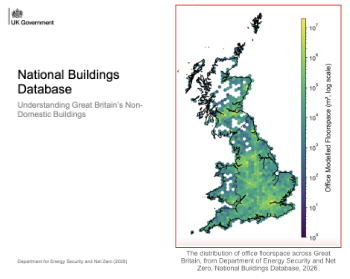
New UK National Buildings Database.
Building Safety Wiki Interviews

Chief executive of the British Woodworking Federation.
Planning condition discharge in England and Wales

A brief explanation from a building compliance expert, with further links.
Overheating guidance and tools for building designers

Guidance for dealing with element of building fabric control that have increasing importance.
Shading for housing, a design guide

From the Good Homes Alliance and British Blind and Shutter Association.
UK Standard Skills Classification (SSC)

A shared framework for describing skills needs.
Social media ban consultation comes to close

CIOB urges UK Government to consider social media’s role in careers guidance in ban debate.