





Final account

Construction contracts generally provide some mechanism for the final payment to be made to the contractor on completion of the works described in the contract. Generally this payment will be made at the end of the defects liability period providing that all patent defects have been rectified.
Preparing the final account is the process of calculating and agreeing any adjustments to the contract sum (the amount originally set out in the contract to be paid to the contractor for completion of the works) so that the amount of the final payment can be determined. The amount of the final payment is then set out in the final certificate (or final statement). It is possible for the final certificate to show that money is owed to the client, rather than due to the contractor.
Construction contracts may not specifically require the preparation of a final account, although they generally do require the contractor to provide all documents necessary for the adjustment of the contract sum within a specified time, and set out the time scale for and consequences of issuing the final certificate.
The contract sum may need to be adjusted for a number of reasons, including:
- Variations.
- Fluctuations.
- Prime cost sums.
- Provisional sums.
- Payments to nominated sub-contractors or nominated suppliers.
- Statutory fees.
- Payments relating to the opening-up and testing of the works.
- Loss and expense.
- Liquidated and ascertained damages.
- Contra claims imposed as a result of the contractor's operations (such as a third-party claim resulting from contractor negligence or contractual breach, for example, flooding a neighbour's property).
- The release of any remaining retention.
Agreeing the final account can be a complicated, time consuming and adversarial process, often resulting in disputes. The process can be made easier if adjustments to the contract sum are agreed as the project progresses rather than saving them up for the end. It is also beneficial if the client's quantity surveyor and the contractor's quantity surveyor work together on drafts of the final account before agreement is sought. It is preferable that a draft copy of the final account is signed off by the contractor as an 'in full and final settlement' prior to issue.
Agreement of the final account will allow the contract administrator to issue the final certificate. The final certificate is conclusive that all patent defects have been remedied, all adjustments to the contract sum have been agreed and all claims settled. Latent defects may still become apparent after completion of the contract and these may give rise to action for damages, for breach of contract or negligence.
Where proceedings have begun in relation to a dispute, the conclusiveness of the final certificate is subject to the findings of those proceedings.
In addition, the final certificate itself can be disputed (usually within 28 days). Adjudication, arbitration or other dispute resolution procedures may then be necessary to resolve the dispute. The final certificate is then only conclusive in relation to matters that are not disputed.
If the client intends to pay a different amount from that shown on the certificate, they must give notice to the contractor of the amount they intend to pay and the basis for its calculation (a 'pay less notice' - see Housing Grants, Construction and Regeneration Act for more information).
See also: Outturn cost.
[edit] Related articles on Designing Buildings
- Accounting.
- Campaign for cash retentions reform.
- Contract sum.
- Contract sum analysis.
- Cost consultant.
- Cost plans.
- Cost reporting.
- Cost value reconciliation.
- Defects.
- Escrow.
- Final certificate.
- Fluctuations.
- Housing Grants, Construction and Regeneration Act.
- Liquidated damages.
- Loss and expense.
- New Rules of Measurement.
- Outturn cost.
- Pre-tender estimate.
- Prime cost sums.
- Provisional sums.
- Retention bond.
- Scott schedule.
- Tender pricing document
- Variations.
- Whole-life costs.
Featured articles and news

We're expanding our collaborative mission by launching DB Intelligence, an exclusive market research advisory panel. Built environment professionals can now get paid to share their expertise on industry trends, products and services.
Panel members receive direct financial incentives for participating in research projects like short surveys, 1-2-1 interviews and focus groups. Register today to shape the future of the construction sector.
Building Control Independent Panel final report
A precis of a key report led by Dame Hackitt with full recommendations and link to the government response.
Guide to ISO 19650 for Architecture Firms (2026)
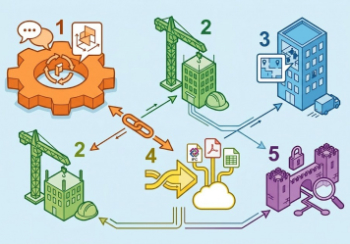
A user gives their low down.

A UK training and membership provider for mould remediation professionals.
Building Safety recap April, 2026
A short and longer run-through of the month, with links to further information and sources.
CIAT May 2026 briefing.

Independent NSI and BAFE study exploring how organisations are changing the way they buy fire safety services.

From medieval scribes to modern word art.

ECA welcomes crackdown on late payment and push for clean energy, whilst CIOB seek fixed cladding removal timeframes.
Cyber Security in the Built Environment
Protecting projects, data, and digital assets: A CIOB Academy TIS.
Managing competence in the built environment

ITFG publishes new industry guide on how to meet the ICC principles.

The UK's campaign to reduce noise pollution: Mythbusting, articles and topic guides.
Comments
[edit] To make a comment about this article, or to suggest changes, click 'Add a comment' above. Separate your comments from any existing comments by inserting a horizontal line.