





Buildings of the EU

Contents |
[edit] Berlaymont building
The European Commission is housed in the imposing modernist Berlaymont building in the European Quarter of Brussels (see image above).
The 14-storey building was designed by architect Lucien De Vestel and consists of a cruciform with four wings of unequal size projecting from a central core in the shape of a star. Each wing supports a 40 m high, narrow concrete ridge which holds steel beams to form the frame of the glass façade.
The building was completed in 1967, but the discovery of asbestos in the 1990s led to a large-scale refurbishment programme, during which the building was retrofitted to strict environment standards and external brises-soleil were added to regulate solar gain and glare.
[edit] Charlemagne building

Also located in Brussels' European Quarter, the Charlemagne building houses the Directorate-General for Economic and Financial Affairs, the Directorate-General for Trade, and the Commission's Internal Audit Service.
The Charlemagne building was designed by Jacques Cuisinier and constructed in 1967 concurrently with the Berlaymont Building to bring together the scattered departments of the European Commission. A major renovation was completed in 1998 by Helmut Jahn, replacing the largely concrete exterior with glass.
[edit] Paul-Henri Spaak building

The Paul-Henri Spaak building is the permanent home of the European Parliament. Located in Brussels, the 17-storey post-modern building contains a hemicycle debating chamber and is notable for its cylinder-shaped barrel-vault inspired by Joseph Paxton's 19th century Crystal Palace.
[edit] Louise Weiss building

The Louise Weiss building is the seat of the European Parliament in Strasbourg, where they must convene for twelve sessions a year, meaning that the building is only used for 48 days a year. Completed in 1999, the building was designed by the Parisian firm Architecture-Studio. It includes a 60 m high tower and was inspired by Roman amphitheatres and the mythical Tower of Babel.
[edit] Court of Justice of the European Union

Located in Luxembourg, and designed by architect Dominique Perrault, the Court of Justice of the European Union accommodates more than 2,000 judges, clerks and translators in 150,000 sq. m of accommodation. Its 100 m towers are the tallest in Luxembourg, and have distinctive gold-tinted aluminium mesh exteriors.
[edit] Related articles on Designing Buildings Wiki
- British Embassies: Their diplomatic and architectural history.
- City Hall, London.
- EU Referendum - Environmental and climate change consequences for the built environment.
- European Union Procurement Directives.
- European Union Timber Regulation.
- European Union.
- General Post Office, Dublin.
- Official Journal of the European Union.
- Palace of Westminster.
- Reichstag building.
- SIS Building.
- The Gherkin.
- The Kremlin.
- The White House.
- UK construction industry.
- United Kingdom.
- US Capitol Building.
- US Embassy hotel plans.
- What does Brexit mean for construction?
[edit] External references
- Building Design - An architectural guide
Featured articles
Check out some of the best features and news from Designing Buildings as well as key stories from around the web.

Confronting competency, codes, capacity and costs.
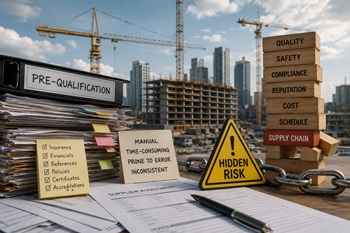
The hidden risk in modern construction supply chains.
Construction Management, 10 June

24 months to 14: CITB launches accelerated apprenticeships.
Bridging the gap between clients and contractors
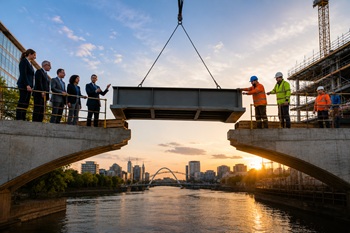
Concerns remain around contractor quality, capability, and delivery.
Construction Management, 10 June.
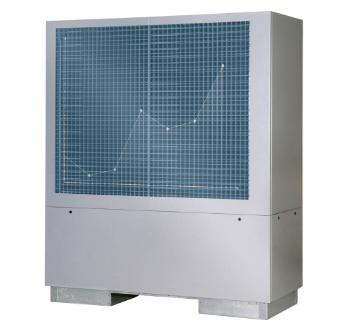
Heat pumps beat boilers in new home tests.
Building Safety Act implementation in Wales

CIAT to host industry panel on 26 June.

New and updated CLC building safety guidance.
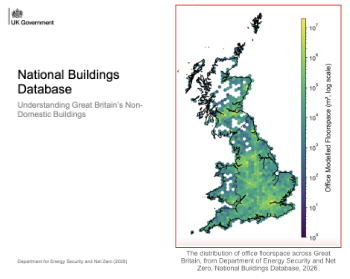
New UK National Buildings Database.
Building Safety Wiki Interviews

Chief executive of the British Woodworking Federation.
Planning condition discharge in England and Wales

A brief explanation from a building compliance expert, with further links.
Overheating guidance and tools for building designers

Guidance for dealing with element of building fabric control that have increasing importance.