





Hostile architecture

Hostile architecture, also known as defensive architecture, is an area of urban design that involves the modification of buildings and public spaces to deter certain activities.
A common application of hostile architecture is in relation to rough sleeping. Techniques used to discourage this include the use of ‘anti-homeless spikes’ - steel or concrete studs embedded in flat surfaces.
Other features that can be used include:
- Railings and other forms of enclosure
- Sloping surfaces.
- Embedded stones.
- Bollards.
- Large round rocks.
- Protrusions on window ledges.
- Wave-shaped benches with central armrests to prevent people lying down
- Using uncomfortable stainless steel furniture.
- Sloping seats at bus stops.

Another activity that is often the target of hostile architecture is skateboarding. San Francisco, the city which gave rise to street skateboarding, was the first to introduce ‘pig’s ears’ – metal flanges bolted onto the corner edges of pavements and low walls to act as a deterrence.
Loitering can also be deterred, with a variety of techniques trialled around the world. In Shandong, China, a pay-per-minute system was introduced for use of its park benches. A series of studs would emerge suddenly from the seat when the occupant’s ‘paid-for’ time had elapsed. In Japan, sloped benches prevent people from leaning back, as well as tubular benches that are either too hot in summer or too cold in winter. New York has adopted a range of spiky anti-sit devices which are found on all manner of surfaces, from air-conditioning units, to fire hydrants and standpipes.
A technique that has been used by some local authorities and businesses to deter teenagers loitering is the Mosquito Alarm which emits a high-pitched sound that is inaudible to older people. A similar use of annoying local sounds can be used to prevent people standing in doorways or near the entrances to buildings.

Lighting can also be used to deter teenage loitering. Mansfield, Nottingham, installed neon pink lights in underpasses because of the way in which they highlight acne. Similarly, Tokyo has used blue lighting in some railway stations to try and alleviate the high suicide rate, blue being used for its soothing qualities.
Unsurprisingly, hostile architecture is controversial. Critics argue that it replaces public spaces with commercial or ‘pseudo-public’ spaces where contrarianism, or deviation from social conventions, is not allowed. Others argue that its use enforces and exacerbates already present social divisions.
According to the journalist Alex Andreou; ‘These measures do not and cannot distinguish the "vagrant" posterior from others considered more deserving. By making the city less accepting of the human frame, we make it less welcoming to all humans. By making our environment more hostile, we become more hostile within it.’
[edit] Related articles on Designing Buildings
- Barrier.
- Bench.
- Bollard.
- CCTV.
- Crime Prevention Design Advisor.
- Defensible space.
- Deterrent paving.
- Entry control.
- Eyesore.
- Fence.
- Outbuildings security.
- Palisade.
- Panopticon.
- Perimeter security.
- Railing.
- Ram raid.
- Secured by design.
- Security and the built environment.
- Talus.
- Street furniture.
- Urban design.
Featured articles and news

We're expanding our collaborative mission by launching DB Intelligence, an exclusive market research advisory panel. Built environment professionals can now get paid to share their expertise on industry trends, products and services.
Panel members receive direct financial incentives for participating in research projects like short surveys, 1-2-1 interviews and focus groups. Register today to shape the future of the construction sector.
Building Control Independent Panel final report
A precis of a key report led by Dame Hackitt with full recommendations and link to the government response.
Guide to ISO 19650 for Architecture Firms (2026)
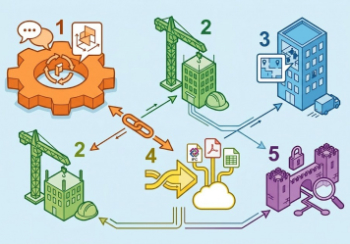
A user gives their low down.

A UK training and membership provider for mould remediation professionals.
Building Safety recap April, 2026

A short and longer run-through of the month, with links to further information and sources.
CIAT May 2026 briefing.

Independent NSI and BAFE study exploring how organisations are changing the way they buy fire safety services.
From medieval scribes to modern word art.

ECA welcomes crackdown on late payment and push for clean energy, whilst CIOB seek fixed cladding removal timeframes.
Cyber Security in the Built Environment
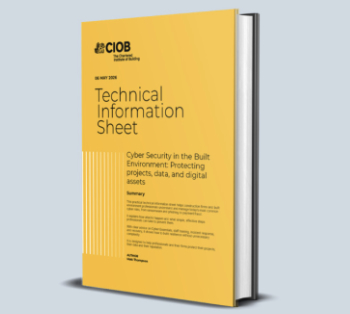
Protecting projects, data, and digital assets: A CIOB Academy TIS.
Managing competence in the built environment
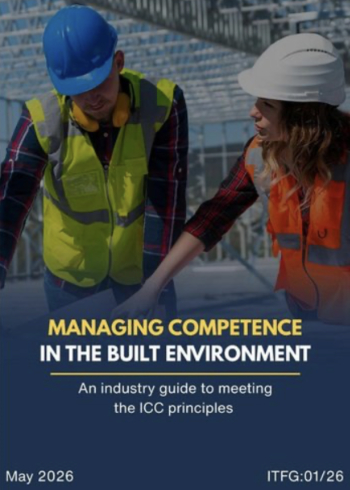
ITFG publishes new industry guide on how to meet the ICC principles.
The UK's campaign to reduce noise pollution: Mythbusting, articles and topic guides.