






Tensegrity bamboo pavilion

|
| Jennifer Hardi MCIAT, Project Leader and Programme Director at London South Bank University teamed up with bamboo architecture expert Dr Andry Widyowijatnoko and other colleagues from the Institute of Technology Bandung (ITB) Indonesia to build a temporary tensegrity bamboo pavilion. |
Contents |
[edit] Introduction
This project was a demonstration of how a sustainable material, such as bamboo, can be used to create an inspiring structure. The work is a continuation of a research-funded project through the Royal Academy of Engineering and HEFCE (now Office for Students) that Jennifer Hardi is leading. This involves multi-disciplinary collaborative working in BIM, and in designing sustainable waste recycling facilities to tackle solid waste management in a coastal tourism area in Indonesia.
The bamboo workshop was carried out at London South Bank University and, over three days, 40 students and 10 colleagues from various disciplines, ranging from architectural technology, architectural engineering, structural engineering, building surveying, civil engineering, construction management and research enterprise team, joined forces to lend a hand and provide some emotional support in building the bamboo pavilion.
With the confirmation of design received only two weeks before the D-Day for construction, clear communication and multi-disciplinary collaborative working played a crucial role in making sure the project was delivered on time.
The first challenge occurred when a decision had to be made on the most robust foundation for the temporary structure. A concrete foundation was proposed. But with such short available, plus the health and safety issues of getting the concrete to cure in that time, and transportation to the site (right next to the Student Union bar), this was not deemed to be an ideal solution.

|
The second proposal was to use a thick steel beam as the foundation for the structure but due to budget constraints this was quickly set aside. A third most feasible and sustainable solution was to re-use/re-purpose a concrete testing beam available in the engineering lab as the foundation for the bamboo structure.
Day two of the bamboo workshop saw further work done on the tensegrity roof and its supporting columns. The bamboo grid was secured in place initially with tape before the steel wires were applied onto each pole.
Day three was the biggest challenge in terms of raising the tensegrity bamboo roof onto the supporting bamboo poles. With a forklift being out of the question due to the difficulty in lifting the bamboo roof while maintaining its stability, a decision was made to rely solely on brute strength.
[edit] About Tensegrity Structure
Tensegrity is an abbreviation of tensile and integrity. It is also known as tensional integrity or floating compression, with structural principles based on the use of isolated components in compression inside a net of continuous tension. In this way, the compressed members do not touch each other and the pre-stressed tensioned members delineate the system spatially.
The picture to the right shows the tensegrity design of the bamboo pavilion by Dr Andry Widyowijatnoko that was built at London South Bank University. The core tensegrity roof was supported with bamboo columns, timber base and re-purpose concrete beam as foundation for the structure.
A tensegrity structure comprises tension and compression members where the compression members do not connect with each other. Metal wire was used in this design to act as the tension member while the bamboo poles were used as compression members. Wires were strengthened in the construction process to provide a rigid and stable structure.
[edit] Project data
Bamboo Pavilion Structure constructed in March 2019,
Designed by: Andry Widyowijatnoko, Institute of Technology, Bandung, Indonesia.
Project Leader: Jennifer Hardi, London South Bank University, UK.
[edit] About this article
This article was written by Jennifer Hardi, BSc (Hons) PGCHE MPhil SFHEA MCIAT. It previously appeared in CIAT’s AT Journal, Issue No. 130, Summer 2019 and can be accessed HERE.
More articles by CIAT on Designing Buildings can be accessed HERE.
[edit] Related articles on Designing Buildings
- Anticlastic.
- Biaxial bending.
- Buckminster Fuller.
- Geodesic dome.
- Hyperbolic paraboloid.
- Long span roof.
- Megastructure.
- Pavilion.
- Synclastic.
- Tensile strength.
- Tensile structures.
- The development of structural membranes.
- The history of fabric structures.
- Verticality.
--CIAT
Featured articles and news
Costs and insolvencies mount for SMEs, despite growth

Construction sector under insolvency and wage bill pressure in part linked to National Insurance, says report.
The place for vitrified clay pipes in modern infrastructure
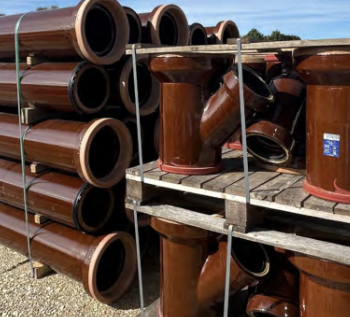
Why vitrified clay pipes are reclaiming their role in built projects.

Research by construction PR consultancy LMC published.
Roles and responsibilities of domestic clients

ACA Safety in Construction guide for domestic clients.
Fire door compliance in UK commercial buildings

Architect and manufacturer gives their low down.
Plumbing and heating for sustainability in new properties

Technical Engineer runs through changes in regulations, innovations in materials, and product systems.
Awareness of the Carbon Border Adjustment Mechanism
What CBAM is and what to do about it.
The new towns and strategic environmental assessments
12 locations of the New Towns Taskforce reduced to 7 within the new towns draft programme and open consultation.
Buildings that changed the future of architecture. Book review.
The Sustainability Pathfinder© Handbook
Built environment agency launches free Pathfinder© tool to help businesses progress sustainability strategies.
Government outcome to the late payment consultation, ECA reacts.
IHBC 2025 Gus Astley Student Award winners
Work on the role of hewing in UK historic conservation a win for Jack Parker of Oxford Brookes University.
Future Homes Building Standards and plug-in solar
Parts F and L amendments, the availability of solar panels and industry responses.
How later living housing can help solve the housing crisis
Unlocking homes, unlocking lives.
Preparing safety case reports for HRBs under the BSA
A new practical guide to preparing structural inputs for safety cases and safety case reports published by IStructE.
Male construction workers and prostate cancer

CIOB and Prostate Cancer UK encourage awareness of prostate cancer risks, and what to do about it.