






Offsite manufacturing

Contents |
[edit] Introduction
It is common knowledge that the UK is in the midst of a housing crisis. Less certain is the way out – beyond simply building more houses. Could offsite manufacturing help?
Laing O'Rourke's offsite manufacturing facility in Steetley, Nottinghamshire is a huge space at 23,000 sq. m – yet they have plans to build another one next door. This gives more than a hint about the growth and potential of offsite manufacture, although it's yet to become mainstream.
[edit] Opportunity
The Government has given £22m towards Laing O'Rourke's new factory so clearly it sees offsite manufacture as a solution.
The Construction Industry Council's Offsite Housing Review from February 2013 agrees, and found there is a massive opportunity to use it to deliver the new homes we badly need. The report identified potential benefits in a number of areas:
- Speed of production.
- Speed of build on site.
- Cost, quality and uniformity of build.
- Sustainability and waste reduction.
- Validation and testing.
- Health and safety.
[edit] The factory
The Laing O'Rourke factory's main output is precast wall panels and modules. It also produces more bespoke items and a selection of outer-wall finishes to fit a variety of architects' demands, including a very convincing heritage brickwork effect. One impressive feature is the twin curing ovens (nicknamed the 'pizza ovens') that can get precast concrete slabs from pour to the back of a lorry within six hours.
On site there is a prototype two-storey, four-bedroom family home, made entirely from factory-manufactured components. This is by far the best offsite-manufactured home we have seen. However, further sustainability and cost research is needed, and the results shared widely, before we can draw real conclusions.
[edit] Offsite manufacture in civil engineering
Despite many benefits, offsite manufacture has yet to become mainstream within infrastructure. Good examples do exist, such as Laing O'Rourke's DfMA (Design for Manufacture & Assembly) contracts to construct circular settlement tanks for sewage and water treatment plants. Laing O'Rourke will also be involved (subject to Final Investment Decision) in two aspects of the Hinkley Point C project:
- Construction workers' campus accommodation (which lends itself nicely to offsite manufacture optimisation).
- Civil construction of all the main power station buildings (though the extent to which offsite manufacture can be used for such complex projects remains to be seen).
[edit] Benefits to nuclear construction
There are potentially huge gains to be made through using offsite manufacturing on nuclear sites. Working on the site itself can create delays (for example, waiting for security clearance for workers, or lorry deliveries) and problems can arise from limited access and space.
Offsite manufacture delivers better uniformity in finish, and testing and validation of product quality is easier in a factory. It remains to be seen to what extent a large, unique civil engineering project can be 'offsited', with the right motivated contractor in charge.
[edit] Obstacles
The blockers to offsite manufacture seem to include a high initial threshold to entry (factories costing £100m are a substantial outlay, and need regular work to make them economically feasible) and the extra time spent at the front-end design stage – i.e. working out how and where to amend the construction plan to accommodate this new method of construction.
This latter issue has the added complication that this interaction is already in flux, due to BIM Level 2, various procurement limitations and very little agreement as to who should do what, even in an 'industry norm' style contract. A deadline-driven client might not be willing to accept all of this and so the offsite solution could be neglected out of hand, unless the benefits are clearly stated.
Could it be that housing, often so traditional in mindset, is actually ahead of the curve and could teach the infrastructure world how to embrace offsite manufacturing?
See also: Off-site manufacturing.
This article originally appeared as Offsite manufacture – on the way to becoming mainstream?, published by the Institution of Civil Engineers on 17 August 2015. It was written by Charles Jensen.
--The Institution of Civil Engineers
[edit] Related articles on Designing Buildings
- Advanced construction technology.
- BSRIA launches Offsite Construction for Building Services topic guide.
- Design for Manufacture and Assembly (DfMA).
- Fabrication.
- Factory-made housing.
- Flying factory for construction works.
- Modern methods of construction.
- Modular buildings.
- Prefabrication.
- Off site materials.
- Off-site manufacturing.
- Offsite manufacturing and standardised design.
- Off-site manufacture for construction: Building for change.
- Off site, on track.
- Off-site prefabrication of buildings: A guide to connection choices.
- Platform approach to design for manufacture and assembly.
- Plug and play skyscrapers.
Featured articles
Check out some of the best features and news from Designing Buildings as well as key stories from around the web.

A quick introduction.
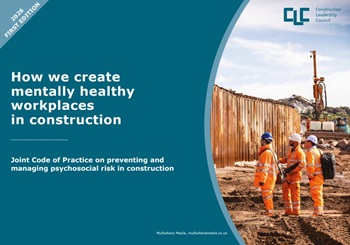
CLC publishes Mental Health Joint Code of Practice.
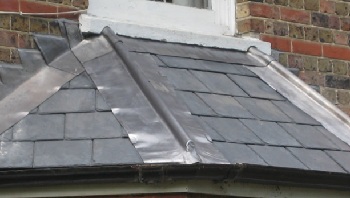
A quick introduction to its uses and risks.
Construction Management, 17 June

Government rolls out digital planning tool to all local authorities.

Your views needed - a strategy for the professions, trades and occupations.

Confronting competency, codes, capacity and costs.
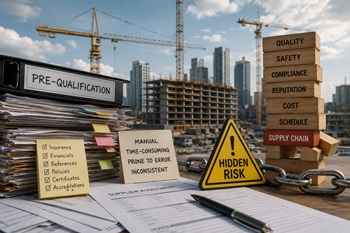
The hidden risk in modern construction supply chains.
Construction Management, 10 June

24 months to 14: CITB launches accelerated apprenticeships.
Bridging the gap between clients and contractors
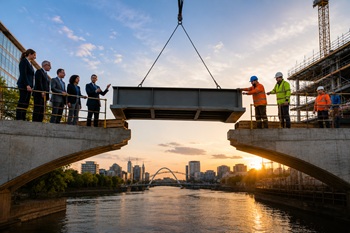
Concerns remain around contractor quality, capability, and delivery.
Construction Management, 10 June.

Heat pumps beat boilers in new home tests.
Building Safety Act implementation in Wales

CIAT to host industry panel on 26 June.